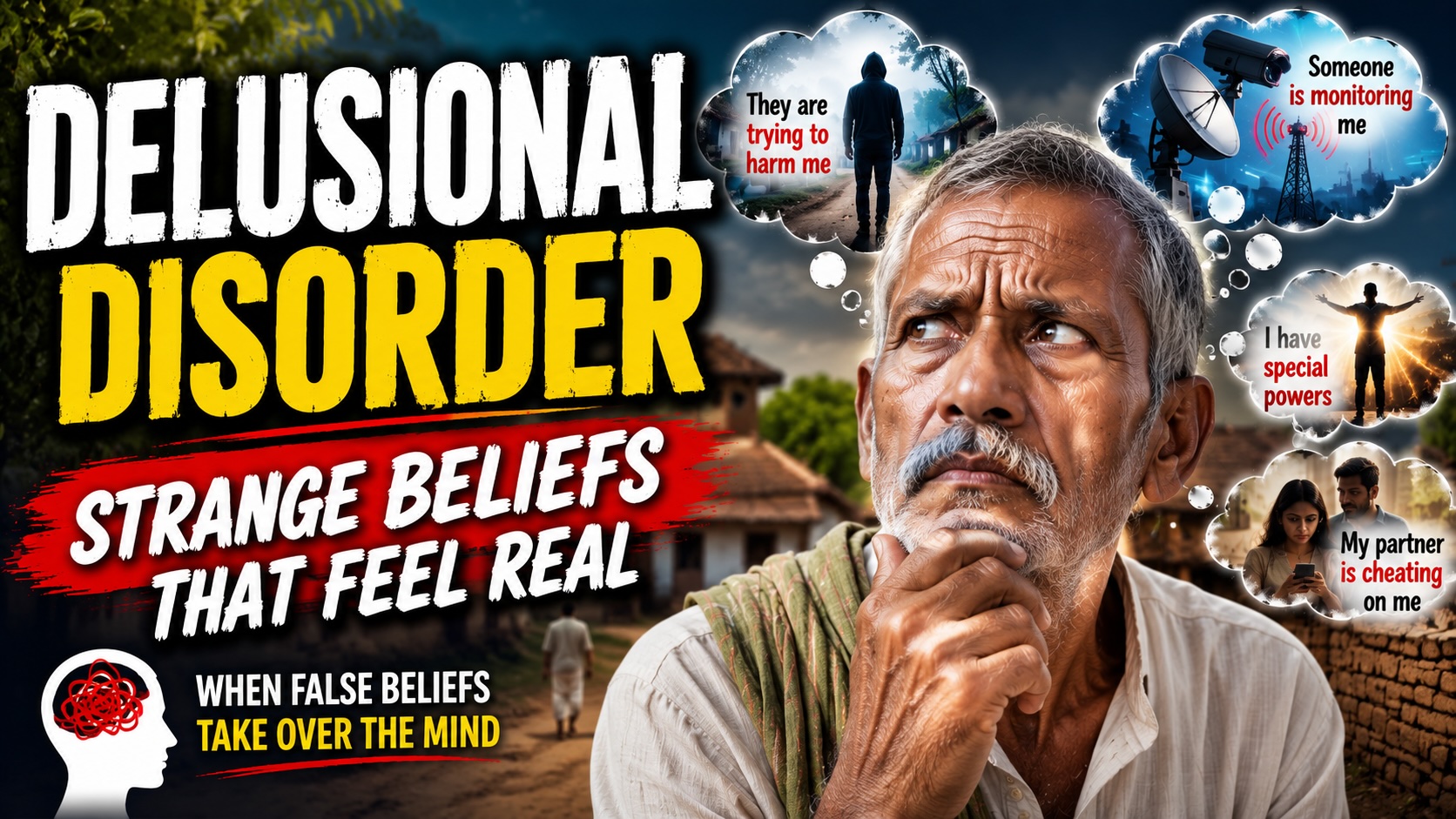
Delusional disorder is a serious mental health condition in which a person strongly believes something that is not true, even when there is no logical evidence to support it. Unlike ordinary misunderstandings or personal opinions, these beliefs remain fixed despite repeated explanations, proof, or reassurance. This can affect relationships, work, and daily life.
What is Delusional Disorder?
A delusional disorder involves one or more persistent delusions that last for at least one month. A delusion is a false belief that is not accepted by the person’s cultural or religious background. The individual continues to believe it even when strong evidence proves otherwise.
Some common examples include:
- Believing neighbours are trying to harm or kill them.
- Thinking someone has secretly implanted a chip in their brain to monitor them.
- Believing they possess special powers or extraordinary abilities.
- Being convinced that their partner is unfaithful without any real evidence.
When family members or friends challenge these beliefs, the person often becomes even more convinced that they are correct.
Common Symptoms of Delusional Disorder
The symptoms of delusional disorder vary depending on the type of delusion, but some common signs include:
- Holding a strong false belief that cannot be changed with evidence.
- Becoming suspicious and finding it difficult to trust others.
- Searching for imaginary “proof” to strengthen the belief.
- Giving unusual meanings to normal everyday events.
- Reacting angrily or defensively when others question the belief.
- Developing relationship conflicts because of the delusion.
- Avoiding people who do not agree with their belief.
- Experiencing anxiety, fear, sadness, or emotional distress related to the delusion.
Although the person may function normally in many other areas of life, these beliefs can gradually interfere with social, family, and professional relationships.
Why Does Delusional Disorder Develop?
The exact cause of delusional disorder is still not fully understood. Researchers believe that a combination of genetic, biological, and psychological factors may contribute. Stressful life events, personality traits, and emotional vulnerability may also increase the risk in some individuals.
Different types of delusions exist, such as persecutory, grandiose, jealous, somatic, and erotomanic delusions. Each type has its own pattern of false beliefs.
Can Delusional Disorder Be Treated?
Treatment requires patience, professional expertise, and a strong therapeutic relationship. Simply arguing with the person or repeatedly presenting evidence usually does not change the belief. In many cases, this may even strengthen the delusion.
At present, no medicine has been proven to directly remove or change a person’s fixed delusional beliefs. However, psychiatrists may prescribe medications to reduce emotions such as anxiety, fear, agitation, or depression that accompany the delusion.
Psychological therapy plays a vital role in managing delusional disorder. An experienced therapist helps the person improve insight, reduce distress, strengthen coping skills, and improve relationships without directly confronting the belief in a way that increases resistance. With appropriate treatment and family support, many individuals can experience meaningful improvement and lead a better quality of life.
Meta Description: