
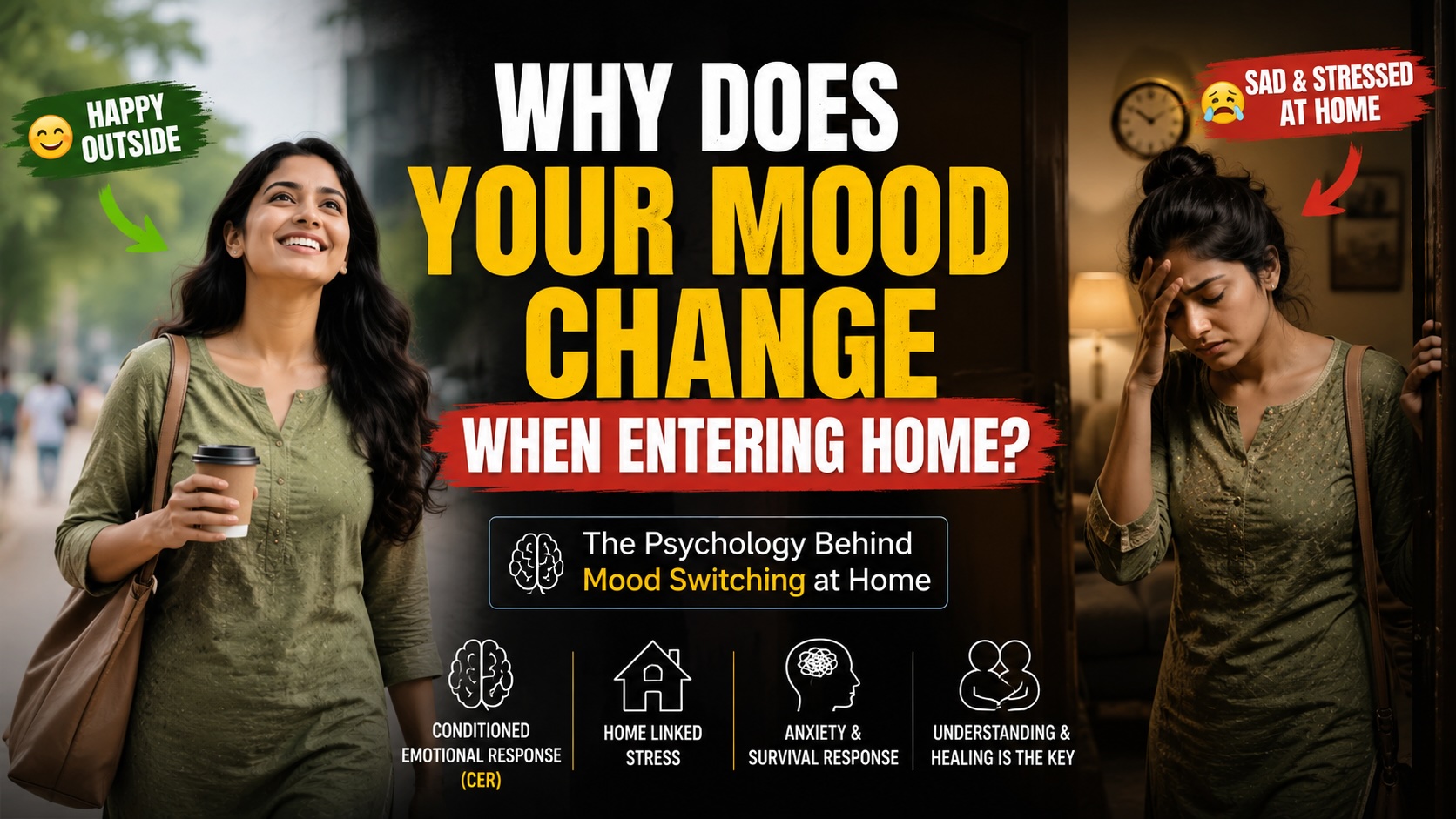
Many people mention a common concern during psychological consultation, especially women. They feel happy, relaxed, or energetic while they are outside. However, the moment they enter their home, their mood suddenly changes. They may feel irritated, sad, anxious, or emotionally exhausted. This mood changes when entering home pattern often creates misunderstandings in relationships because partners may assume it is intentional.
In many cases, this reaction is not a conscious choice. It can be explained by a psychological concept called Conditioned Emotional Response (CER).
What is a Conditioned Emotional Response (CER)?
A Conditioned Emotional Response is a learned emotional reaction. Our brain continuously learns from repeated experiences. If a person repeatedly experiences stress, criticism, emotional neglect, or conflict in a particular environment, the brain starts associating that place with those emotions.
Eventually, simply entering that environment can trigger the same emotional response automatically, even before anything stressful happens.
A similar example is a child who feels anxious the moment they enter school because of repeated unpleasant experiences in the past. The school itself is not the problem; the brain has learned to associate it with emotional distress.
Mood Switching at Home
The same process can explain mood changes when entering home.
If someone repeatedly experiences blaming, criticism, avoidance, comparison, frequent arguments, or constant pressure over household responsibilities, the brain may begin to recognise home as a stressful environment.
As soon as the person enters the house, the brain’s threat detection system can become more active. This may increase stress hormones and shift the body into a survival response. Depending on previous experiences, the person may suddenly experience anger, sadness, anxiety, or emotional exhaustion.
This emotional shift is usually automatic and not under voluntary control.
Can It Happen Even in a Safe Home?
Yes. Some people no longer live in a stressful home, yet they continue to experience the same emotional reaction.
This can happen because the emotional brain has learned from earlier experiences. Past trauma or long-term emotional stress may continue to influence current emotional responses, even when the present home is peaceful and supportive.
The brain simply repeats what it learned in the past until it experiences enough evidence that the environment is now safe.
How Can It Improve?
The brain can also learn new emotional associations.
When home consistently becomes a place of safety, understanding, appreciation, and emotional support, the conditioned response gradually becomes weaker. A caring and emotionally supportive partner can play an important role in this process. Sharing household responsibilities, reducing criticism, communicating with kindness, and creating positive daily experiences help the brain rebuild a sense of safety.
If the emotional response is linked to past trauma or long-standing relationship difficulties, professional psychological therapy can help process those experiences and reduce the automatic emotional reaction.
If your partner experiences mood changes when entering home, avoid assuming they are intentionally behaving this way. Understanding the psychological reason behind the behaviour can prevent unnecessary conflicts and strengthen your relationship. If these mood changes are affecting your daily life or relationships, seeking professional guidance can be an important step towards recovery.