
Most people think control in a relationship means saying, “Don’t go there,” “Don’t talk to them,” or “Quit your job.” However, Coercive Control is often much more subtle and difficult to identify. It is a psychological manipulation technique used to gain power, isolate a person, and gradually dominate their thoughts, emotions, and behaviour.
Coercive Control can occur in husband-wife relationships, parent-child relationships, and even close family relationships. The biggest challenge is that outsiders often fail to notice it because the controlling person may appear caring, supportive, and respectful in public.
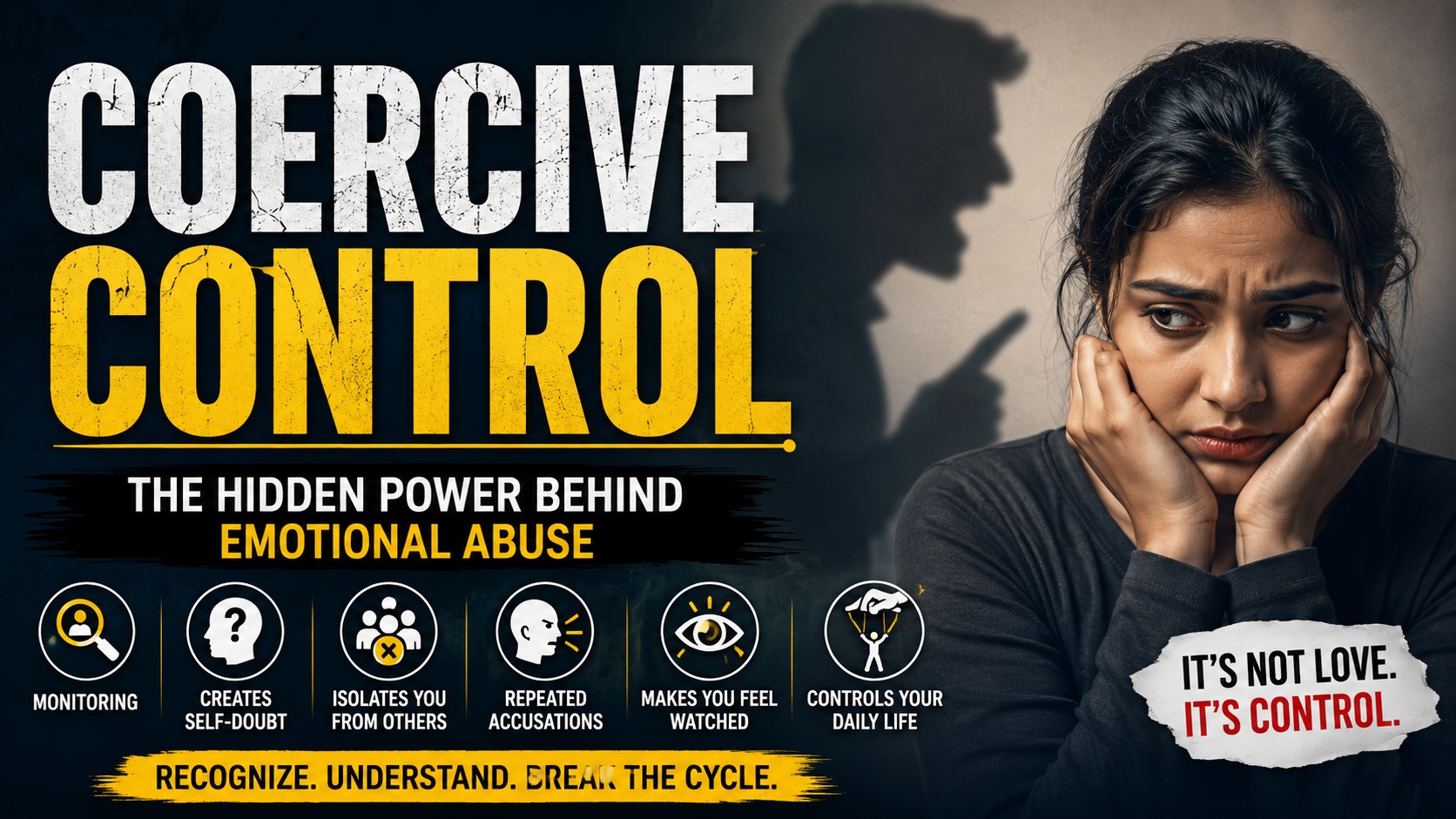
1. Monitoring Every Move
One of the most common Coercive Control strategies is monitoring. This may be direct or indirect.
The person may closely observe your mobile phone usage, social media activity, phone calls, or interactions with friends. Some even track location or create the feeling that they are always watching you. Even when they are not monitoring directly, they may make you believe they know everything you do.
2. Creating Self-Doubt Through Indirect Suspicion
Instead of openly accusing you, they often express suspicion indirectly.
Over time, you may start explaining every small detail of your day. Even minor things that you forgot to mention can later be used against you. Statements such as, “It would have been better if you had told me first,” may sound caring but can slowly create guilt and fear. Eventually, you begin doubting your own honesty and judgement.
3. Slowly Isolating You From Others
People using Coercive Control rarely stop you from meeting others directly.
Instead, they make every interaction stressful. They may say, “You can meet them, but…” and attach conditions, questions, or emotional pressure. If they notice that you enjoyed spending time with someone else, they may later create an argument that destroys that happiness. Gradually, you start avoiding friends and relatives to prevent conflict.
4. Repeated Accusations and Emotional Manipulation
Another common strategy is making repeated allegations, either directly or indirectly.
Ignoring you, refusing to communicate, giving silent treatment, or repeatedly bringing up old incidents can increase guilt and emotional confusion. Eventually, you may begin asking yourself, “Am I really the problem?”
5. Making You Feel Constantly Watched
Many controlling partners use statements like:
- “I know everything.”
- “People tell me about you.”
- “Don’t think I don’t know what you’re doing.”
Even when these statements are untrue, they create fear and confusion. You may begin wondering which friend is sharing information and slowly distance yourself from everyone.
6. Controlling Your Daily Life
Over time, even ordinary activities come under control.
You may stop doing things that make you happy because every activity leads to questioning, criticism, or emotional pressure. Past mistakes are repeatedly brought up, leaving you feeling trapped with no opportunity to move forward.
How Coercive Control Affects Mental Health
Living under Coercive Control for a long period can lead to anxiety, depression, low self-esteem, social withdrawal, and emotional exhaustion. In some cases, the same person who creates emotional pain may later appear overcaring, making it even harder for the victim to recognise the unhealthy pattern.
Remember, Coercive Control is identified by a repeated pattern of behaviour, not by one isolated incident. A single argument or disagreement does not mean someone is using coercive control.
What Should You Do?
If these patterns continue and you feel trapped, do not ignore the warning signs. The earlier you recognise the pattern, the easier it becomes to protect your mental health.
If you find it difficult to break this cycle on your own, seek professional psychological support. Early intervention can help you regain confidence, rebuild healthy boundaries, and make informed decisions about your future.