
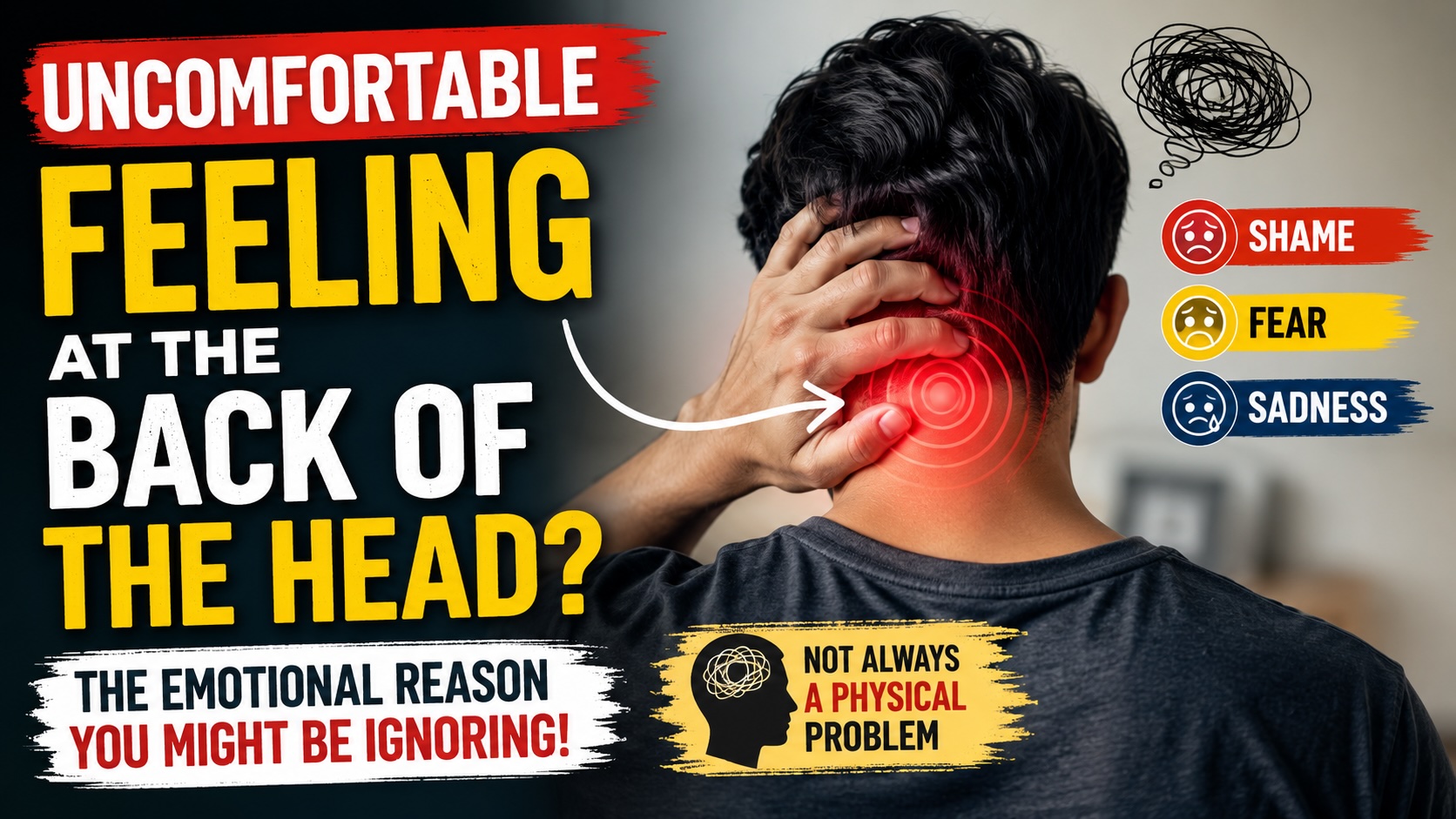
Many people experience an uncomfortable feeling at the back of the head even after medical tests show that everything is normal. Some describe it as pain, while others feel heaviness, pressure, numbness, tightness, or the sensation that “something is sitting there.” Along with this, thoughts such as “Something is wrong with me,” “What will others think if I tell them?” or “Will something bad happen to me?” can make the mind even more distressed.
If your medical check-up, brain scan, or neurological examination is normal, this sensation may be related to an emotional somatic symptom rather than a structural problem.
What Is a Somatic Symptom?
A somatic symptom is a physical sensation that is closely linked to emotional stress. Anxiety does not affect only the mind. It can also create real physical sensations in different parts of the body, including the chest, neck, shoulders, stomach, legs, and head.
An uncomfortable feeling at the back of the head may become more noticeable when anxiety increases and often reduces when the anxiety settles.
Why Does This Feeling Occur at the Back of the Head?
Although more scientific research is needed to confirm this exact mechanism, there is a reasonable explanation based on how the body responds to emotions.
In many people, this symptom appears along with a combination of shame, fear, sadness, and anxiety. People who have repeatedly experienced embarrassing, frightening, or emotionally painful events may be more likely to notice this sensation.
Think about the natural posture of a person who feels ashamed. The head bends down, the shoulders drop, and eye contact reduces. In this position, the small suboccipital muscles located at the base of the skull become tense.
During a mild emotional moment, this may create only a slight sensation. However, during intense traumatic experiences involving shame, fear, and sadness, the muscle tension can become much stronger, making the discomfort more noticeable.
How Anxiety Makes It Worse
When anxiety increases, muscle tension also increases. At the same time, the brain becomes more alert to body sensations, a process known as hypervigilance.
Over time, if similar emotional situations happen repeatedly, the brain may learn to associate these emotions with the physical sensation at the back of the head. As a result, even ordinary anxiety can trigger the same uncomfortable feeling again.
This does not mean the pain is imaginary. The sensation is real, but its source may be emotional rather than a physical injury.
Why Medicines Alone May Not Solve It
If the symptom is mainly emotional, painkillers, repeated scans, or physiotherapy may provide only temporary relief. Unless the underlying emotional factors are addressed, the discomfort may continue to return.
Therapy can help identify unresolved emotional trauma, reduce fear of judgment, overcome shame, and build emotional resilience. As anxiety reduces, the body often becomes less tense, and the somatic symptoms gradually improve.
When to Seek Professional Help
If you frequently experience an uncomfortable feeling at the back of the head, especially after normal medical reports, do not ignore your emotional health. A mental health professional can help you understand whether anxiety, shame, fear, or past emotional experiences are contributing to your symptoms.
With the right therapeutic support, emotional somatic symptoms can improve significantly, helping you regain both mental and physical comfort.