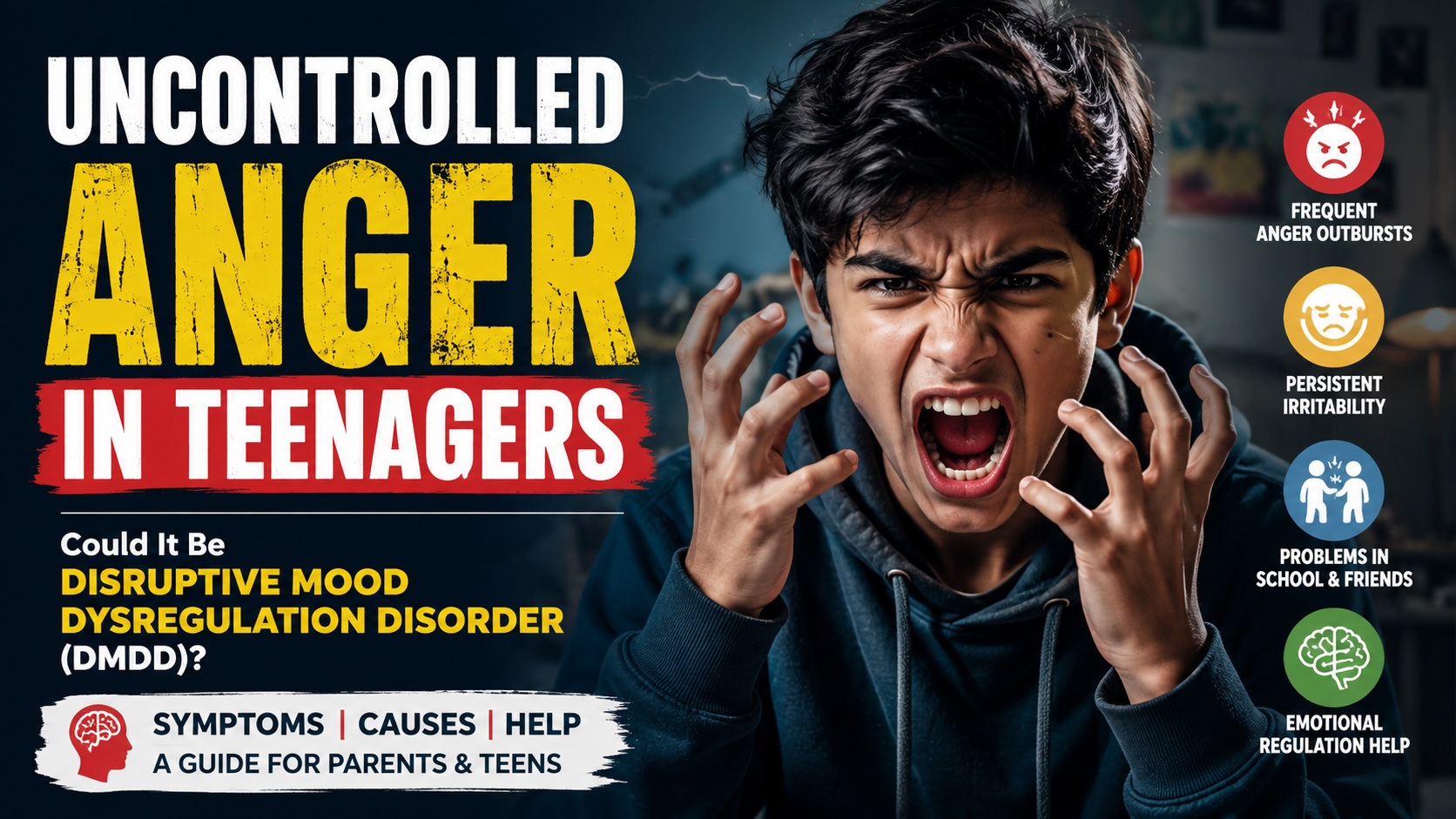
Teenagers often experience mood swings, but uncontrolled anger in teenagers is not always a part of normal adolescence. When a teenager remains irritable most of the time and has repeated angry outbursts over small issues, it may indicate Disruptive Mood Dysregulation Disorder (DMDD). Early identification and the right psychological support can help teenagers develop healthy emotional regulation skills and improve their relationships at home and school.
What is Disruptive Mood Dysregulation Disorder (DMDD)?
Disruptive Mood Dysregulation Disorder (DMDD) is an emotional and behavioural disorder commonly seen in children and teenagers. It is characterised by persistent irritability, frustration and frequent anger outbursts that are much more intense than expected for the situation. The condition is usually diagnosed between the ages of 6 and 18 years, with symptoms beginning before the age of 10.
Parents often mistake these behaviours as stubbornness or poor discipline. However, uncontrolled anger in teenagersmay sometimes have an underlying psychological or neurological basis that requires proper assessment.
Symptoms of DMDD
Teenagers with DMDD may show several of the following symptoms:
- Crying, shouting or screaming over minor issues.
- Frequent verbal aggression or abusive language.
- Hitting others or damaging objects during anger episodes.
- Angry outbursts occurring three or more times every week.
- Persistent irritability even when there is no obvious problem.
- Being regularly described as an “angry boy” or “angry girl.”
- Difficulty accepting rejection or hearing the word “no.”
- Frequent conflicts with teachers, parents or friends.
For a diagnosis of DMDD, these symptoms should be present in at least two settings, such as home, school or among friends. If the behaviour occurs only in one place, other factors may be responsible.
Why Does DMDD Develop?
There is no single cause of DMDD. Several emotional, environmental and neurological factors may contribute.
Some teenagers may have grown up with unpredictable parenting, frequent comparisons with siblings or classmates, or constant conflict between parents. These experiences can make emotional regulation more difficult. Some children also have neurological differences that affect how the brain processes frustration and emotional reactions.
Many teenagers with DMDD have a low tolerance for uncomfortable feelings. They may suppress emotions instead of expressing them in a healthy way. As a result, frustration builds up until it explodes as anger. They may also carry a constant belief that “Nobody understands me,” which further increases emotional distress.
How Therapy Can Help
The good news is that DMDD is treatable. Psychological therapy focuses on improving emotional regulation, increasing frustration tolerance and helping teenagers express feelings before they become overwhelming.
Therapists also work with parents to create a supportive environment where the teenager feels understood rather than criticised. When uncontrolled anger in teenagers is addressed early, emotional control, relationships and overall quality of life can improve significantly.
What Parents Should Avoid
Many parents react by scolding, blaming or labelling the teenager as “short-tempered” or “problematic.” Unfortunately, these responses can increase shame and frustration, making the condition worse.
Instead of punishment alone, parents should try to understand the emotional struggle behind the behaviour and seek professional help if the anger becomes frequent, intense and difficult to manage.
When to Seek Professional Help
If uncontrolled anger in teenagers happens several times every week, affects school performance, damages friendships or creates ongoing family conflict, a psychological assessment is recommended. Early intervention can prevent long-term emotional and behavioural difficulties while helping teenagers develop healthier coping skills.