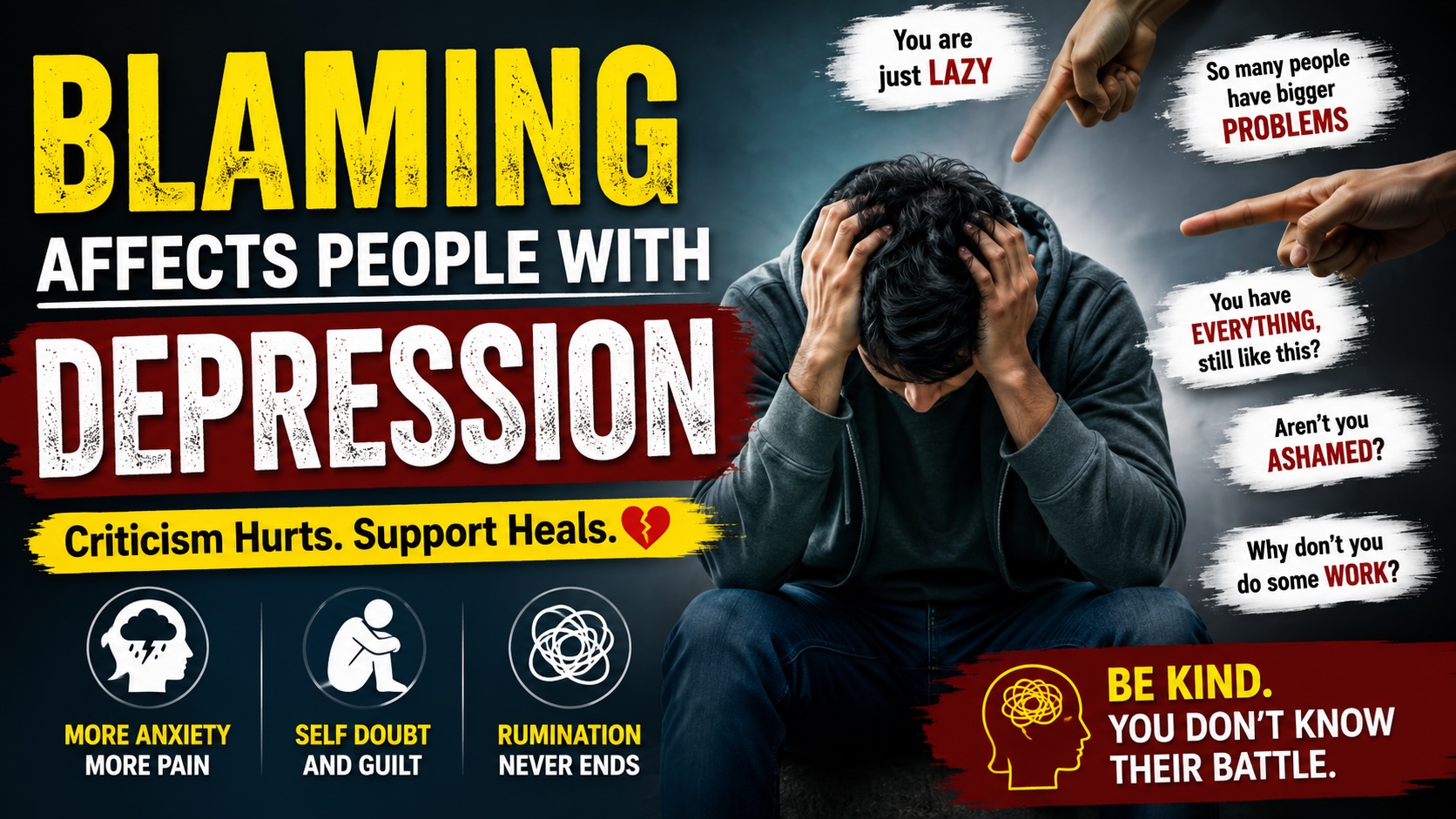
When someone is emotionally strong, they may handle criticism and move on. However, blaming affects people with depression very differently. During emotional weakness, a person often hears criticism instead of comfort. Instead of supportive words, they hear:
- “You are just lazy.”
- “People with bigger problems are living happily.”
- “You are arrogant.”
- “You have everything. Why are you like this?”
- “Aren’t you ashamed?”
- “Why don’t you just go and work?”
People living with long-term anxiety or depression hear these statements repeatedly. Unlike a physical illness, mental health struggles are invisible. Others cannot see the emotional pain, which often leads to misunderstanding and blame instead of empathy.
Why Blaming Affects People with Depression
Many people believe that criticism will motivate someone to change. In reality, blaming affects people with depressionby increasing emotional pain rather than reducing it. Instead of feeling encouraged, they often feel helpless, worthless, and emotionally exhausted.
Let’s understand how blame influences mental health.
1. Blaming Activates the Brain’s Threat System
The human brain is designed to detect danger. For a person with anxiety or depression, repeated blame activates this threat system even more.
Their emotional overload increases, anxiety becomes stronger, and the brain shifts into survival mode. Instead of solving problems, they start thinking about escaping difficult situations or avoiding people who constantly criticise them.
2. Self-Doubt, Self-Blame and Guilt Become Stronger
One of the biggest reasons blaming affects people with depression is that it strengthens negative thoughts.
Many people already struggle with:
- Self-doubt
- Excessive guilt
- Self-blame
- Low self-worth
When others repeatedly blame them, these thoughts become stronger. In severe cases, the risk of self-harm or suicidal thinking may also increase because they begin to believe they are a burden to everyone around them.
3. Fear of Rejection Increases Anxiety
Depression and anxiety often come with a fear of losing relationships.
Repeated criticism makes a person wonder:
- “Do they hate me?”
- “Am I a burden?”
- “Will everyone leave me?”
This fear increases emotional stress and makes recovery even more difficult.
4. Hypervigilance Becomes Stronger
Blame can make a person constantly watch for signs of criticism.
They may begin to analyse:
- Facial expressions
- Tone of voice
- Small changes in behaviour
Over time, they may interpret neutral conversations as criticism. This pattern, called overgeneralisation, can worsen anxiety and depression.
5. Rumination Keeps the Emotional Pain Alive
A single blaming sentence can trigger painful memories from the past.
The person may repeatedly think about previous failures, embarrassing moments, guilt, sadness, or anger. This cycle of rumination keeps emotional wounds open and prevents healing.
Support Heals Better Than Blame
Many people genuinely believe they are helping by pointing out mistakes. Their intention may be good, but the impact can be harmful.
For someone who is emotionally vulnerable, repeated blame does not build strength. Instead, it slowly damages hope, confidence, and the desire to keep fighting.
Sometimes, they even begin to feel that life itself has become too difficult and that they are only a burden to others.
Choose Professional Support Instead of Repeatedly Explaining Yourself
If you are struggling with anxiety, depression, or any other psychological disorder, you do not have to keep explaining yourself to people who refuse to understand.
Rather than becoming emotionally weaker through repeated criticism, seek help from a skilled psychologist. With proper assessment, evidence-based therapy, and consistent support, anxiety, depression, and many other psychological disorders can be effectively treated, helping you regain emotional balance and improve your quality of life.