
At some point in life, many people ask themselves a difficult question: “What is the purpose of my life?” For some people, this question leads to self-discovery. For others, it develops into an existential crisis.
An existential crisis is a state in which a person starts questioning the meaning of life, personal values, identity, beliefs, goals, and purpose. They may begin to wonder whether the life they are living truly reflects who they are.
As this confusion increases, the person may feel trapped, emotionally exhausted, and disconnected from life. In some cases, an existential crisis can contribute to anxiety and depression.
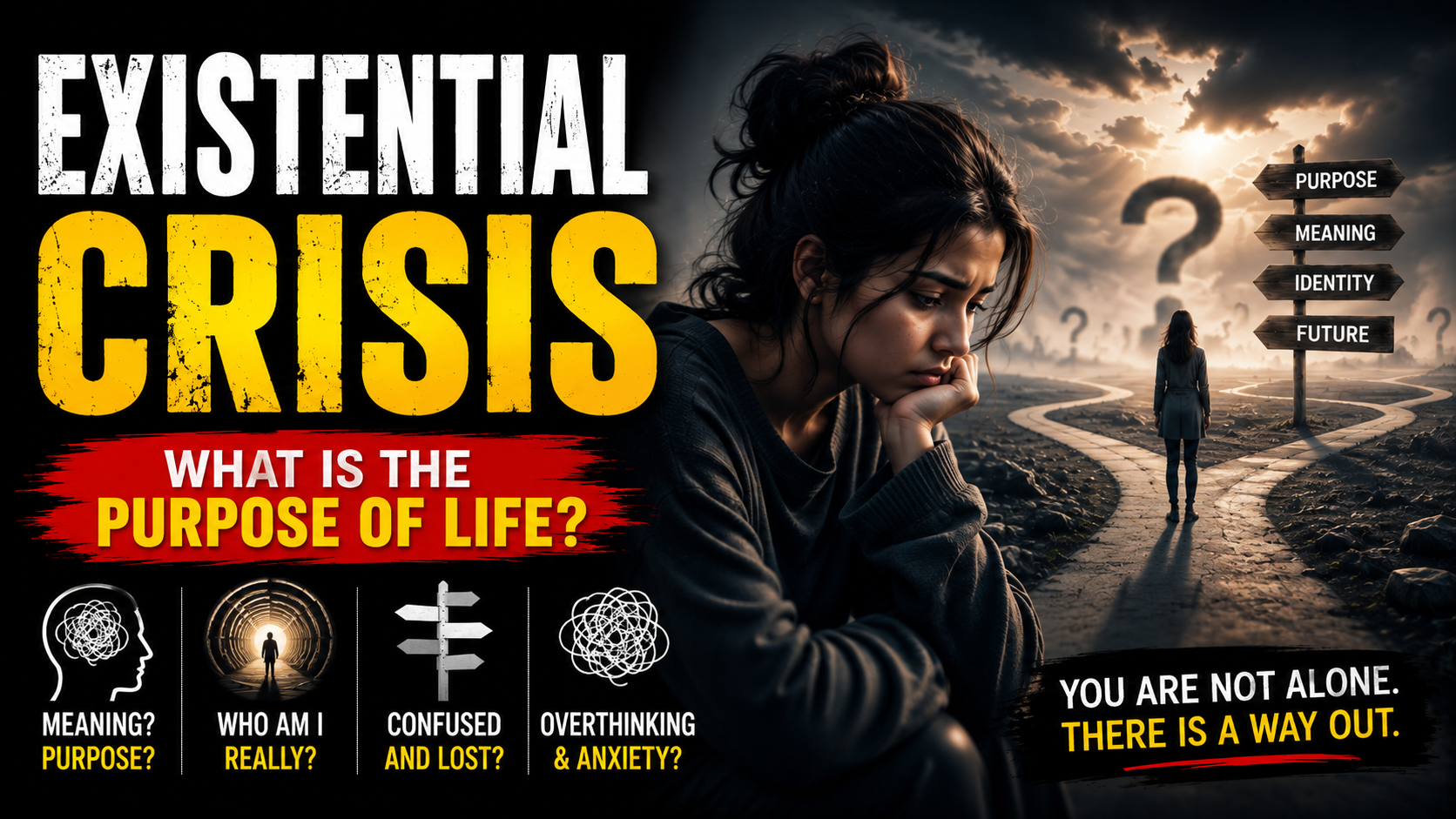
What Is an Existential Crisis?
An existential crisis does not simply involve feeling sad or stressed. Instead, it involves a deeper struggle related to identity, purpose, freedom, mortality, and the meaning of life.
People often ask questions such as:
- Why am I here?
- What is the purpose of my life?
- Am I living according to my own values?
- Have I spent my life trying to fulfil other people’s expectations?
- What happens after death?
These thoughts can become overwhelming and difficult to control.
Common Symptoms of an Existential Crisis
The symptoms of an existential crisis vary from person to person. Some of the most common signs include:
- Repeated thoughts about the meaning of life
- Excessive overthinking
- Feelings of helplessness
- Emotional numbness
- Loss of motivation and happiness
- Fear of death
- Difficulty making decisions independently
- Persistent dissatisfaction with life
- Lack of clear goals
- Sleep disturbances
- Repeated focus on negative memories
- Feeling unable to express emotions fully, even while experiencing sadness
Many people also become more vulnerable to external influence during this period. Their beliefs, values, and opinions may change rapidly.
Why Does an Existential Crisis Occur?
Trauma, grief, relationship problems, financial stress, health concerns, and major life changes can all contribute to an existential crisis.
However, another important factor often receives less attention. During childhood and adolescence, some individuals learn to suppress their own interests, dreams, values, and preferences in order to satisfy the expectations of parents, teachers, relatives, or society.
As adults, they may suddenly realise that they have spent years living according to someone else’s expectations. This realisation can create confusion, frustration, and emotional pain.
Risks Associated With an Existential Crisis
People experiencing an existential crisis may become highly vulnerable to manipulation. They may place excessive trust in others, enter unhealthy relationships, or make impulsive decisions in an attempt to find meaning and emotional security.
For this reason, professional guidance can be extremely valuable. A qualified mental health professional can help individuals explore their beliefs, identify hidden emotional conflicts, recognise their strengths, and establish meaningful goals.
Moving Forward
Although an existential crisis can feel frightening, it can also become an opportunity for personal growth. Understanding yourself, accepting your emotions, and aligning your life with your own values can help you create a stronger sense of direction and purpose.
Seeking help is not a sign of weakness. Sometimes, it is the first step towards discovering your true potential.