
When we enter a romantic relationship, our first impression of a person can strongly influence how we see them later. One important cognitive bias behind this is the halo effect.
The halo effect occurs when we notice one positive quality in a person and unconsciously assume that the person is positive in many other ways too. This can make us overlook qualities that we have not actually evaluated.
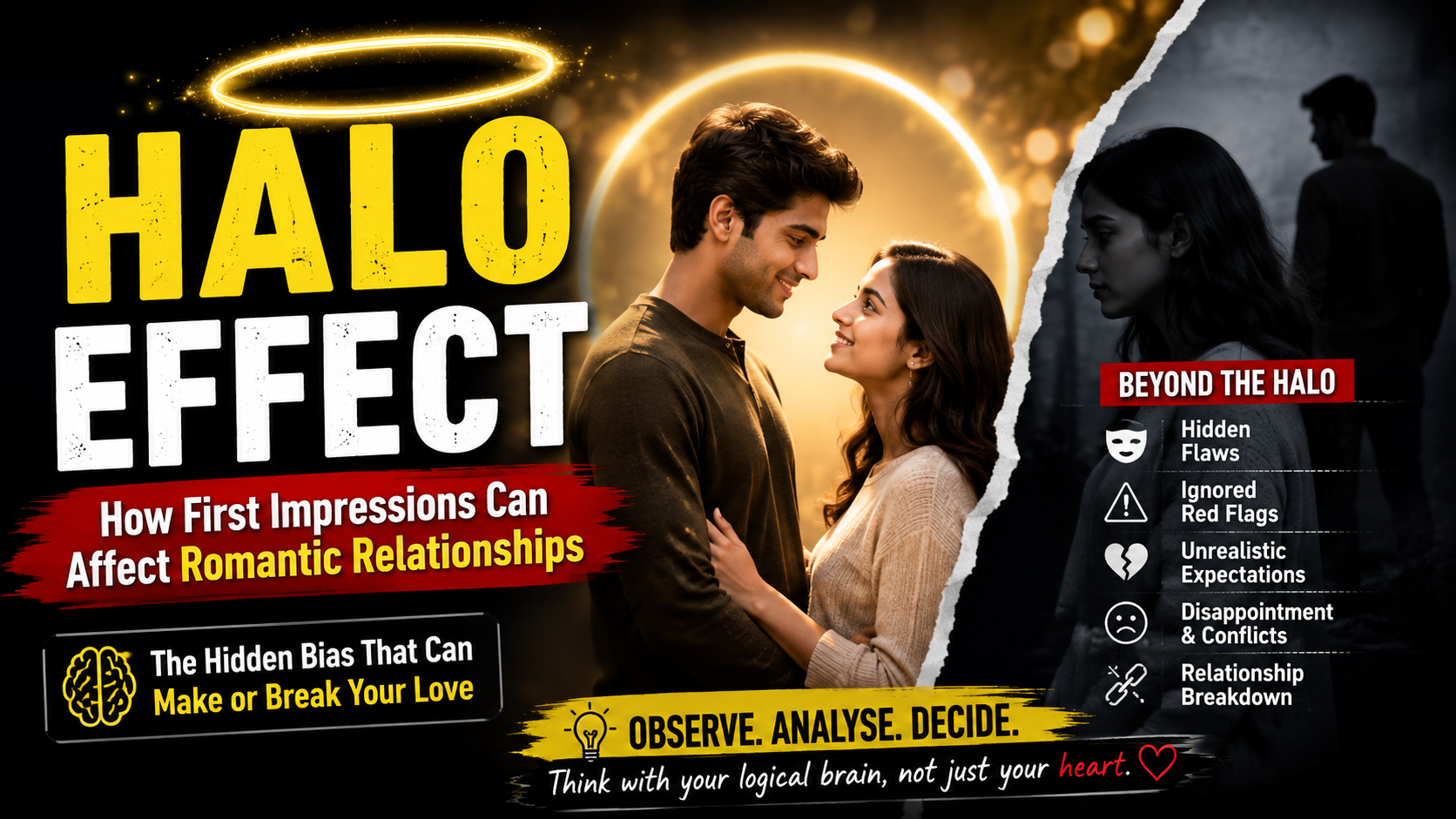
What Is the Halo Effect?
Imagine meeting someone who is physically attractive. You immediately feel attracted to them and develop an impression that they are a “good person”. Their appearance becomes the first positive quality you notice.
However, attractiveness tells you very little about their honesty, emotional maturity, empathy, responsibility, or behaviour towards others.
Yet the mind may unconsciously connect these unrelated qualities. Because the person looks attractive or behaves charmingly, we may find it difficult to notice other warning signs.
The same process can happen with confidence, intelligence, communication skills, social status, wealth or professional success.
Examples Beyond Romantic Relationships
The halo effect is not limited to love and attraction.
For example, a student who gets excellent marks in one subject may be considered highly intelligent in every subject, even when there is no evidence for it.
Similarly, someone who speaks English confidently may appear highly knowledgeable. But fluency in communication does not automatically mean that the person has expertise in every area.
A successful businessperson may appear trustworthy simply because they are successful. Again, success and honesty are separate qualities that require separate evaluation.
Our brain often connects these qualities because it wants to make quick judgments.
How Does the Halo Effect Affect Love?
The effect can become particularly important during the early stages of romantic relationships.
A person may focus strongly on one attractive quality—appearance, confidence, humour, kindness, financial success or emotional attention—and unconsciously create a much larger positive image of the person.
This can contribute to what people commonly describe as love at first sight. Attraction itself is not a problem. The problem begins when attraction becomes a substitute for observation.
We may start ignoring behaviours that do not fit our positive image.
Red flags may seem “small” or may be explained away:
“He is controlling because he cares.”
“She gets angry because she loves me.”
“He lied only because he was protecting me.”
The positive image can make us reinterpret concerning behaviour in a favourable way.
When Reality Becomes Visible
As the relationship progresses, we naturally learn more about each other.
The qualities that were ignored during the initial attraction may become increasingly visible. At this stage, unrealistic expectations can create disappointment, resentment and repeated conflicts.
Sometimes the person has not changed dramatically. Instead, our perception has changed because we are finally seeing more of the complete person.
In some relationships, this can even move from the halo effect to the opposite extreme—the “horn effect”, where one negative quality starts influencing our entire perception of the person.
How Can You Protect Yourself?
You do not need to stop yourself from feeling attracted to someone. Instead, give yourself enough time to understand the person beyond the first impression.
When you experience a strong positive feeling, ask yourself:
“Why do I feel this way about this person?”
Then ask:
“What evidence do I actually have for this belief?”
Observe how the person behaves with different people, handles disagreement, accepts responsibility, responds to boundaries and treats people who cannot offer them anything in return.
Most importantly, separate different qualities instead of combining them into one overall judgment.
A person can be attractive but dishonest. They can be confident but irresponsible. They can be successful but emotionally immature. They can be caring towards you but still have unhealthy relationship patterns.
Think Beyond the First Impression
The halo effect can influence romantic relationships, friendships, business relationships and even professional decisions.
Strong emotions are not necessarily wrong. But strong emotions can make us judge quickly.
So, when you suddenly feel that someone is “perfect”, pause for a moment.
Feel the attraction, but also observe.
Think, analyse and allow your logical brain to participate before making major decisions.
A first impression can introduce you to a person, but only time and observation can help you understand them.