There are many discussions and comments online about whether a person with Borderline Personality Disorder (BPD) can suddenly leave one relationship and move into another. The answer is yes, it can happen, but relationship switching itself is not a separate diagnostic symptom of BPD.
To understand this properly, we first need to understand how BPD can affect romantic relationships.
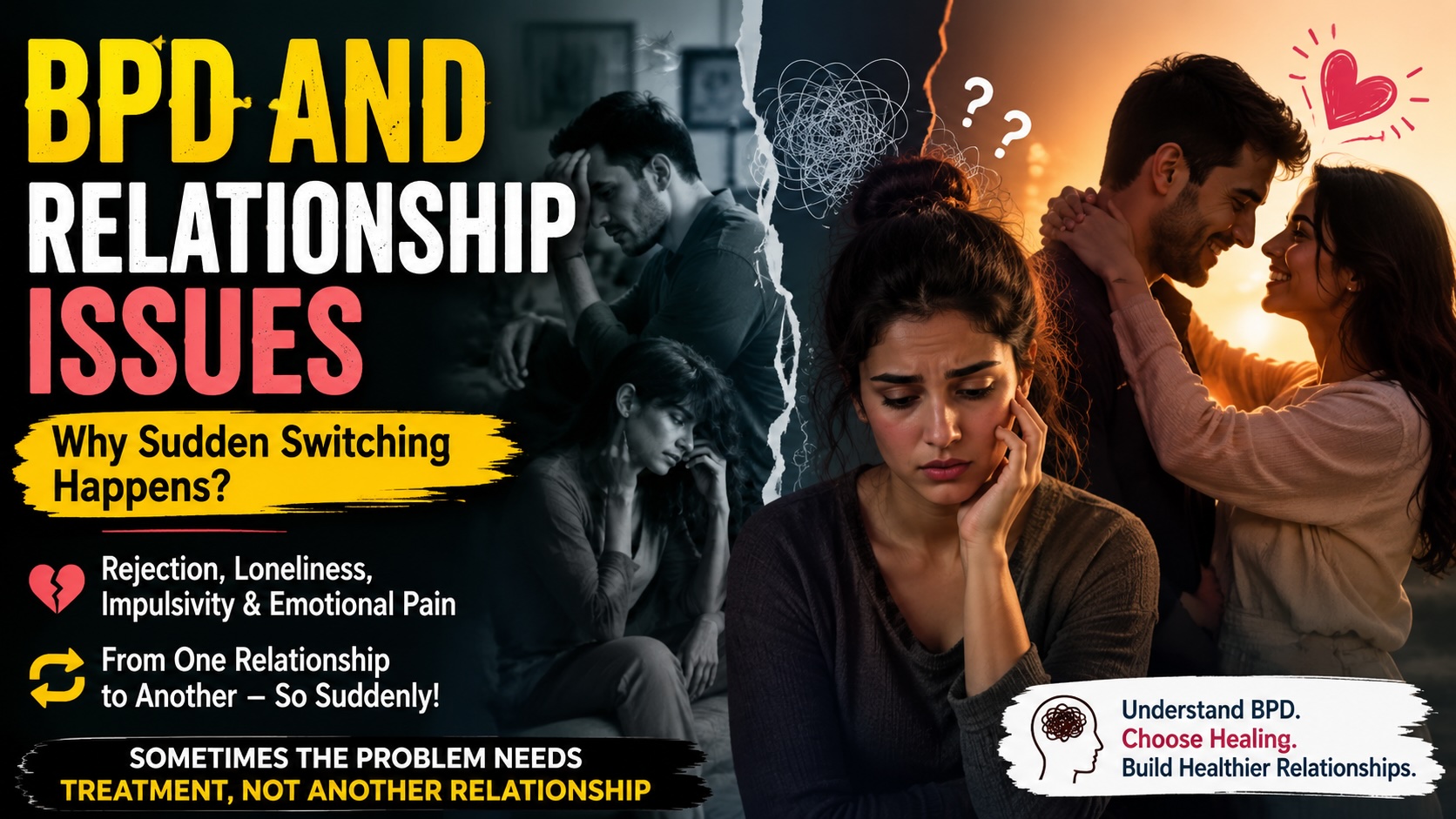
BPD and Relationship Issues: Common Relationship-Related Symptoms
People with BPD can experience intense sensitivity to rejection, abandonment and feeling emotionally unimportant. They may strongly feel that their partner is ignoring them, does not give them enough priority, or is going to leave them. These perceptions can produce intense sadness, anger, anxiety and emotional distress.
Another important feature is unstable and intense romantic relationships. Feelings towards a partner can change rapidly, sometimes moving from extreme closeness and idealisation to anger, disappointment or rejection. BPD can also involve an unstable sense of self, chronic emptiness, intense anger and dissociative experiences.
Impulsivity is another important feature. It may involve potentially harmful behaviours such as excessive spending, substance use, unsafe sexual behaviour, reckless driving and other risky actions. Recurrent suicidal behaviour and self-harm can also occur.
However, not everyone with BPD will experience all these symptoms. Symptoms vary in their severity, frequency and duration, and diagnosis requires a broader clinical assessment rather than identifying one particular behaviour.
Does BPD Cause Sudden Relationship Switching?
This is where the subject becomes more complicated.
Impulsivity can contribute to a sudden relationship decision. A person experiencing intense emotional distress may act quickly instead of tolerating the discomfort and thinking through the long-term consequences.
For example:
Rejection or loneliness → emotional distress → attention from another person → intense emotional attachment → impulsive decision → sudden relationship change
Therefore, sudden switching can occur as part of a larger pattern of emotional instability and impulsivity.
But there is an important point: a person does not necessarily switch relationships simply because of BPD.
Can a Third Person Influence the Switch?
Sometimes, another person becomes an important factor.
A person who already feels lonely, rejected or emotionally neglected may become particularly vulnerable to someone who provides intense attention, validation and emotional support. If that new person understands the individual’s emotional weaknesses and deliberately uses them to create attachment, manipulation can further accelerate the transition.
This does not mean that every new relationship is manipulative. Genuine attraction can also occur.
However, the person who interacts with someone for one or two hours may see only the emotionally positive side of that individual. The existing partner, who spends much more time with them, may also be dealing with their anger, insecurity, emotional fluctuations, conflicts and other difficulties.
As a result, the new person may initially appear much better than the existing partner.
Why Does the New Relationship Sometimes Feel Perfect?
During the early stage, the new relationship can provide intense attention, excitement, validation and emotional relief.
The person may gradually focus more on the existing partner’s weaknesses while focusing on the new person’s positive qualities. This can create a strong contrast:
“My current partner is the problem.”
“This new person understands me.”
The transition may therefore appear extremely sudden to the people around them.
Importantly, this does not prove that the new person is a manipulator. That conclusion requires evidence from the person’s actual behaviour.
What Happens After the Switch?
The new relationship may initially feel extremely satisfying. The person may experience relief, excitement and a strong sense of being understood.
But if the underlying emotional difficulties remain untreated, the same patterns can eventually appear in the new relationship too.
The problem may not have been only the previous partner.
If rejection sensitivity, emotional dysregulation, impulsivity, unstable attachment or chronic emptiness remain unchanged, changing the person may not change the underlying psychological pattern.
This is why BPD and relationship issues should be understood through the person’s emotional and behavioural patterns rather than through one dramatic relationship event.
Not Everyone With BPD Leaves Their Partner
There is another side of the story that is often missed on social media.
People sometimes assume that a person with BPD will simply abandon their partner and move to someone else. In reality, many people experiencing severe abandonment fears may do the opposite: they may desperately try to prevent the relationship from ending, repeatedly seek reassurance, apologise, plead or make intense efforts to maintain the relationship.
Therefore, relationship instability does not always mean leaving. It can also mean repeatedly trying to hold on to a relationship while experiencing intense emotional distress.
Sometimes the Problem Needs Treatment, Not Another Relationship
A new relationship may provide temporary emotional relief, but it cannot automatically resolve underlying psychological difficulties.
If a person repeatedly experiences intense rejection sensitivity, emotional instability, impulsivity, self-harm, suicidal behaviour, chronic emptiness or unstable relationships, professional psychological assessment and appropriate treatment may be more useful than simply changing partners.
BPD is treatable, and evidence-based psychotherapies can help people regulate emotions, reduce self-destructive behaviours and develop healthier relationships.
Sometimes, what a person needs is not another love story—but psychological treatment for the difficulties they are carrying from one relationship to another.