
In our previous article, we discussed the Halo Effect, where one positive quality can make us view an entire person positively. The Horn Effect works almost in the opposite direction.
The horn effect is a cognitive bias where one negative impression of a person starts influencing how we interpret their other behaviours. Once this negative image becomes strong, even neutral or positive actions may appear negative.
Importantly, this bias does not apply only to people. It can also influence how we judge a brand, organisation, place, community, or any other group.
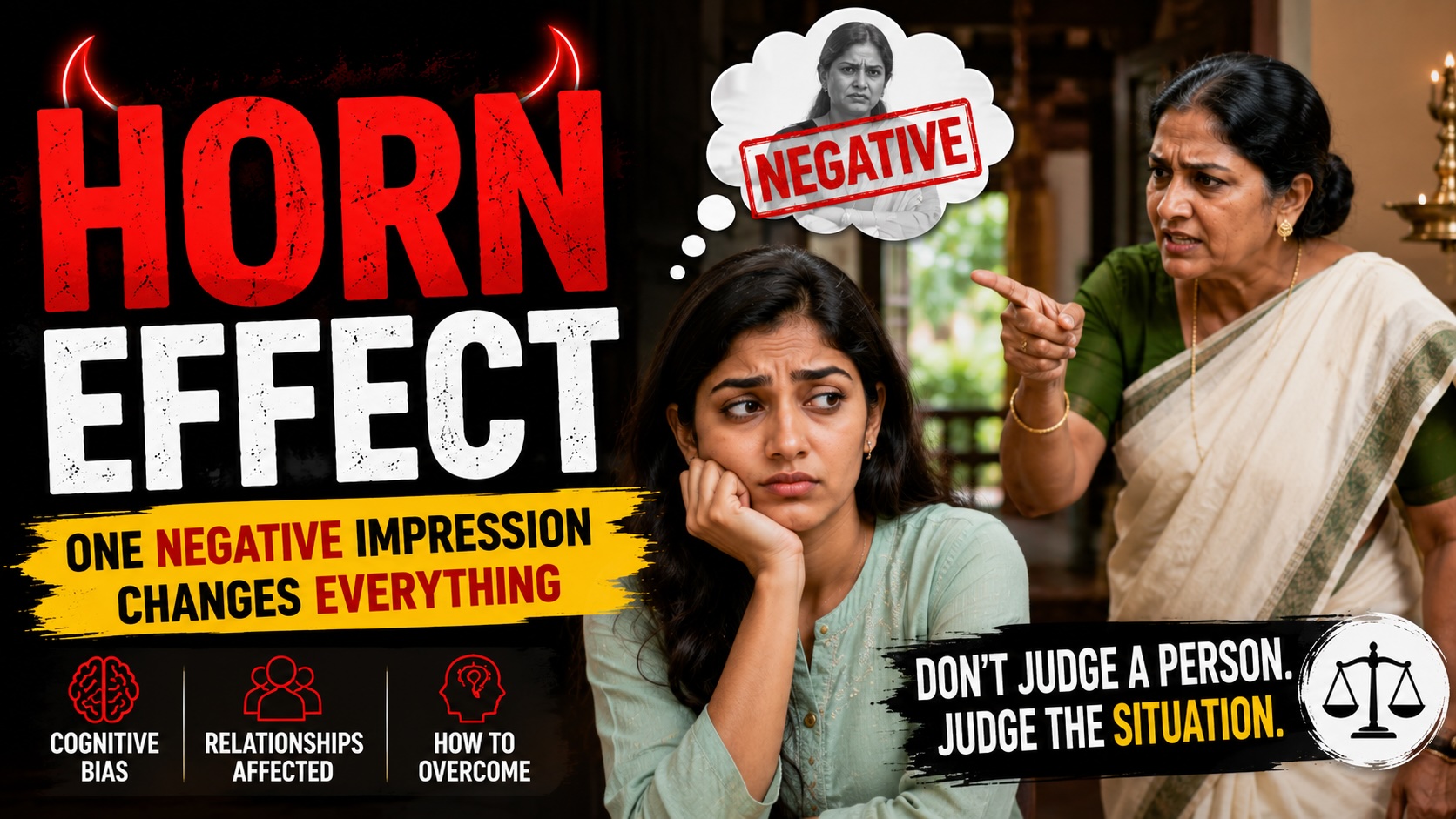
How Does the Horn Effect Work?
Imagine that someone makes a mistake during your first interaction with them. You may initially feel disappointed. However, if your mind starts creating a general conclusion such as “This person is irresponsible”, that conclusion can influence your future observations.
Later, when the person makes another decision, speaks in a particular tone, or remains silent, you may interpret everything negatively.
Their voice modulation, facial expression, body language and tone may suddenly appear disrespectful or intentional, even when the same behaviour might have looked neutral before.
The horn effect can therefore influence not only what we see but also how we interpret what we see.
Horn Effect in Mother-in-Law and Daughter-in-Law Relationships
This bias can become particularly visible in some family relationships.
Suppose a mother-in-law develops a negative impression of her daughter-in-law after one disagreement. Later, when the daughter-in-law remains quiet, she may think, “She is deliberately ignoring me.”
If she speaks in a particular tone, it may feel like disrespect. If she makes an independent decision, it may appear as though she does not value the family.
The same process can happen from the other side as well. A daughter-in-law who has experienced criticism may start interpreting many later comments from her mother-in-law negatively.
Sometimes there may be genuine problems in the relationship. The issue arises when one negative experience starts colouring every subsequent interaction.
Horn Effect in Romantic Relationships
Consider a husband who lies once about an important matter. Trust may naturally reduce after such an incident.
However, if the mind concludes, “He always lies,” every future statement may become suspicious.
Similarly, one serious mistake by a partner may lead someone to interpret every later action as evidence that the partner does not care.
Here, it becomes important to distinguish between reasonable caution based on repeated behaviour and a cognitive bias based on an overly generalised conclusion.
Horn Effect at the Workplace
The same pattern can occur professionally.
Imagine an employee making an important mistake. If a manager starts believing that the employee is generally careless, subsequent work may receive greater scrutiny.
Even good performance may receive less attention, while small mistakes become highly noticeable.
This can affect employee confidence, workplace relationships and opportunities for growth.
Why Does Our Mind Do This?
Our brain naturally pays attention to information that appears threatening or negative. When we strongly want to avoid something unpleasant, we may become more hypervigilant towards signs of that problem.
Previous emotional experiences can also influence what we notice and how we interpret new situations.
Gradually, the mind may start searching for evidence that supports the existing negative impression. This can strengthen the pattern further.
How Can We Reduce the Horn Effect?
The goal is not to ignore genuine problems or become blindly positive.
Instead, try to separate the person from the situation.
Ask yourself:
“Am I judging this person, or am I judging what happened in this particular situation?”
A person can make a good decision today and a bad decision tomorrow. The same person can show kindness in one situation and make a mistake in another.
Instead of judging the entire person based on one moment, evaluate the specific behaviour, situation and pattern over time.
Give Your Mind More Space
The horn effect can influence relationships, workplaces and many everyday decisions.
Moving away from automatic negative judgments does not mean becoming less careful. It means allowing your mind to consider the complete picture.
Don’t judge the whole person for one moment. Evaluate the moment, understand the situation and look at the pattern.