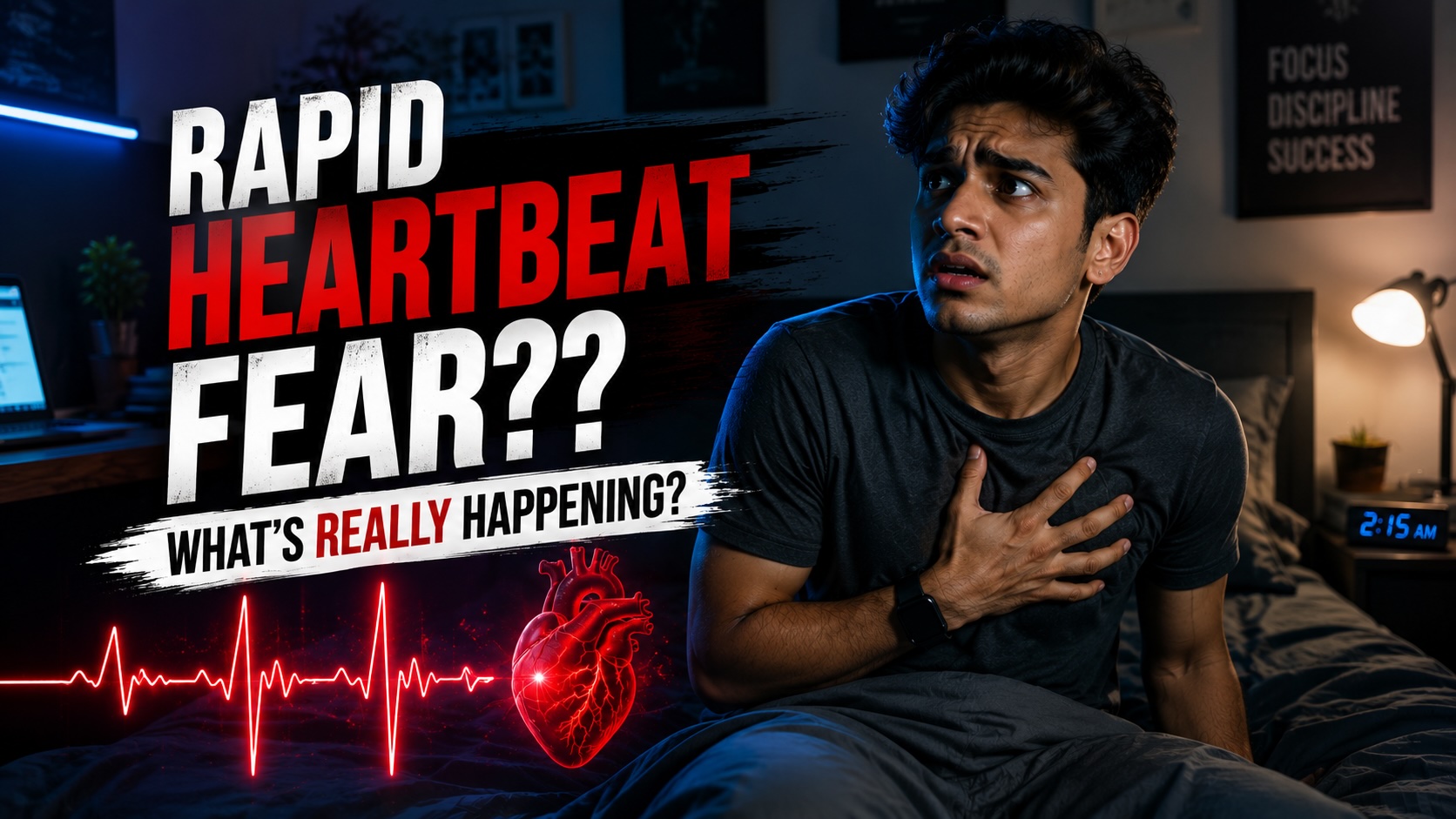
For many people with cardiophobia, the sudden awareness of a faster heartbeat can become a powerful trigger. A normal increase in heart rate may go unnoticed by someone without cardiophobia. However, a person who already fears a heart attack may immediately interpret the same sensation as a sign of danger.
This is where heartbeat increasing anxiety can become a self-reinforcing cycle.
Why Does the Heartbeat Trigger Fear?
Heart rate can increase for many ordinary reasons, even when you are not exercising. Stress, caffeine, lack of sleep, dehydration, standing up suddenly, emotional stimulation and normal changes in the autonomic nervous system can all influence heart rate.
A person without cardiophobia may notice the change and simply move on.
Someone with cardiophobia may think:
“Something is wrong with my heart.”
“Am I having a heart attack?”
“What if I am going to die?”
These thoughts increase the person’s perception of danger. The brain then activates the body’s stress response.
The Heartbeat–Fear–Adrenaline Cycle
When the brain perceives danger, the sympathetic nervous system becomes more active and adrenaline contributes to several physical changes, including an increase in heart rate.
The cycle can therefore look like this:
Heartbeat increases → Fear → Adrenaline → Heartbeat increases further → More fear
This is an important part of heartbeat increasing anxiety.
The person may then think, “I knew something was wrong. My heartbeat is getting even faster.” The increased heartbeat becomes perceived as evidence that the original fear was correct.
Why Do Symptoms Start Feeling So Real?
Once the fear cycle begins, attention becomes strongly focused on the body. The person may start monitoring the heartbeat, chest, breathing and other sensations.
The brain may also bring to mind symptoms that the person has previously learned about from doctors, social media, Google searches or other people’s experiences.
The important point is that the physical sensations can be real even when the interpretation is inaccurate.
Anxiety can produce genuine physical sensations. The problem is not that the person is imagining everything. Rather, the brain may be interpreting a real bodily sensation as evidence of an immediate catastrophe.
How Is Cardiophobia Treated?
Psychological treatment aims to change the fear response and the catastrophic interpretation of bodily sensations. Depending on the individual case, therapy may include psychoeducation, cognitive restructuring, exposure-based techniques and interoceptive exposure, where safe bodily sensations associated with anxiety are experienced without immediately escaping or seeking reassurance.
The goal is not simply to tell someone, “Don’t be afraid.” The person needs opportunities to learn that a bodily sensation does not automatically mean danger.
This can gradually weaken the association between heartbeat and catastrophic fear.
When Should You Seek Medical Attention?
Cardiophobia should not be used to dismiss genuine cardiac symptoms. New, severe, persistent or concerning chest pain, fainting, significant breathlessness or other acute symptoms require appropriate medical assessment.
Once medical causes have been appropriately evaluated, psychological treatment can address the persistent fear and hypervigilance.
If you experience heartbeat increasing anxiety, understanding the fear cycle can be an important first step. In the next article, we can look at an important question: why can your heartbeat suddenly increase even when you are sitting quietly and doing no physical activity?