
Retroactive jealousy refers to intense jealousy or emotional distress about a current partner’s past romantic, sexual, or emotional experiences. The previous partner may no longer be part of the relationship, yet thoughts about that person can continue to create jealousy in the present relationship.
A person may repeatedly wonder, “What might they have done together?”, “Did my partner enjoy those moments more?”, or “Was their previous partner better than me?” These thoughts can gradually become repetitive and difficult to control.
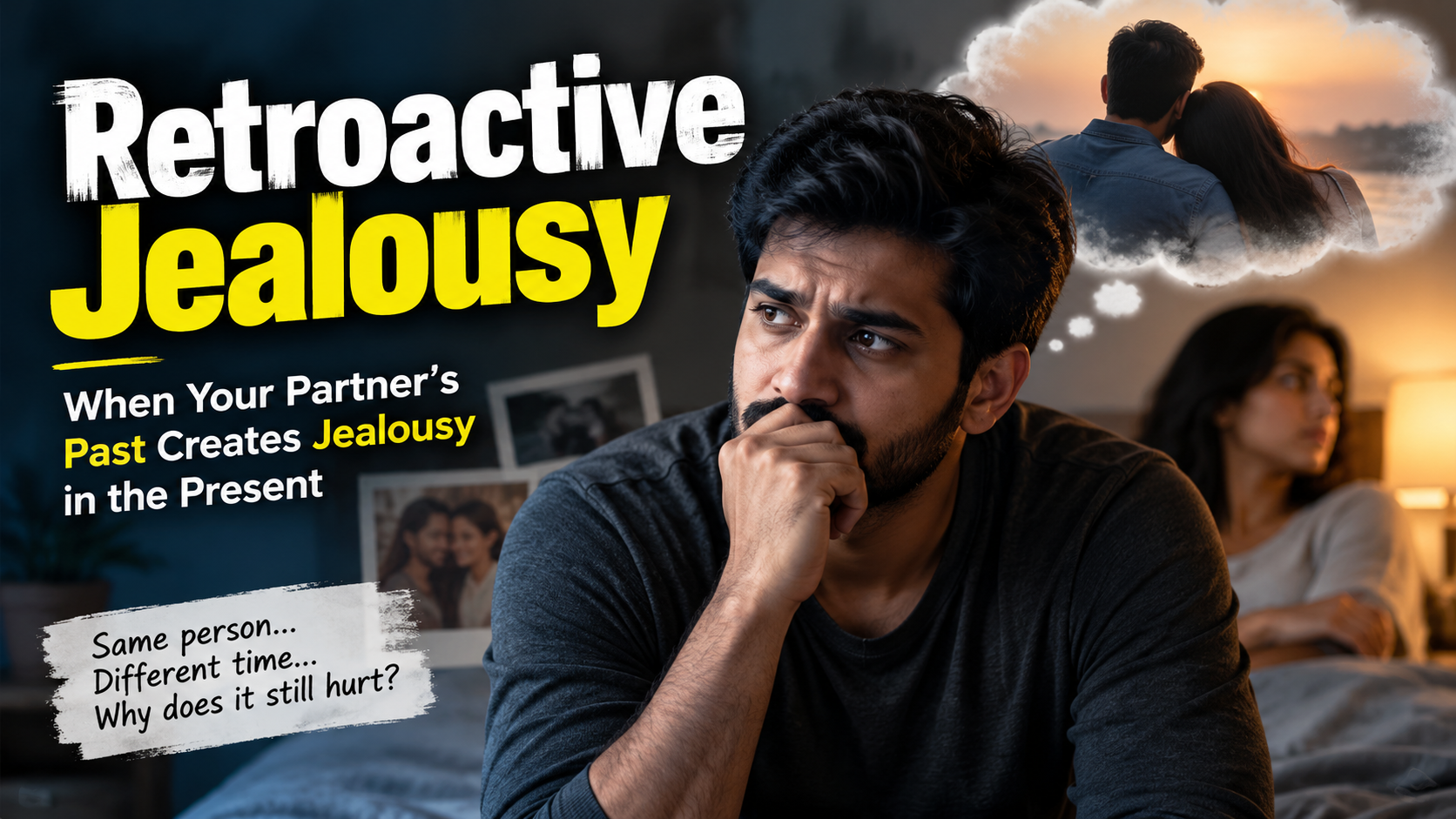
What Does Retroactive Jealousy Feel Like?
The main emotion in retroactive jealousy is jealousy related to the partner’s past. The person may continuously think about the feelings their partner had in a previous relationship, the moments they enjoyed together, or their previous physical and emotional intimacy.
The mind may create imaginary situations and repeatedly analyse them. Even though nothing is happening in the present relationship, the emotional reaction can feel very real.
Common Symptoms of Retroactive Jealousy
Some common signs include:
- Continuously thinking about a partner’s previous relationship
- Wanting to know extremely detailed information about the past
- Comparing yourself with the ex-partner romantically, physically, emotionally, or sexually
- Feeling proud when you believe you are better in some area, but jealous when you think you are not
- Feeling that you may not be as good or attractive as the previous partner
- Visualising possible situations from the partner’s past and mentally replaying them
- Checking old photographs, social-media profiles, or other information about the ex
- Repeatedly asking the partner questions about their past even after receiving an answer
- Asking questions such as, “Do you love me more than your ex?” or “Am I better than your ex?”
- Feeling anger towards the partner about things that happened before the current relationship
- Worrying that the partner may return to the previous relationship
- Avoiding places, situations, songs, photographs, or other reminders associated with the partner’s past
Why Does It Become a Problem?
Having an occasional thought about a partner’s past does not automatically mean retroactive jealousy. It becomes more concerning when the same jealousy and comparison cycle repeatedly returns and becomes difficult to control.
For some people, comparison and uncertainty become important triggers. They may continuously seek information or reassurance to feel secure. However, reassurance may provide relief only temporarily, after which another question or comparison can appear.
If this pattern continues, it can affect communication, trust, emotional intimacy, and overall relationship satisfaction.
RJ Can Affect Both Men and Women
Retroactive jealousy can occur in both men and women. It is not determined simply by gender. The underlying factors may differ from person to person and can include insecurity, comparison, fear of rejection, difficulty tolerating uncertainty, or repetitive thinking patterns.
If thoughts about a partner’s past are becoming persistent, distressing, or difficult to control, psychological consultation can help identify the underlying pattern and develop healthier ways of managing jealousy, comparison, and insecurity.
The goal is not to erase the partner’s past, but to reduce the emotional control that the past has over the present relationship.