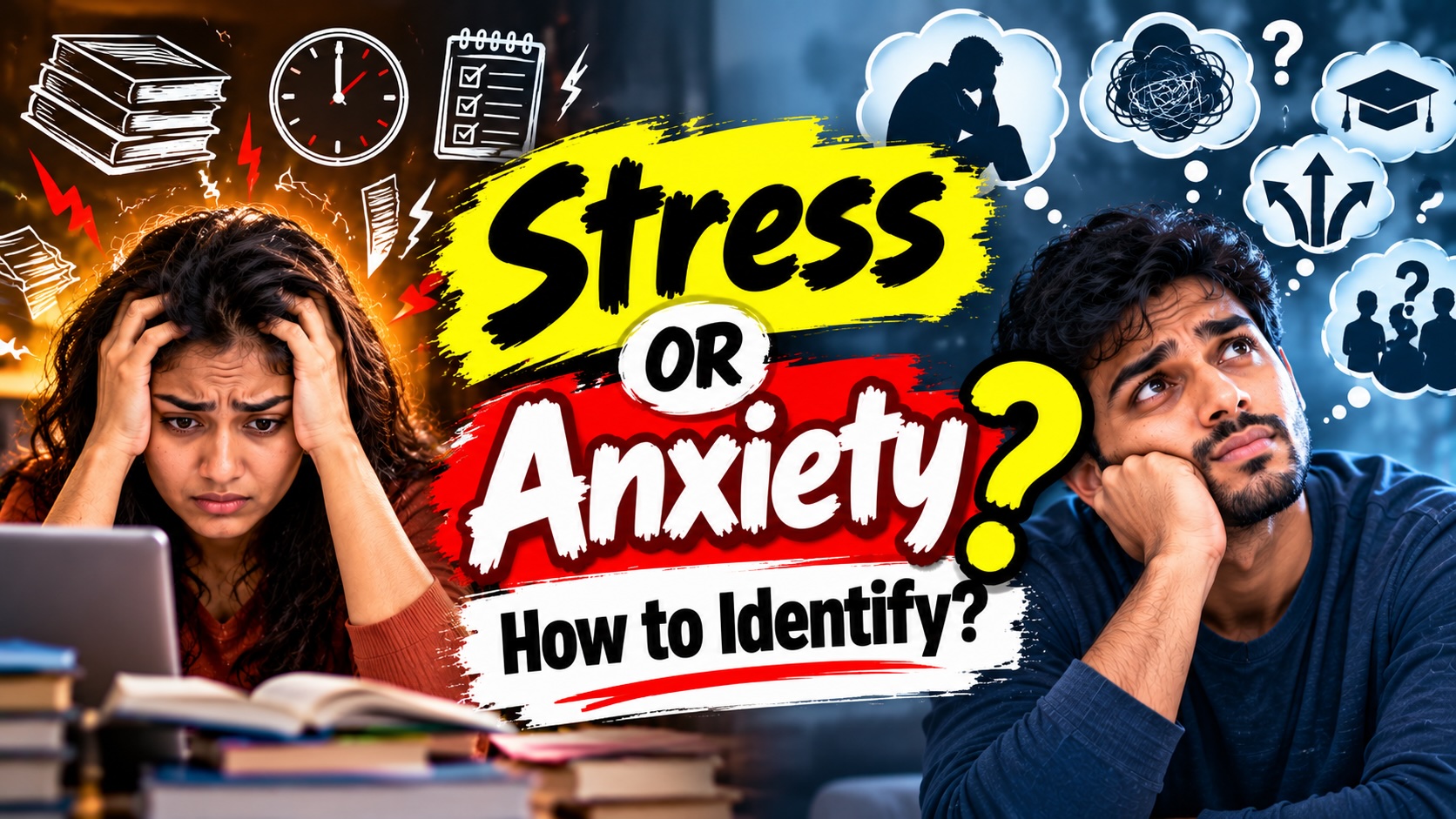
Stress and anxiety are common experiences in modern life. People often use these terms interchangeably because both can affect our emotions, thoughts and physical health. However, understanding the Symptoms of Stress and Anxiety can help us recognise our emotional responses and choose suitable coping strategies.
What Are the Physical Symptoms of Stress and Anxiety?
Stress and anxiety can produce very similar physical symptoms. These include:
- Increased heartbeat or palpitations
- Faster breathing
- Sweating and trembling
- Muscle tension
- Changes in body temperature or sensations of warmth and chills
- Headaches and dizziness
- Sleep disturbances
- Stomach discomfort
These symptoms occur partly because the body activates its stress response when it perceives a demand or threat. However, physical symptoms alone cannot reliably distinguish stress from anxiety.
Emotional Symptoms of Stress and Anxiety
The emotional symptoms also overlap considerably. A person may experience fear, shame, anger, frustration, nervousness or a feeling of being overwhelmed.
For example, a student preparing for an examination may feel afraid of failing, embarrassed about poor performance or frustrated by the amount of work remaining.
The important distinction does not lie in the emotion itself. Instead, we should examine the person’s thinking patterns, the circumstances that trigger the response and how long the symptoms persist.
Stress vs Anxiety: The Difference in Thinking Patterns
1. Stress Focuses on Current Demands
Stress often develops when a person perceives that a situation demands more effort or resources than they can currently manage.
Consider a student preparing for an examination. Their thoughts might include:
- “There is too much left to study.”
- “I cannot finish these chapters in time.”
- “I am struggling to understand this topic.”
- “I cannot remember what I studied.”
These thoughts focus mainly on present demands and the difficulty of completing tasks.
The central thought is: “I have too much to handle right now.”
2. Anxiety Focuses on Anticipated Threats
Anxiety often involves anticipating possible negative outcomes, even when they have not occurred.
The same student might think:
- “What if I forget everything during the examination?”
- “What if I fail?”
- “How will I face my family and friends?”
- “What will happen to my future?”
These thoughts focus on uncertainty and possible future threats rather than only the work that remains.
The central thought is: “What if something goes wrong?”
3. When Do Stress and Anxiety Occur?
Stress often relates to an identifiable demand and may decrease when the situation ends or becomes manageable. For example, examination stress may peak before the exam and ease afterwards.
Anxiety can occur before, during or after an event. It may also arise without an immediate external trigger and continue even after the original problem has ended.
However, this distinction is not absolute. Stress can persist, and anxiety can develop in response to a specific situation. Both can occur together.
How to Manage the Symptoms of Stress and Anxiety
Breathing exercises, grounding techniques, meditation, regular physical activity and adequate sleep can help people manage stress and anxiety. Identifying unhelpful thoughts and developing practical coping skills can also improve emotional regulation.
For persistent or severe symptoms, professional assessment can help identify the underlying difficulties and guide appropriate treatment. Cognitive Behavioural Therapy (CBT) is one established psychological approach. Hypnotherapy may also support some people with relaxation and emotional coping, although its effectiveness varies by condition and individual.
Conclusion
Understanding the Symptoms of Stress and Anxiety requires looking beyond physical sensations and negative emotions. Stress often centres on current demands, while anxiety frequently involves anticipated threats and uncertainty. Learning to recognise these patterns can help you respond more effectively and seek appropriate support when necessary.