
Have you ever struggled to concentrate on even a simple task? Do you frequently forget where you kept your keys, why you entered a room, or what you were about to do? Sometimes, you may remember something only after making an effort. At other times, you may find yourself doing things automatically, without paying proper attention.
You may also feel that your thinking has become unusually slow, like a machine running at a lower speed. Even a small task or decision may leave you mentally exhausted. These experiences can be associated with brain fog, a term that describes a feeling of reduced mental clarity.
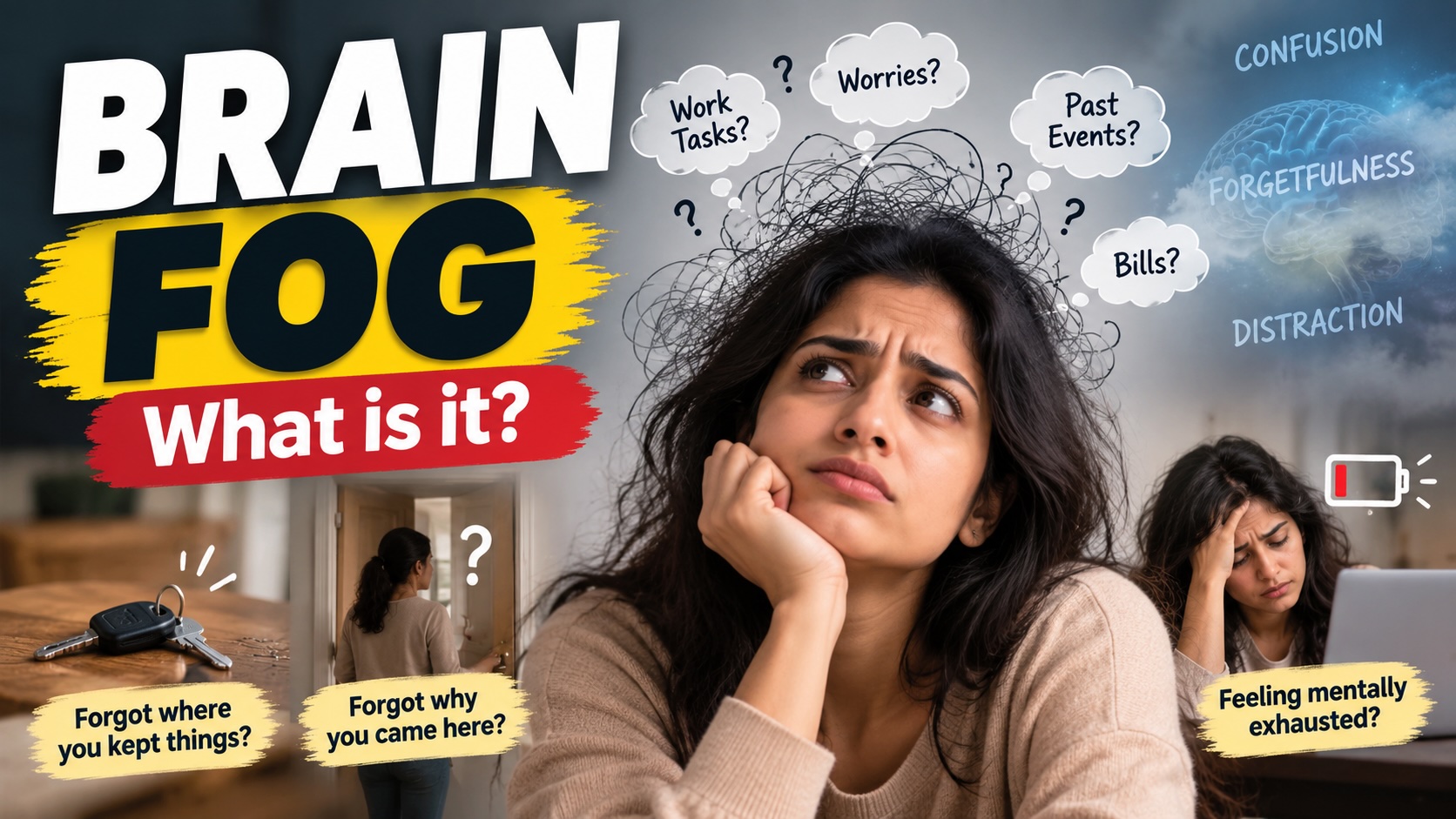
What Are the Symptoms of Brain Fog?
Brain fog can affect attention, memory, thinking speed and decision-making. Common symptoms include:
- Difficulty concentrating on work or studies.
- Forgetting where you kept things or what you intended to do.
- Feeling absent-minded while performing routine activities.
- Taking longer than usual to understand information or make decisions.
- Experiencing mental fatigue after simple tasks.
- Struggling to organise thoughts or decide what to do next.
These symptoms can have several causes. Brain fog itself is not a medical diagnosis, and persistent symptoms deserve proper assessment.
What Causes Brain Fog?
Several factors can contribute to brain fog, including excessive stress, anxiety, insufficient sleep, mental exhaustion and medication side effects. Medical conditions and nutritional deficiencies can also affect cognitive functioning.
When you manage multiple responsibilities while worrying about other problems, your attention may become divided. This can make it harder to concentrate, remember information and complete tasks efficiently.
How Can Background Thoughts Contribute to Brain Fog?
Consider a person who manages several clients at work. While handling these responsibilities, the person may also worry about a disagreement at home or an upcoming EMI payment.
Even when the person focuses on work, these concerns may repeatedly enter their awareness or occupy attention in the background. If this pattern continues alongside inadequate sleep and ongoing stress, the person may experience increasing mental fatigue and difficulty concentrating.
Think of your attention as a camera trying to focus on two objects simultaneously. When the camera cannot focus properly on either object, the resulting image becomes unclear. Similarly, competing thoughts and demands can interfere with effective attention.
However, not every case of brain fog results from background thoughts. Sleep problems, physical health conditions and other factors may also play an important role.
Can Hypnotherapy Help With Brain Fog?
Hypnotherapy may help some people manage stress, practise relaxation and respond differently to anxiety-related thoughts. During a session, a trained practitioner may use focused attention, guided imagery and therapeutic suggestions to help the person explore concerns and develop more helpful responses.
For example, a person who feels mentally overloaded may learn to identify recurring worries, decide which concerns need immediate attention and schedule time for those that can wait. This approach can help organise thoughts and reduce unnecessary mental pressure.
However, research specifically supporting hypnotherapy as a treatment for brain fog remains limited. Hypnotherapy should not replace medical assessment or treatment when symptoms persist.
A Practical Way to Improve Mental Clarity
The next time you feel absent-minded, pause and ask yourself, “What is occupying my mind right now?”
Write down your pending tasks, worries and unresolved decisions. Identify what needs attention immediately and what you can address later. Then return your attention to the task in front of you.
Maintain a regular sleep schedule, take appropriate breaks and seek professional help if brain fog continues or interferes with daily life.
Conclusion
Brain fog can make everyday activities feel unexpectedly difficult. Understanding the factors affecting your attention, memory and mental energy can help you choose appropriate solutions. Rather than forcing yourself to concentrate harder, start by identifying the cause, organising your mental workload and giving your brain adequate recovery.
For support with stress management and emotional concerns, you may contact a qualified professional. Follow this page for more practical psychology tips and techniques.