
Understanding the Need for Subtle Observation
Children often express inner emotions through small, unconscious actions rather than words. Traditional assessments may miss these subtle cues. The Silent Pen Projection Test offers an innovative, nonverbal method that complements established tools by observing how a child uses a pen during enforced silence to reveal stress, coping style, and temperament. This approach is practical for clinicians, school counselors, and researchers seeking an additional psychological test for children that is quick and nonthreatening.
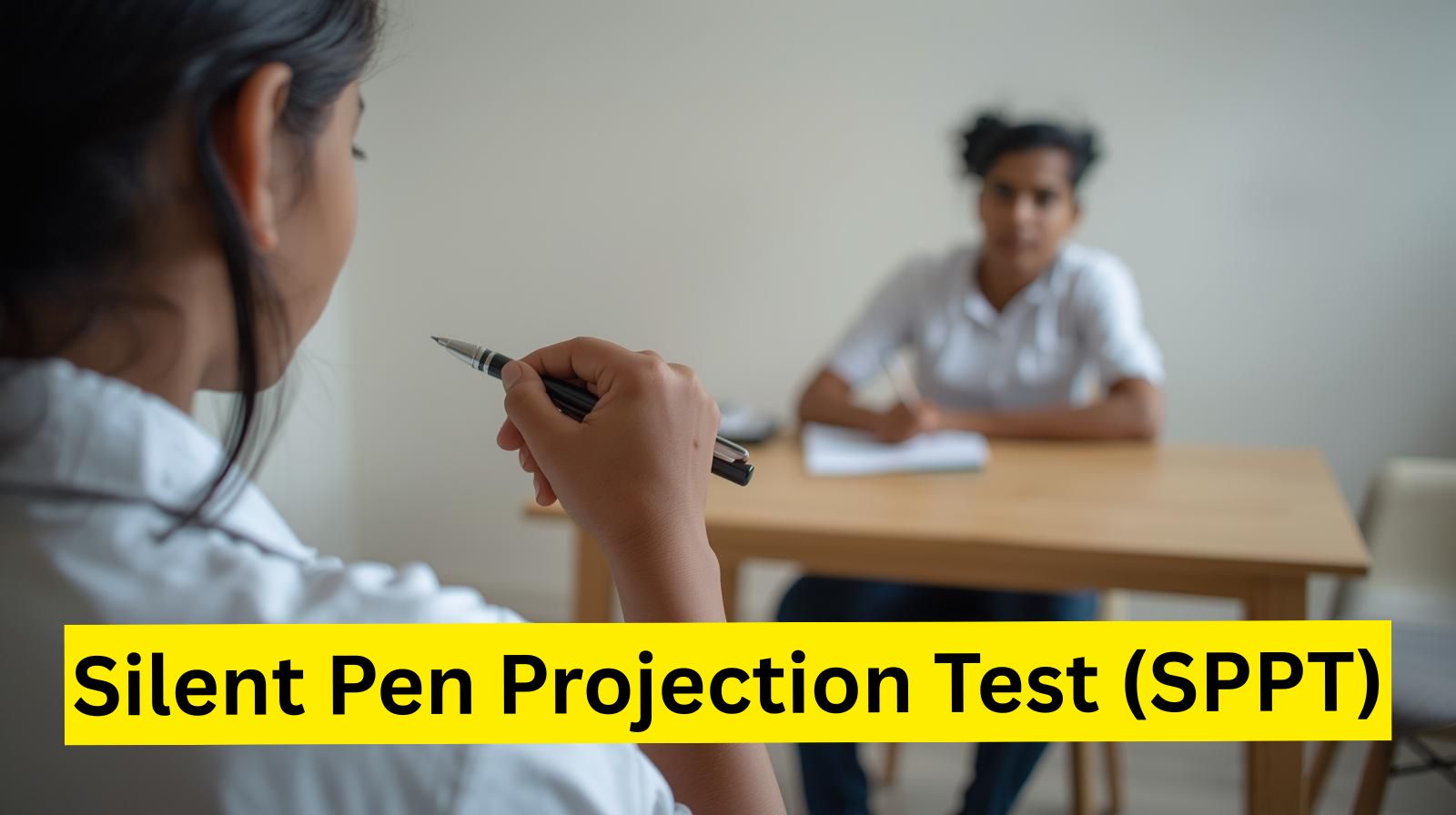
What Is the Silent Pen Projection Test?
The test involves asking a child to sit quietly for five minutes while holding a simple pen and blank paper. The psychologist observes micro-behaviors — pen-biting, twirling, tapping, squeezing, drawing, or complete stillness — and records frequency, duration, and context. Each behavior serves as a projective expression: for example, pen-biting may indicate tension or oral fixation, while twirling may indicate restless energy or curiosity.
How It Works Psychologically
When asked to remain silent and still, a child’s body seeks outlets for suppressed impulses. The pen becomes a symbolic channel for internal states. The test is rooted in projective principles similar to drawing or storytelling tasks: neutral objects or instructions elicit behaviors through which unconscious feelings are projected. Observed pen behaviors, combined with posture and facial cues, provide a richer, multidimensional view of the child’s emotional state than single-method assessments alone.
Procedure (step-by-step)
-
Prepare room: quiet, neutral, well-lit space with minimal distractions.
-
Materials: identical simple pens, blank white paper, observation sheet, timer.
-
Consent: explain to caregiver and obtain permission; build brief rapport (1–2 minutes).
-
Instructions: calmly say, “Sit here for five minutes. You can hold this pen; you don’t have to draw or talk. Just sit quietly.” Do not demonstrate.
-
Positioning: seat child comfortably facing observer or at 90° to reduce direct pressure; place paper in front.
-
Start timer and observe silently for 5 minutes; avoid intervening or prompting.
-
Record baseline: note initial reaction in first 10–30 seconds (acceptance, refusal, visible anxiety).
-
Systematic coding: mark occurrences and durations of predefined behaviors (biting, twirling, tapping, squeezing, drawing, stillness).
-
Note context: posture, facial tension, breathing, and eye contact alongside pen behaviors.
-
Debrief: thank child, remove pen, offer neutral positive statement; record immediate impressions within 2–5 minutes.
Applications and Limitations
Use in clinical screening, school emotional checks, and therapy rapport-building. It is an adjunctive psychological test for children, not a standalone diagnostic tool—interpret within broader assessment and cultural context.
Why It’s a Breakthrough
Fast, noninvasive, and revealing, the Silent Pen Projection Test turns a simple object into a window on a child’s inner world, making it a valuable addition to modern child psychology practice.