The Mahabharata is not just an epic about war. It is a profound exploration of the human mind, emotions, choices, and destiny. When we look at the story through the lens of Mahabharata psychology, we see that each character represents a specific psychological pattern that still exists today. This ancient text becomes a guide to understand our inner conflicts, relationships, and moral struggles.
Arjuna’s Conflict: The Battle Within
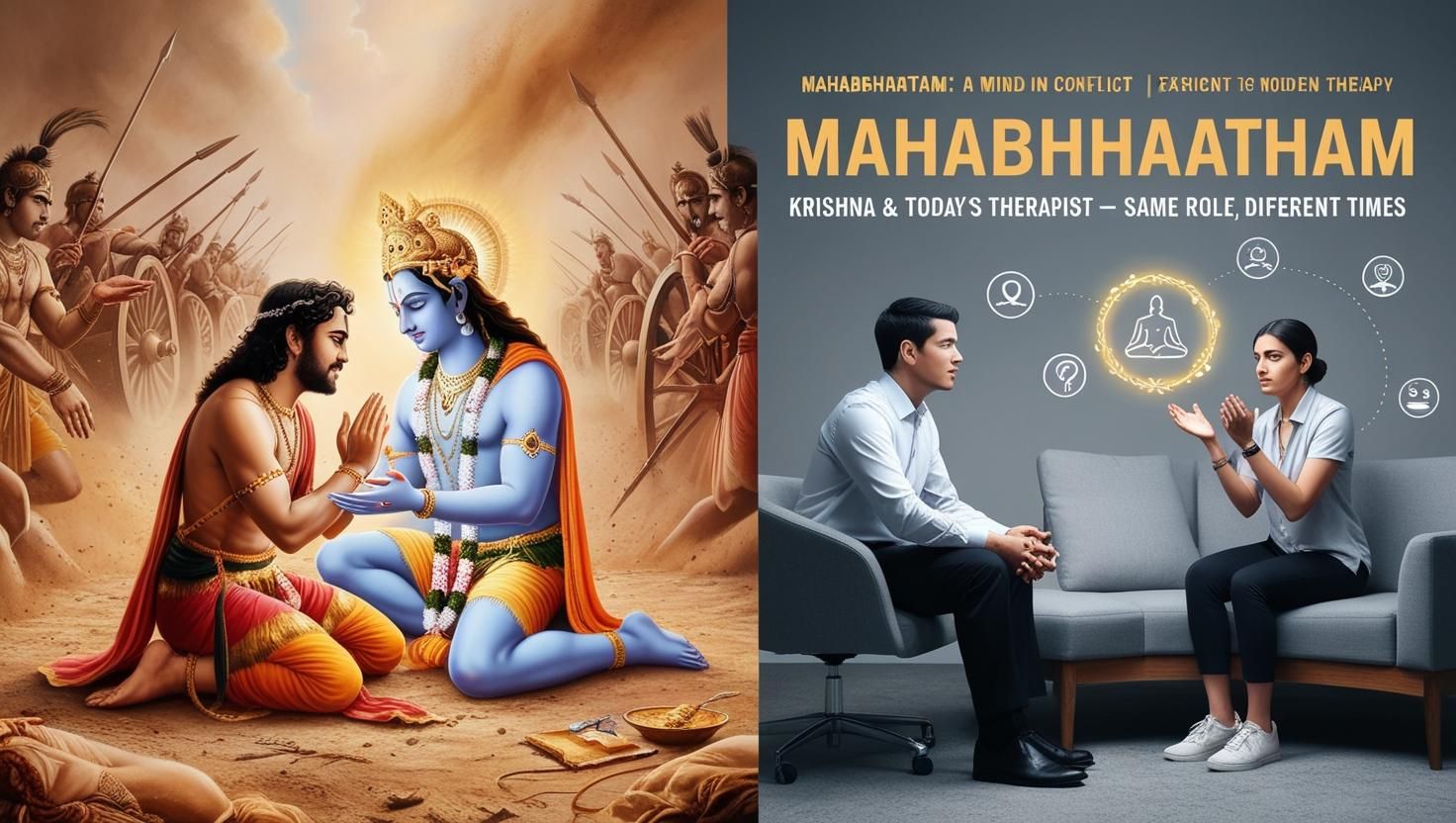
Arjuna’s breakdown before the war reflects a common modern issue: emotional confusion and identity crisis. He stands between duty and emotional attachment. In Mahabharata psychology, this moment symbolizes every person’s struggle between what feels right and what must be done. Krishna guides Arjuna to understand his inner truth, reminding us that clarity comes from connecting with our higher awareness, not from external situations.
The Ego of Duryodhana
Duryodhana represents the ego that refuses to accept truth. He knows what is right, yet he chooses power and superiority. This psychological pattern appears when the mind is controlled by jealousy, insecurity, and comparison. Mahabharata psychology teaches that ego-based decisions lead to inner suffering and destruction of peace. Recognizing ego is the first step to emotional maturity.
Karna’s Wound of Rejection
Karna’s entire life is shaped by rejection and identity pain. He strives to prove his worth to the world. Many people today carry the same emotional wound: “Am I enough?” Karna’s story reflects how deep emotional hurt can influence life choices, friendships, and self-belief. Healing begins when we accept ourselves instead of seeking validation from others.
Krishna’s Guidance as Inner Wisdom
In the epic, Krishna is not just a divine figure. He symbolizes the voice of wisdom inside every human being. When confusion, stress, and anxiety take over, this inner voice becomes weak. Practicing awareness, meditation, and self-reflection helps us reconnect with this inner guide. This is the core insight of Mahabharata psychology: the real teacher is within.
Conclusion
The Mahabharata is a mirror that reflects our psychological patterns. Arjuna teaches us courage to face inner conflict, Duryodhana reminds us of the danger of ego, Karna shows the pain of emotional wounds, and Krishna represents inner clarity. By understanding these characters, we understand ourselves.