In recent years, awareness around emotional well-being has grown rapidly. However, many people still confuse mental health with mental illness. These terms are related, yet they have very different meanings. Understanding the difference helps in improving our emotional resilience and seeking help when needed. This article explains mental health vs mental illness in a clear and practical way.
What is Mental Health?
Mental health refers to our emotional, psychological, and social well-being. It influences how we think, feel, and behave in everyday life. Good mental health does not mean feeling happy all the time. Instead, it means having the capacity to handle stress, adapt to challenges, and maintain meaningful relationships.
Key signs of good mental health:
-
You can manage daily stress effectively.
-
Your emotions feel balanced and understandable.
-
You maintain stable relationships.
-
You can make decisions with clarity.
Everyone has mental health, just like everyone has physical health.
What is Mental Illness?
Mental illness refers to diagnosable psychological conditions that affect how a person thinks, feels, or behaves. These conditions can disrupt daily functioning and relationships. Examples include depression, anxiety disorders, bipolar disorder, schizophrenia, and OCD.
Mental illness is not a sign of weakness. It is a health condition that may arise due to:
-
Genetics
-
Trauma or emotional stress
-
Brain chemistry imbalances
-
Lifestyle and environmental factors
Treatment often involves therapy, counseling, lifestyle changes, or in some cases, medication.
Mental Health vs Mental Illness: The Core Difference
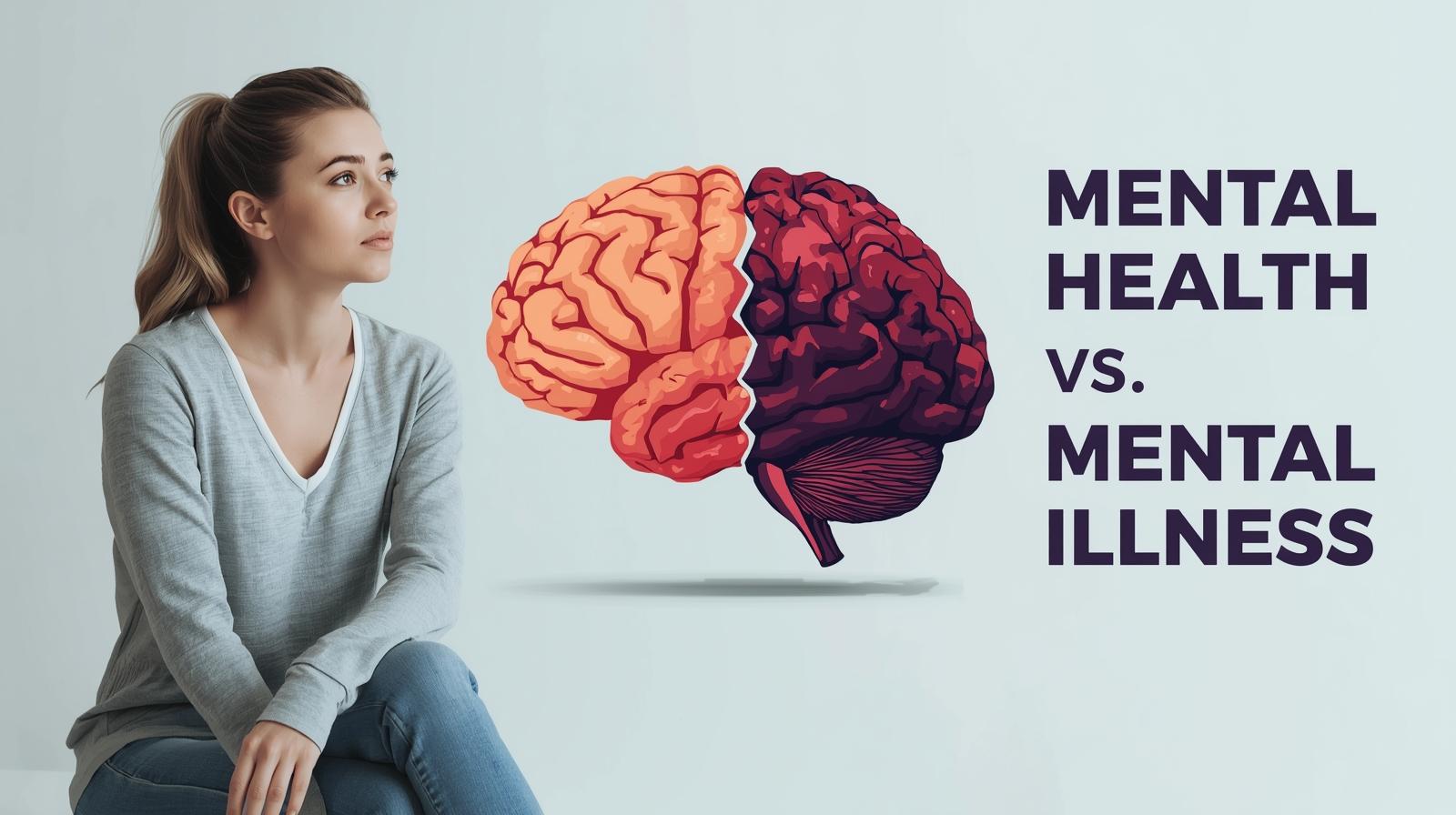
To understand mental health vs mental illness, think of it like physical well-being. Everyone has physical health, but not everyone has a physical illness. Similarly, everyone has mental health, but not everyone has a mental illness.
| Mental Health | Mental Illness |
|---|---|
| A state of emotional and psychological well-being | A diagnosable condition affecting thoughts, emotions, or behavior |
| Present in every human being | Present only in some individuals |
| Can be improved through lifestyle and emotional skills | May require professional treatment |
| Focuses on thriving | Focuses on managing symptoms and recovery |
Why This Difference Matters
Understanding the difference helps reduce stigma. When people realize that mental illness is not a character flaw, they are more likely to seek support early. Also, by maintaining good mental health habits, we can prevent emotional burnout and increase life satisfaction.