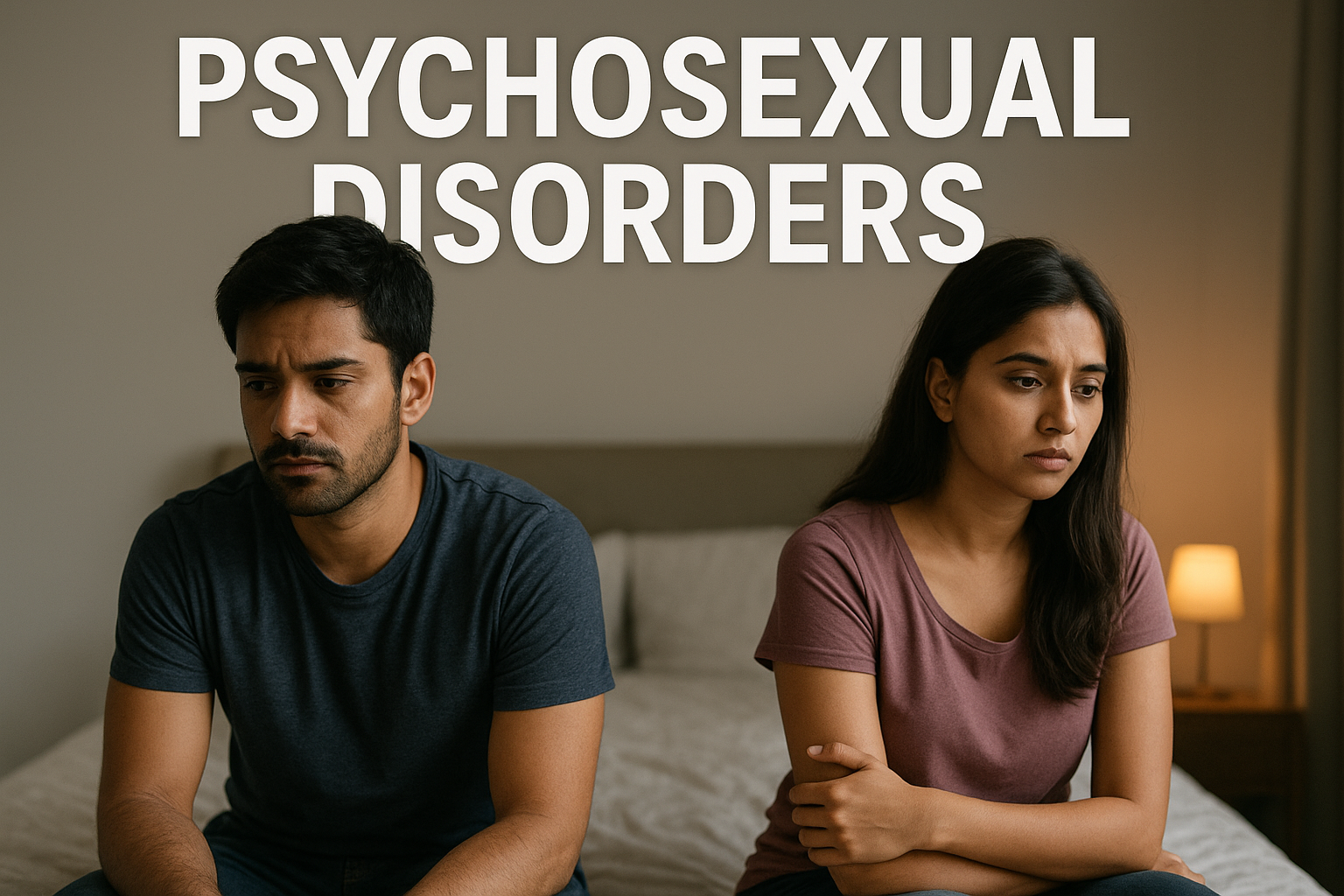
Psychosexual Disorders affect a person’s ability to experience healthy desire, arousal, intimacy, or satisfaction in sexual relationships. These conditions are deeply connected to emotional conflicts, subconscious beliefs, past experiences, and relationship patterns. Understanding them helps individuals and couples rebuild confidence, trust, and intimacy.
What Are Psychosexual Disorders?
Psychosexual Disorders refer to psychological conditions that disturb sexual desire, arousal, orgasm, identity, or behaviour. These issues are not only physical. They often arise from unresolved emotions, trauma, self-image conflicts, or fear-based beliefs. Many people silently struggle because they do not realise their problem has a psychological origin and can be treated effectively.
Types of Psychosexual Disorders
1. Sexual Desire and Arousal Issues
Low sexual desire, difficulty becoming aroused, or fear-based avoidance of intimacy are common in both men and women. Sexual desire may drop due to stress, emotional suppression, past relationship failures, or internalised shame. When the mind associates sex with fear, judgment, or rejection, the body naturally shuts down its sexual response.
2. Orgasmic Difficulties
Some individuals struggle to reach orgasm or feel blocked during the experience. This often happens when anxiety, overstimulation of thoughts, or performance pressure interferes with the natural flow of pleasure. Many women experience this due to emotional insecurity, while some men face it because of performance fears.
3. Pain-Related Psychosexual Disorders
Conditions such as vaginismus or pain during intercourse usually develop due to subconscious fear, trauma, strict upbringing, or negative beliefs about sex. These problems affect emotional bonding and lead to frustration within relationships when left unaddressed.
4. Paraphilic Interests
Certain people develop unusual or intense sexual interests that cause distress or disrupt normal functioning. These arise from early conditioning, emotional deprivation, power dynamics, or childhood associations. Only when these behaviours create harm or distress do they become Psychosexual Disorders.
Common Psychological Causes
Emotional and Subconscious Roots
The subconscious mind plays a major role in most psychosexual problems. Early experiences, strict parenting, embarrassment, and guilt often create deep emotional blocks. Many individuals carry beliefs such as “I am not good enough,” “Sex is shameful,” or “I may get rejected.” These beliefs silently influence sexual confidence and intimacy.
Relationship Factors
Unresolved conflicts, lack of communication, and emotional disconnection can significantly affect sexual functioning. When couples suppress emotions or avoid difficult conversations, sexual desire naturally drops.
Self-Image and Identity Conflicts
Body image issues, negative self-talk, or confusion about sexual identity can trigger anxiety and reduce sexual satisfaction.
Effective Treatment Options
Psychosexual Disorders can be treated successfully through psychological therapies. Methods like subconscious reprogramming, hypnotherapy, trauma healing, and communication training help individuals break emotional blocks. When couples learn to connect emotionally, trust and desire naturally return. Early intervention brings faster recovery and improves relationship quality.
https://my.clevelandclinic.org/health/diseases/9121-sexual-dysfunction