
Understanding Orgasm vs Emotional Trauma gives deep insight into how the human mind works. Both experiences create strong, permanent memories, but for completely opposite emotional reasons. One is rooted in fear and survival, while the other is built on pleasure and bonding. Yet the brain uses the same memory mechanism to store both.
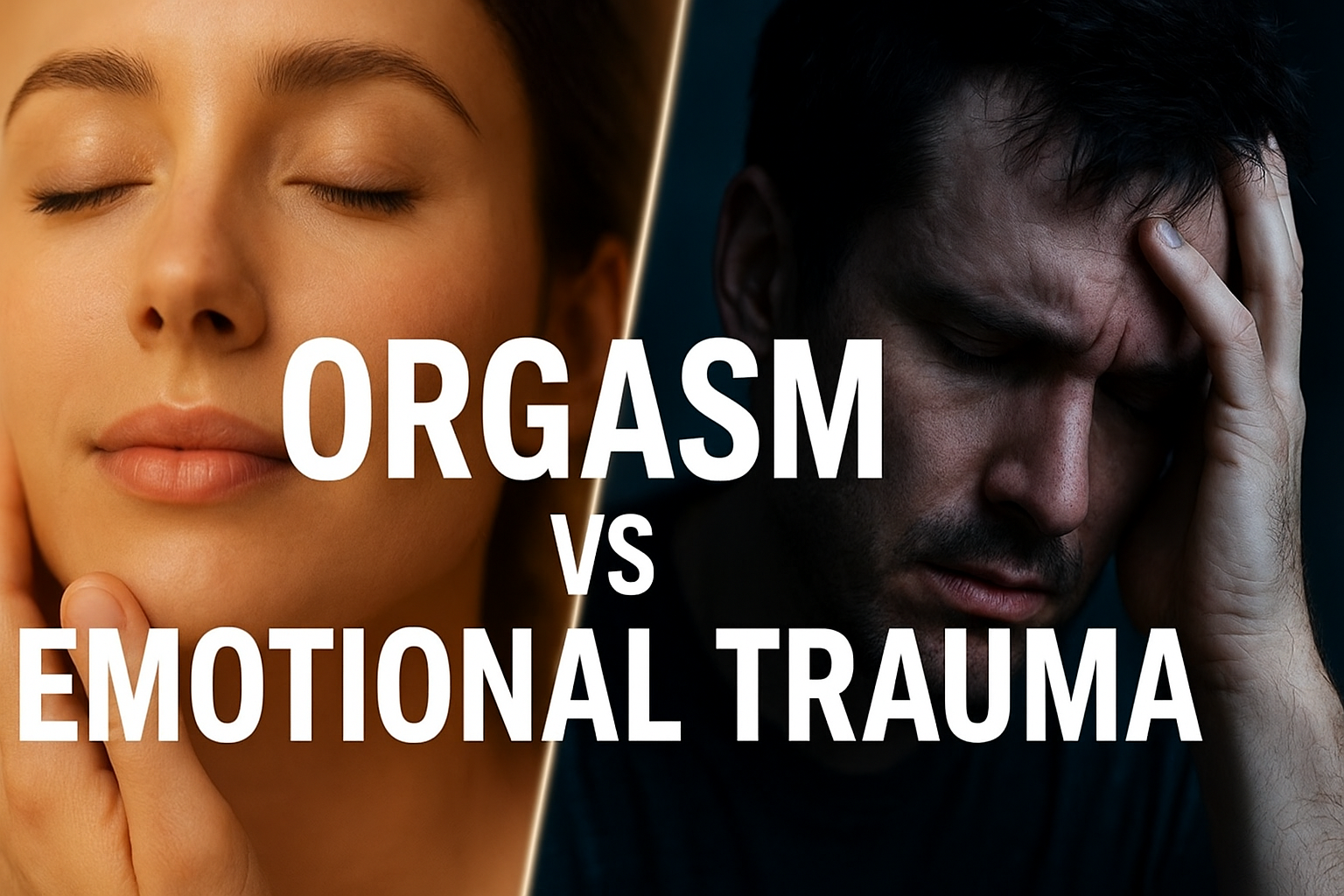
How Emotional Trauma Gets Imprinted
In trauma, a sudden event overwhelms the mind through the five senses. Vision and sound usually dominate the experience. The brain receives a high-intensity negative emotional surge that the body cannot handle. This overload activates the survival system: fight, flight, or freeze.
The amygdala marks the incident as dangerous, while the hippocampus stores it permanently for future protection. Because the emotional peak is extremely strong, the mind keeps this memory alive to prevent similar harm.
This is why traumatic memories feel sharp, vivid, and intrusive. They are recorded for survival, not for choice.
How Orgasm Creates a Positive Memory
When we look at Orgasm vs Emotional Trauma, orgasm represents the opposite side of the same emotional mechanism. Here, the mind receives a positive emotional surge instead of a negative one. Touch becomes the dominant sense, supported by sight, sound, smell, and even taste.
During orgasm, the brain releases dopamine, oxytocin, and endorphins. These chemicals relax the body and create a feeling of emotional openness. The experience also leads to tiredness, similar to trauma, but for a positive reason: the nervous system reaches its peak and then relaxes deeply.
Because the emotional intensity is high, the memory becomes permanent. This is why the first orgasm strongly influences future arousal patterns, bonding, and sexual preferences.
Why Both Memories Stay for Life
The brain stores intense emotional peaks permanently—whether positive or negative. This is the core link between Orgasm vs Emotional Trauma. The mind does not care if an event is pleasurable or painful. It only cares about intensity.
- Trauma leads to fear-based memories.
- Orgasm creates pleasure-based memories.
Both shape future behaviours, reactions, and emotional responses. Trauma builds avoidance, hypervigilance, and fear. Orgasm builds desire, connection, and bonding.
This understanding explains why intense emotional experiences influence long-term personality and relationship patterns.
The Psychological Opposites
Trauma is fast, shocking, and overwhelming.
Orgasm is gradual, pleasurable, and releasing.
But both end in a sensory-emotional peak that the brain marks as important.
This makes both experiences crucial for understanding human emotions and subconscious programming.
Recognising this pattern helps psychologists, therapists, and individuals heal trauma and build healthier emotional experiences.