
Lucid dreaming often becomes controversial on social media. Some people dismiss it because they cannot experience it. Others claim it as truth only because it happened to them. Psychology does not work on either extreme. What matters is why a phenomenon occurs and whether science can verify it. When we look at lucid dreaming evidence, neuroscience gives us clear answers.

What Is Lucid Dreaming?
Lucid dreaming refers to a condition where a person becomes aware that they are dreaming while still in the dream. This awareness happens during the REM (Rapid Eye Movement) stage of sleep. In some cases, the dreamer can also modify or influence the dream to a limited extent.
Lucid dreaming is not imagination, fantasy, or waking thought. It happens during sleep and follows measurable brain patterns.
REM Sleep and Brain Activity
REM sleep usually occurs in the fourth stage of the sleep cycle. During normal REM sleep, the brain areas responsible for logic, self-monitoring, and reality testing remain less active. The prefrontal cortex, which handles conscious awareness and reasoning, stays mostly offline.
Lucid dreaming changes this pattern.

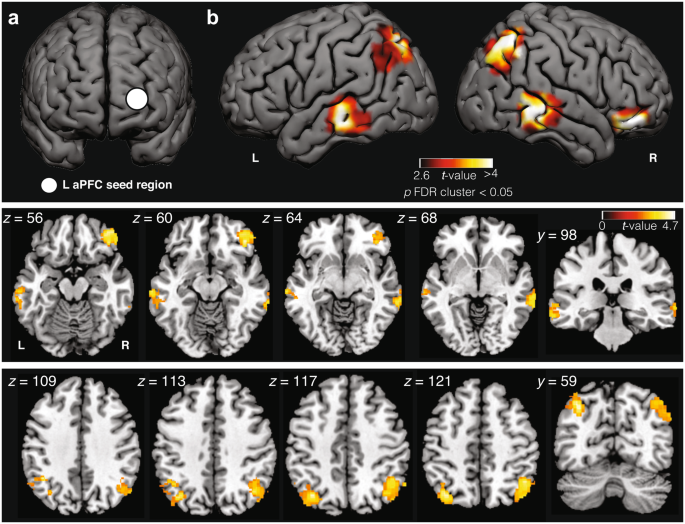
Neuroscience studies using EEG and fMRI clearly show that during lucid dreams, parts of the prefrontal cortex reactivate. This activation explains why the dreamer knows the experience is a dream while remaining asleep. This is the core scientific basis behind lucid dreaming evidence.
Experimental Proof from Sleep Laboratories
The strongest early experimental work came from Stephen LaBerge. In controlled sleep lab settings, trained lucid dreamers used pre-decided eye movement signals during REM sleep. Eye muscles remain active in REM sleep, so researchers could detect these signals on monitoring equipment.
These experiments confirmed three things at the same time:
-
The person was asleep
-
The person was dreaming
-
The person was consciously aware
This ruled out imagination, waking thought, and false reporting.
EEG, fMRI, and Gamma Waves
Later studies strengthened lucid dreaming evidence further. EEG recordings showed increased gamma wave activity, which is associated with awareness and conscious processing. fMRI scans demonstrated increased communication between brain regions that normally stay disconnected during REM sleep.
A landmark study by Ursula Voss showed that lucid dreaming represents a hybrid state between waking consciousness and REM sleep. This finding appeared in peer-reviewed neuroscience journals, not interviews or social media claims.
Why Personal Experience Is Not Enough
A crucial psychological rule applies here.
If one person cannot experience lucid dreaming, it does not make it false.
If another person experiences it, that alone does not make it scientific evidence.
Lucid dreaming evidence comes from repeatable, measurable brain data, not individual belief.
Final Scientific Conclusion
Neuroscience clearly confirms one fact:
Lucid dreaming equals conscious awareness inside the REM stage of sleep.
This state has been proven using EEG, fMRI, and controlled sleep laboratory experiments. Whether a person can train it easily or not varies with fear, anxiety, and emotional regulation. Science does not depend on who said it first. It depends on why it happens and how the brain behaves.