
Many people search for answers when they experience a bad taste without reason. They visit dentists, ENT specialists, and physicians. Tests come normal. Reports show nothing. Still, the unpleasant taste continues. This situation can create anxiety, emotional weakness, and constant discomfort.
If medical causes are ruled out, psychology may offer important answers.
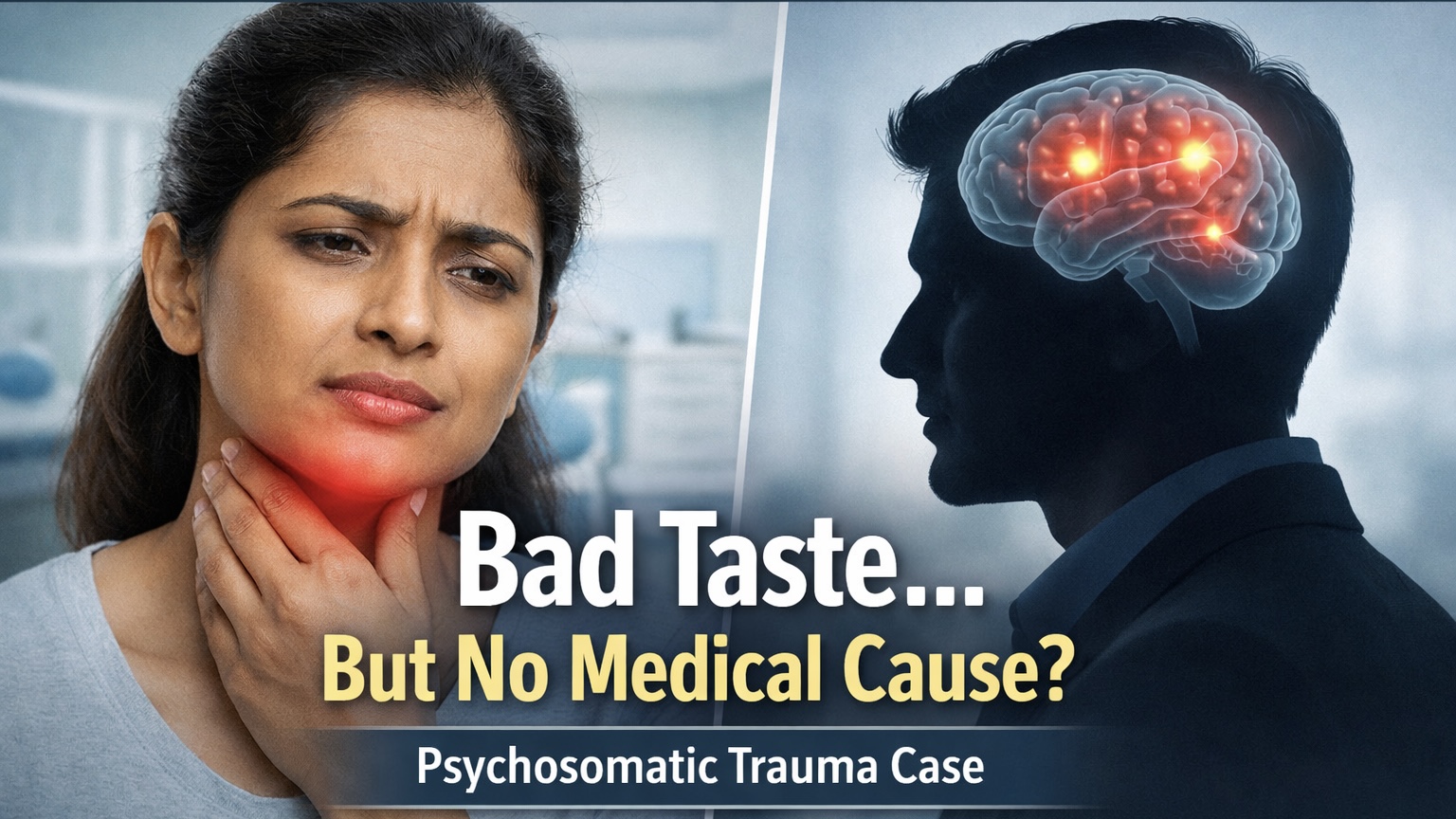
Understanding Bad Taste Without Reason
A bad taste without reason does not always come from infection or dental problems. Sometimes, the body expresses unresolved emotional experiences through physical sensations. The brain and body work together. When stress or trauma remains unprocessed, the body may communicate it through symptoms.
Research shows that the brain stores traumatic experiences not only as stories but also as sensations. Smell, taste, touch, and body feelings can carry emotional memory. In such cases, the symptom feels real because it is real — but the source lies in emotional memory rather than physical disease.
How Trauma Connects With Taste Sensation
The brain areas responsible for emotion and body sensation work closely. The amygdala processes fear and emotional threat. The insular cortex processes disgust and taste sensation. When someone experiences a disturbing or boundary-violating event, the brain may link emotion and taste together.
Years later, the person may feel a bad taste without reason, even if they do not consciously remember the event. This is called a sensory or somatic flashback. The mind may forget, but the body remembers.
In many trauma cases, individuals suppress memories to protect themselves. Suppression helps survival in the short term. However, the stored emotional energy may resurface through unexplained physical symptoms.
Why Medical Tests Appear Normal
In psychosomatic cases, the structure of the body remains healthy. There is no infection, no nerve damage, and no dental issue. Doctors cannot detect a physical abnormality because the symptom originates from emotional memory networks.
This does not mean the problem is imaginary. The taste feels intense and distressing. The emotional brain activates the sensation loop, and the body responds.
Before considering psychological causes, always rule out medical conditions such as GERD, vitamin deficiencies, medication side effects, and oral infections. Once doctors exclude these factors, a psychological evaluation becomes helpful.
Treatment and Recovery
Trauma-focused therapy helps reduce the emotional charge connected to the sensory memory. Techniques such as desensitization, guided processing, and subconscious work can calm the nervous system.
When the emotional intensity decreases, the brain stops triggering the taste sensation. Many clients report significant relief after addressing the underlying memory. The symptom often reduces naturally once emotional integration happens.
Early intervention prevents chronic anxiety and repeated medical consultations. If you experience a persistent bad taste without reason, do not ignore the possibility of emotional causes.
Final Thought
Not every symptom begins in the body. Sometimes, the body speaks what the mind has hidden. A holistic approach that includes both medical and psychological evaluation ensures complete healing.