
Many couples say the same thing:
“We are trying for pregnancy. Test results are normal. We are tracking correct dates. Physical relationship is proper. Still, no pregnancy.”
On top of this, society keeps asking questions. Family pressure increases. Every month brings hope, and when periods come, disappointment follows. Over time, stress and anxiety build up.
This is where Stress and infertility Explained becomes important. Pregnancy is not only biological. It has a strong psychological and neurobiological connection.
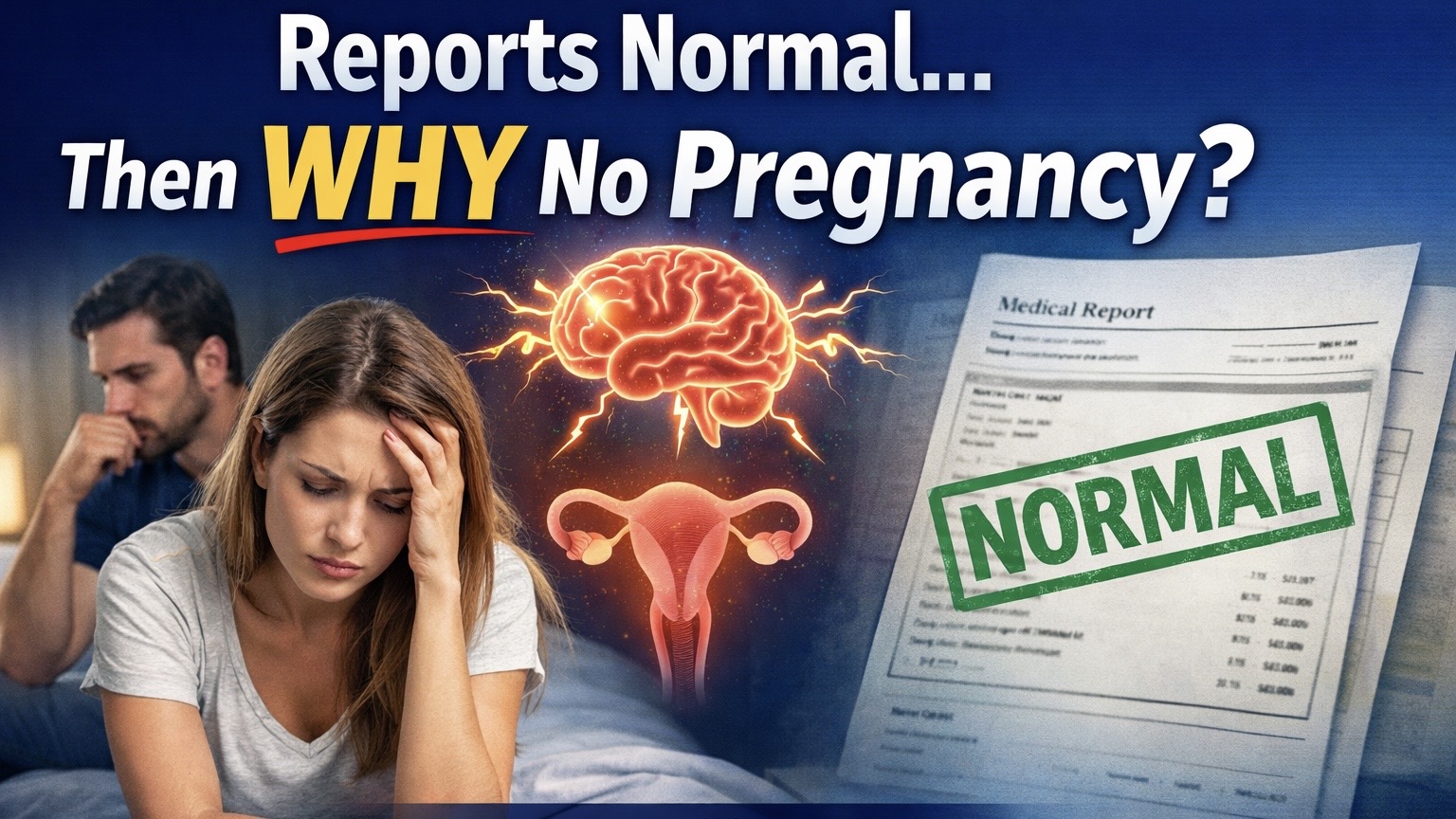
How Stress Affects Conception
When couples try repeatedly without success, the mind enters a pressure mode.
Thoughts like:
-
“Why is it not happening?”
-
“What will people say?”
-
“Is something wrong with us?”
These thoughts activate stress response in the body.
The body releases cortisol, the primary stress hormone. When cortisol remains high for long periods, it interferes with reproductive hormones such as LH (Luteinizing Hormone) and FSH (Follicle Stimulating Hormone).
Ovulation may still occur, but egg quality, implantation timing, and uterine receptivity can get affected.
This is not imagination. This is neurobiology.
Survival Mode vs Creation Mode
When stress increases, the brain shifts into survival mode.
In survival mode, the body prioritises:
-
Safety
-
Energy conservation
-
Immediate threat response
Pregnancy is not the body’s priority in this state.
Biologically, the brain thinks:
“This is not the right time to reproduce.”
To conceive naturally, the body needs:
-
A relaxed nervous system
-
Proper blood flow to the uterus
-
Emotional safety
-
Balanced reproductive hormones
-
Positive bonding hormones like oxytocin
This connection is the core of Stress and infertility Explained.
Pressure, Tracking and Mechanical Intimacy
Many couples track ovulation dates strictly. Sex becomes scheduled, goal-oriented, and performance-based.
Instead of pleasure and bonding, intimacy becomes a task.
Interestingly, unplanned or unexpected pregnancies often happen when couples feel relaxed and emotionally connected. When sex happens for pleasure rather than pressure, the nervous system remains calm.
This is why sometimes pregnancy happens during vacations or after couples “stop trying.”
It is not magic. It is psychological and neurobiological balance.
Role of Anxiety and Past Trauma
Unresolved past trauma, relationship insecurity, or deep anxiety can silently affect fertility.
Some individuals carry:
-
Fear of responsibility
-
Fear of change
-
Childhood emotional conditioning
-
Body-related shame
-
Performance anxiety
Even if they consciously want a baby, the subconscious mind may carry hidden fear.
The body listens to the subconscious mind more than verbal desire.
When we look at Stress and infertility Explained, we must consider emotional blocks along with medical reports.
What Can Help Before Planning Pregnancy
If a couple experiences high stress or anxiety, they should focus on mental health before aggressively planning pregnancy.
Helpful steps include:
-
Stress reduction therapy
-
Trauma processing
-
Emotional counselling
-
Nervous system regulation techniques
-
Building emotional safety in the relationship
When the body feels safe, conception becomes more natural.
Pregnancy requires relaxation, connection, and internal stability. So clearing stress and anxiety before planning can significantly improve chances.
Understanding Stress and infertility Explained helps couples remove guilt and blame. Instead of forcing the body, we can help it feel safe enough to create life.