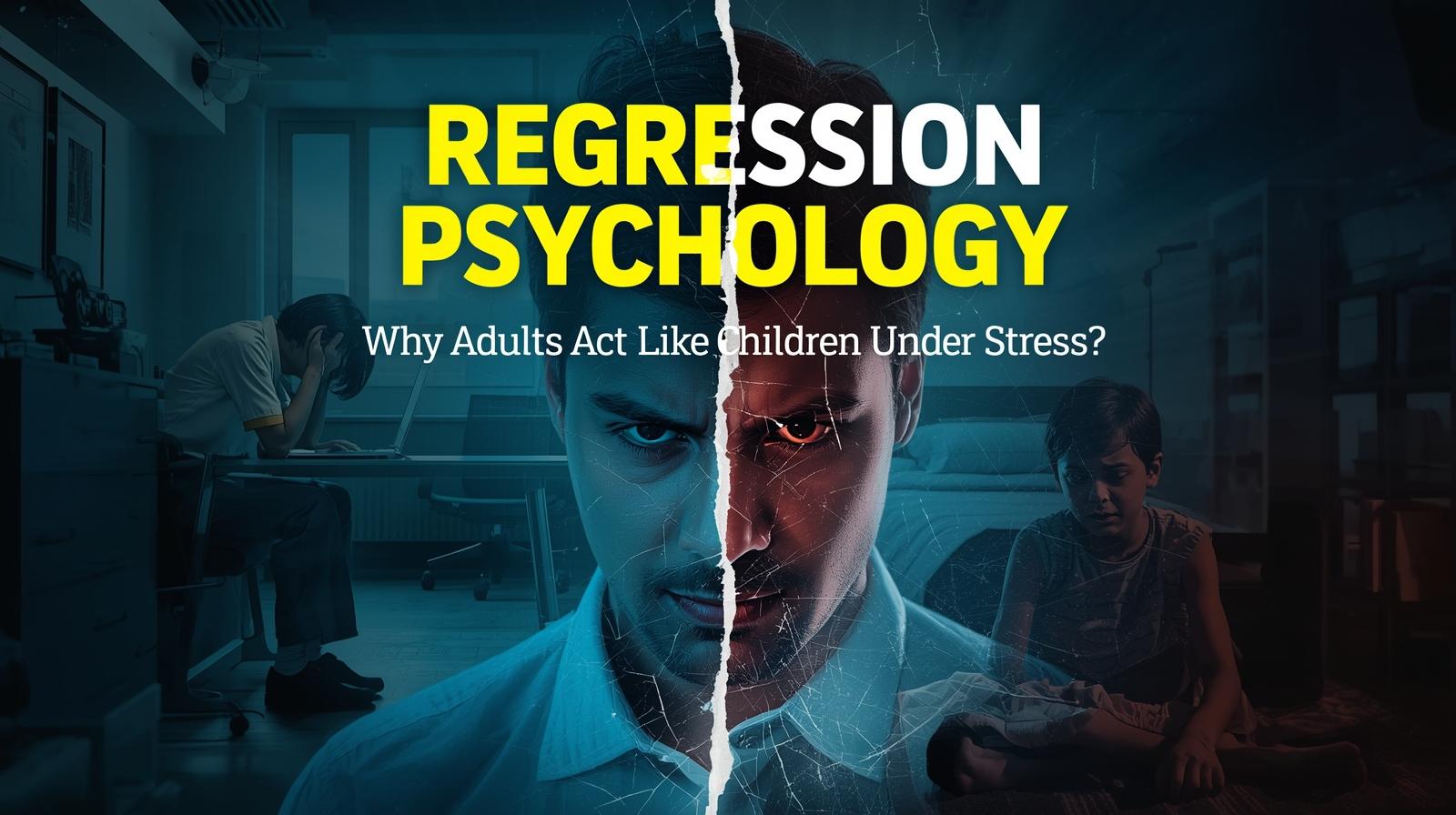
Regression psychology is a powerful concept that explains how the human mind sometimes goes back to earlier stages of emotional development. Many people experience this without even realising it. During stress, trauma, or emotional overload, a person may respond like a child even though they are an adult. This is not weakness. It is a psychological defence mechanism.
In clinical practice, regression psychology helps therapists understand hidden emotional wounds and unresolved childhood experiences. When handled correctly, it can become a healing tool rather than a problem.
What Is Regression Psychology?
Regression psychology refers to a defence mechanism where a person reverts to behaviours, thoughts, or emotions from an earlier stage of life. For example, an adult may cry uncontrollably, throw tantrums, or seek excessive reassurance during stressful situations.
This happens because the subconscious mind tries to return to a time when it felt safer or more protected. The brain believes earlier coping patterns can reduce current emotional pain. In therapy, professionals observe these reactions carefully to identify unresolved emotional blocks.
Why Does Emotional Regression Happen?
Emotional regression usually appears during:
-
Relationship conflicts
-
Financial stress
-
Health anxiety
-
Trauma triggers
-
Fear of abandonment
When stress crosses a certain limit, the rational brain becomes less active. The emotional brain takes control. At that moment, old memories and childhood emotional patterns may surface.
Regression psychology explains that these behaviours are not random. They are learned survival strategies from the past. For example, a child who received attention only when crying may unconsciously use the same pattern in adult relationships.
Regression Psychology in Therapy
In therapeutic settings, regression psychology becomes a structured healing approach. Techniques like inner child work, guided imagery, and hypnotherapy help clients access earlier emotional states safely.
As a psychologist or hypnotherapist, you may notice that clients speak in a softer tone, change posture, or express forgotten memories when they connect with childhood emotions. These signs indicate emotional regression.
When handled professionally, regression psychology allows clients to reprocess painful memories. They gain awareness, release suppressed emotions, and develop healthier coping mechanisms. The aim is not to keep the person in the past. The aim is to heal the past so the present becomes stable.
Healthy vs Unhealthy Regression
Not all regression is harmful. Temporary emotional regression during grief or extreme stress is normal. However, chronic regression that affects relationships, career, or daily functioning needs professional support.
Healthy regression:
-
Short-term emotional release
-
Increased self-awareness
-
Leads to growth
Unhealthy regression:
-
Repeated childish reactions
-
Avoidance of responsibility
-
Emotional dependency
Regression psychology teaches that awareness is the key difference. When a person understands their triggers, they regain control.
How to Manage Regression Responses
If you notice regression patterns in yourself or clients:
-
Identify the trigger clearly.
-
Observe the emotional age you feel at that moment.
-
Provide reassurance to that inner child.
-
Build adult coping skills consciously.
Mindfulness, breath work, journaling, and structured therapy sessions help reduce unwanted regression patterns.
Conclusion
Regression psychology does not mean moving backward in life. It means understanding where certain emotional reactions began. When we identify and heal childhood emotional wounds, we respond to life with maturity and stability.
Instead of judging regression, we can use it as a doorway to deeper emotional healing and transformation.