
This is one of the most common dialogues I hear during consultations, especially from married women. Interestingly, many of them deeply love their partner. They cannot imagine life without him. Yet, somewhere inside, they feel disconnected.
Loneliness in relationship does not always mean you chose the wrong partner. It does not mean you are a failure. It also does not mean your partner is completely wrong. Let us understand the possible psychological reasons behind this painful state.
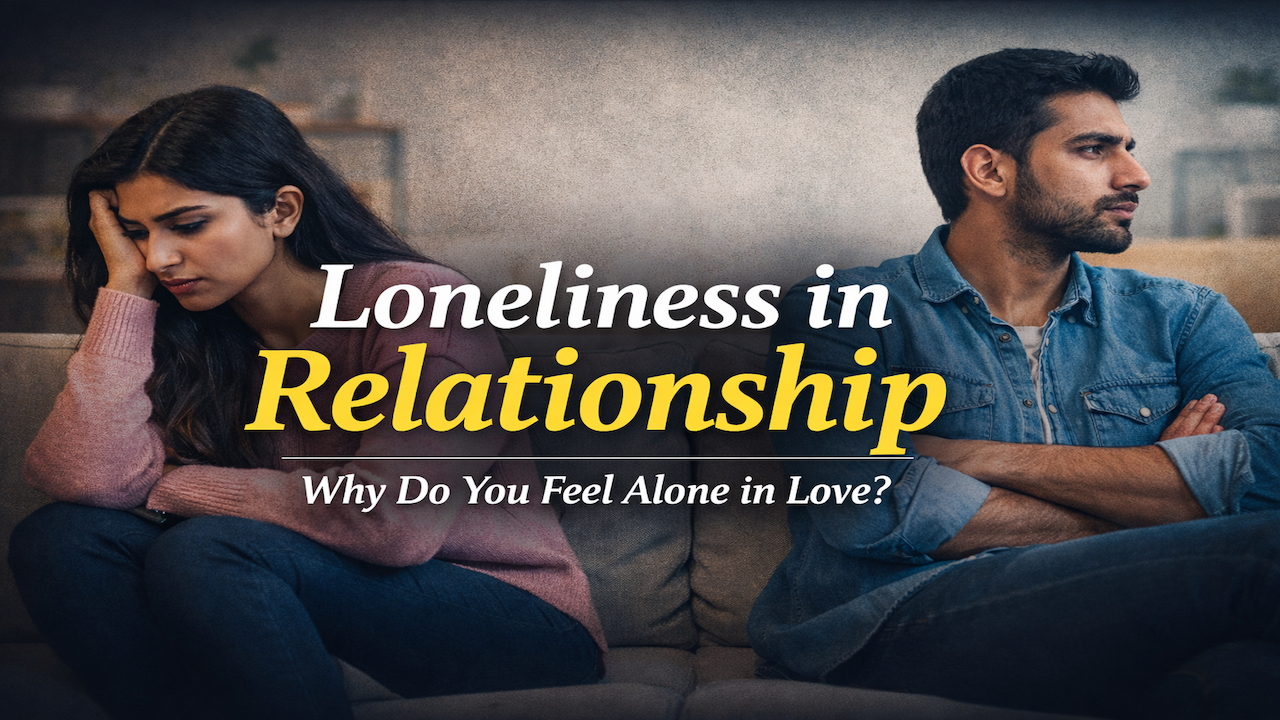
1. Emotional Disconnection: When Communication Becomes Mechanical
In many homes, conversations revolve around rice, vegetables, school fees, bills, and responsibilities. Emotional communication slowly disappears.
Real intimacy develops only when two people sit, look into each other’s eyes, and talk about feelings — fear, insecurity, desire, hurt, dreams. Without this, loneliness in relationship quietly grows.
When emotional sharing stops, partners start feeling like roommates. The bond weakens even if love still exists.
2. Childhood Emotional Neglect: Old Wounds, New Fights
Some individuals grew up with emotionally unavailable parents. Nobody listened to their feelings. Nobody validated their emotions.
Such people become extremely sensitive to even small signs of avoidance from their partner. A delayed reply or silent mood feels like rejection. They complain more. They blame more.
The partner, unable to handle constant complaints, starts avoiding further. And what they feared most — emotional abandonment — slowly becomes reality.
Here, loneliness in relationship is not created by the present alone. The past silently controls the reactions.
3. High Level of Suppressed Feelings
Many people learned from childhood to suppress anger, sadness, guilt, and frustration. They appear calm outside but carry emotional pressure inside.
Such individuals become highly sensitive. They cry easily. They get angry suddenly. To avoid triggering them, partners may stop sharing openly. Gradually, both sides reduce emotional expression.
This mutual emotional withdrawal increases loneliness in relationship, even though both still care deeply.
4. Love Language Differences
One partner expresses love through responsibility, financial security, and physical presence. The other expects expressive dialogues, quality time, appreciation, or affectionate touch.
Both feel they are giving their best. Yet both feel unloved.
When love languages differ and remain unspoken, misunderstanding increases. Emotional distance follows. Slowly, loneliness in relationship becomes a silent third person in the marriage.
5. Identity Loss: Losing Yourself in Love
Sometimes, one partner sacrifices personality, interests, friendships, and dreams for the relationship. Initially, this feels like commitment.
Later, it creates emptiness.
When you disconnect from your own identity, you cannot feel emotionally fulfilled. You may blame the partner, but the deeper issue is self-loss.
Healthy love requires two whole individuals — not one dissolved into another.
Why Counselling Becomes Important
This condition rarely changes on its own. Counselling helps both partners understand subconscious patterns, emotional wounds, and communication gaps.
Real healing needs effort from both sides. When subconscious beliefs shift, emotional safety increases. Happiness becomes possible again.
If you feel intense loneliness in relationship, do not ignore it. It is not weakness. It is a signal that emotional connection needs attention.