
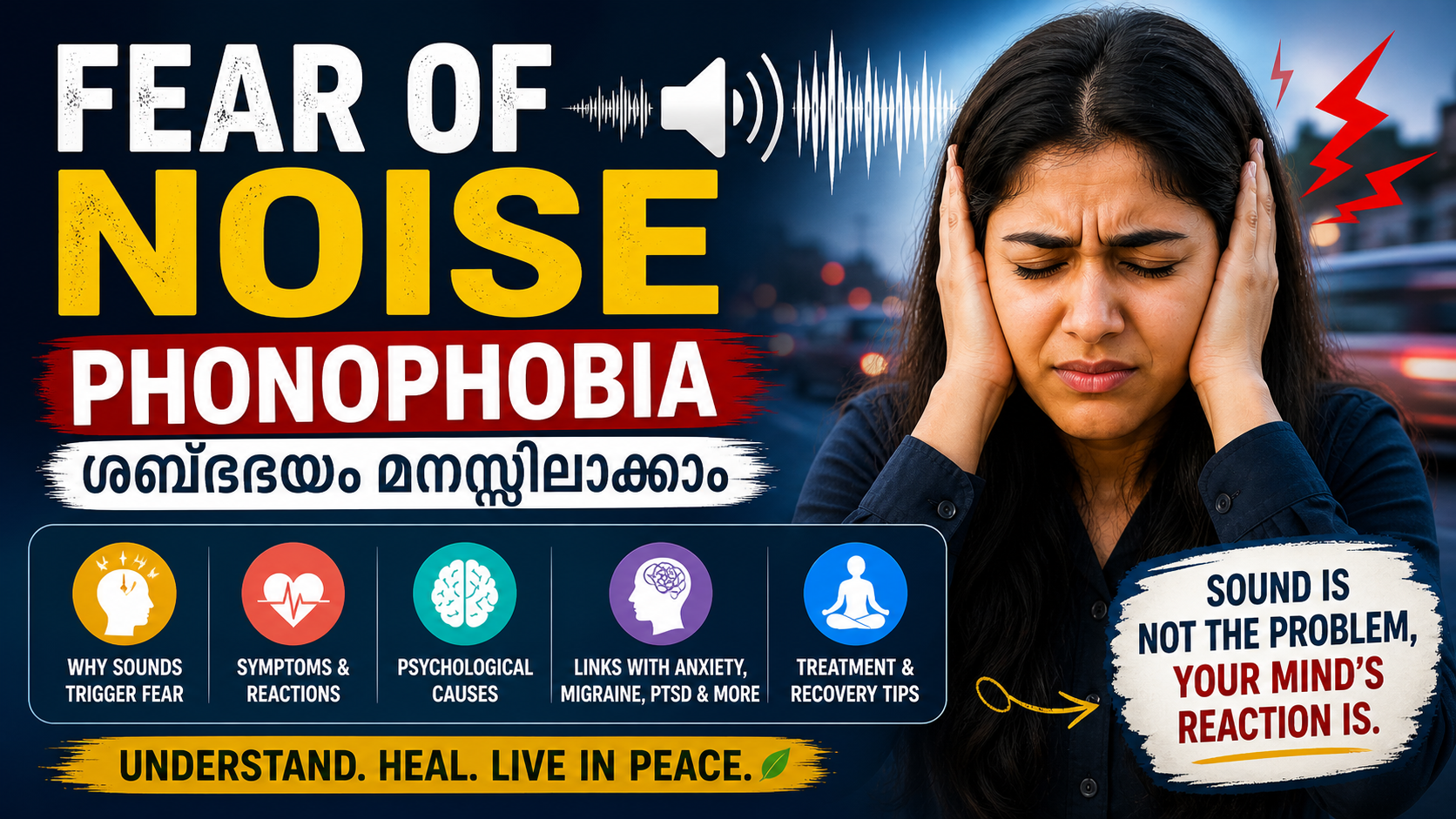
Phonophobia refers to an intense fear of noise or extreme sensitivity to sound. People with this condition struggle to tolerate sounds beyond a certain level. This is not just discomfort—it is a strong emotional and physical reaction where the body behaves as if sound itself is a threat.
What is Phonophobia?
Phonophobia, commonly described as fear of noise, involves both psychological fear and sensory overload. Even normal sounds can feel overwhelming. The reaction often appears automatic and difficult to control.
Some individuals experience it occasionally, while others face it daily. The severity depends on the person’s emotional state and nervous system sensitivity.
Common Symptoms of Fear of Noise
People with fear of noise show different reactions depending on the situation. Common symptoms include:
- Panic when hearing loud or unexpected sounds
- Rapid heartbeat in noisy environments
- Irritation or anger even for normal sounds
- Strong preference for silence
- Avoidance of crowded or noisy places
- Headache during continuous noise exposure
- Mental discomfort in environments with background sound
These reactions are often uncontrolled, and the person may feel embarrassed or confused about their own response.
Why Does Fear of Noise Happen?
The fear of noise usually develops due to deeper psychological or neurological reasons:
1. Emotional Trauma
People who experienced distressing events in noisy environments may associate sound with danger. For example, children who grew up hearing frequent parental conflicts may develop sensitivity later.
2. Difficulty Handling Uncertainty
Unpredictable sounds create discomfort for individuals who struggle with uncertainty. The mind prefers control, and noise disrupts that control.
3. Past Conditioning
Repeated exposure to stressful sound situations trains the brain to react quickly. Over time, even safe sounds can trigger fear.
Associated Conditions
Phonophobia often appears along with other conditions such as:
- Migraine
- Anxiety Disorders
- Autism Spectrum Disorder
- Post-Traumatic Stress Disorder
In these cases, the nervous system remains highly sensitive, making it harder to tolerate sound.
How Can It Be Managed?
Managing fear of noise requires addressing both emotional and behavioural aspects:
- Emotional Processing: Resolving underlying trauma reduces internal tension
- Gradual Exposure: Slowly increasing tolerance to sound helps retrain the brain
- Relaxation Techniques: Breathing and grounding reduce immediate reactions
- Cognitive Reframing: Changing how the mind interprets sound lowers fear
With the right approach, individuals can regain control and reduce sensitivity over time.
Conclusion
Phonophobia is more than a dislike for noise—it reflects how the mind and body respond to stress and past experiences. Understanding the root cause of fear of noise helps in creating effective solutions and improving quality of life.