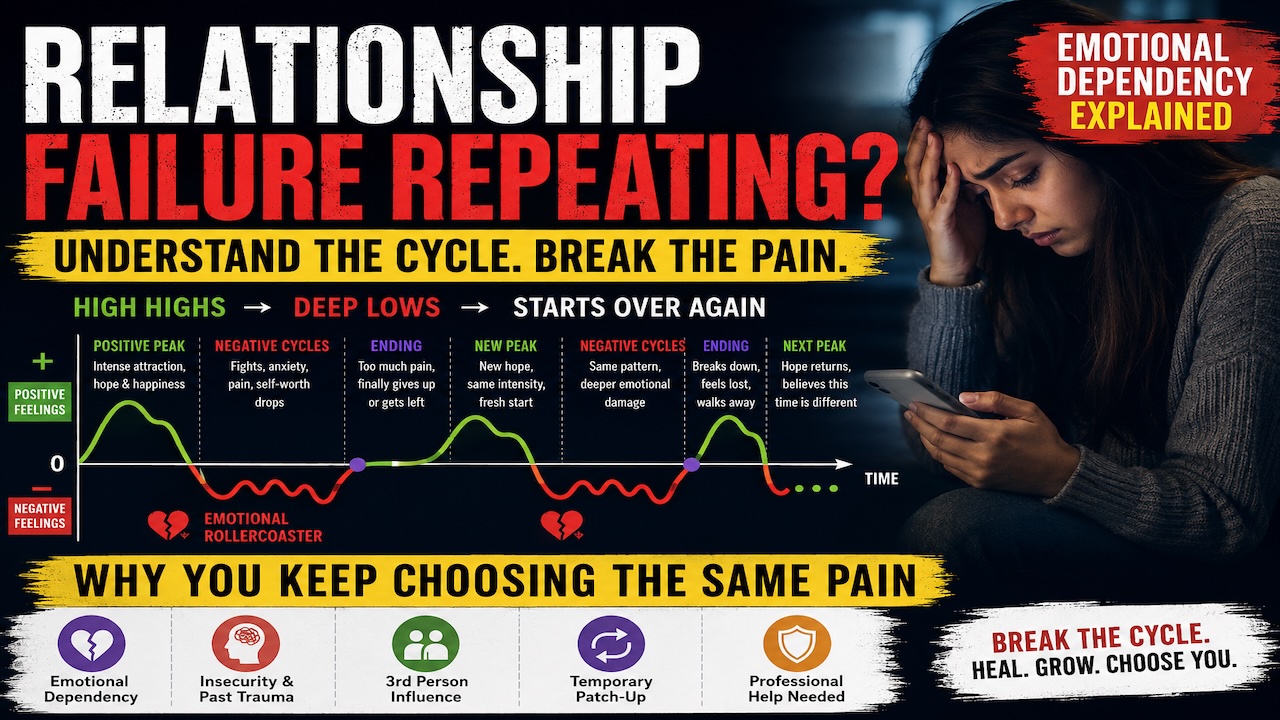
Many people experience one painful breakup and eventually move on. However, some individuals go through the same cycle repeatedly. They enter a relationship with great hope, become deeply attached, face emotional turmoil, and eventually experience another breakup. This pattern may repeat several times throughout life.
If you are struggling with Repeated relationship failure in life, the problem may not be bad luck or fate. In many cases, underlying emotional dependency and unhealthy relationship patterns play a major role.
The Emotional High at the Beginning
Most relationships start with intense positive emotions. People often feel:
- Happiness
- Love
- Hope
- Confidence
- Excitement
- Emotional security
During this stage, the relationship may feel perfect. The partner becomes a major source of emotional comfort and validation. Some individuals begin to depend heavily on the relationship for their happiness and self-worth.
This emotional high can create unrealistic expectations about the future.
When Problems Start to Appear
As the relationship progresses, everyday differences begin to emerge. Communication issues, misunderstandings, unmet expectations, and personal insecurities can create tension.
At this stage, emotions often shift dramatically. Positive feelings gradually give way to:
- Sadness
- Anxiety
- Fear
- Anger
- Frustration
- Emotional insecurity
For emotionally dependent individuals, these feelings can become overwhelming. Small relationship problems may feel like major threats because their emotional stability depends heavily on the partner.
The Breakup-Reconciliation Cycle
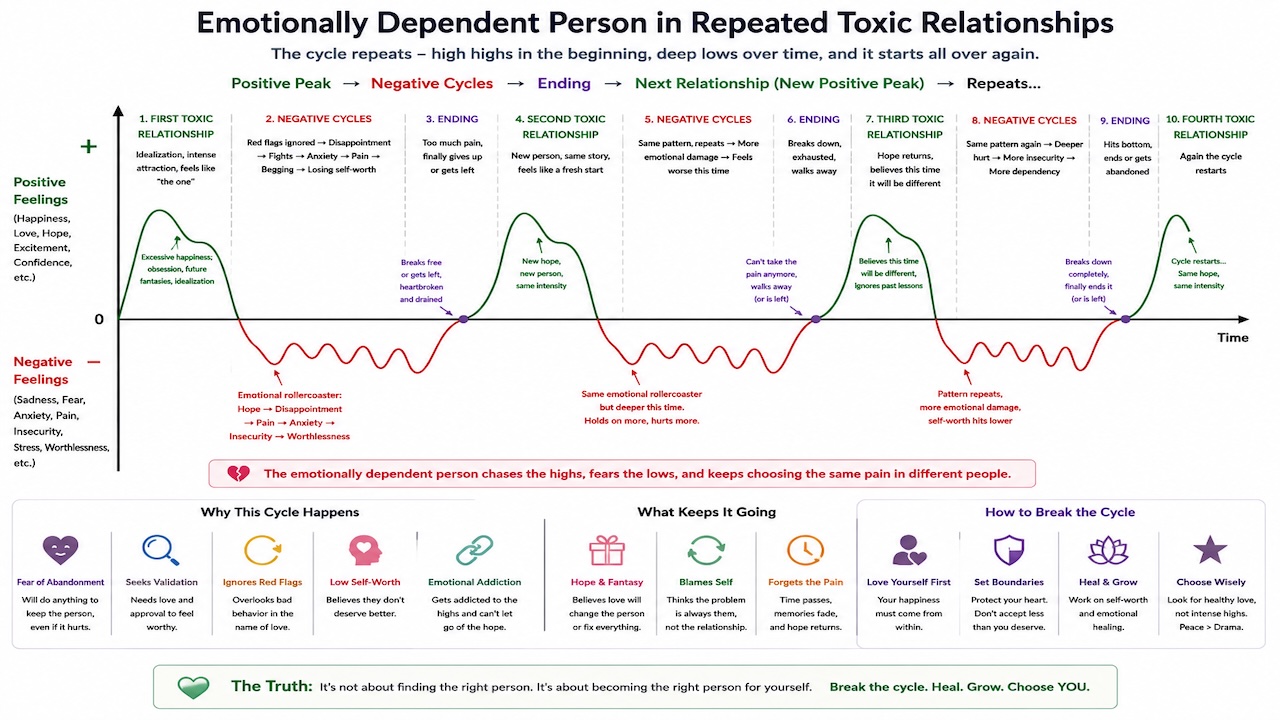
Many people caught in Repeated relationship failure in life experience a familiar pattern:
- Intense emotional connection
- Growing conflicts and misunderstandings
- Frequent arguments
- Reconciliation and compromise
- Emotional exhaustion
- Breakup
After the breakup, there may be weeks or months of crying, pleading, or trying to reconnect. Eventually, another person enters their life, creating hope once again.
The cycle then repeats with only minor variations.
In clinical consultations, some individuals report experiencing this pattern across multiple relationships. In rare cases, people have gone through more than ten relationships while repeating the same emotional dynamics.
Why the Same Pattern Repeats
The common factor is often not the partner but the person’s emotional framework.
Many individuals who experience Repeated relationship failure in life show signs of:
- Emotional dependency
- Fear of abandonment
- Low self-esteem
- Excessive need for validation
- Difficulty being alone
- Relationship-centered identity
Because these underlying issues remain unresolved, changing partners does not automatically solve the problem.
The Importance of Emotional Independence
True emotional independence does not mean avoiding love or relationships. It means being able to maintain emotional stability even when relationship challenges arise.
Emotionally independent individuals:
- Take responsibility for their feelings
- Maintain personal goals and identity
- Set healthy boundaries
- Communicate needs effectively
- Do not rely entirely on a partner for happiness
Developing these skills often reduces relationship conflicts and improves long-term relationship satisfaction.
When Professional Help Can Make a Difference
If you notice a recurring pattern of relationship breakdowns, seeking professional guidance can be valuable. A psychologist or relationship therapist can help identify emotional triggers, unconscious beliefs, and behavioural patterns that contribute to repeated failures.
Many people only achieve lasting change after addressing the emotional roots of the problem rather than focusing solely on finding a new partner.
Conclusion
Repeated relationship failure in life is not always a matter of fate. In many cases, emotional dependency and recurring behavioural patterns keep the cycle alive. Identifying these patterns and developing emotional independence can help create healthier, more stable, and more fulfilling relationships.