
The teaser of Drishyam 4 was released yesterday, and a review posted by a major media outlet quickly attracted attention. However, what stood out was not the review itself, but the large number of laughing reactions and mocking emojis underneath it.
When I examined many of the profiles behind these reactions, a pattern appeared. Most did not look like genuine Malayalam-speaking users. Some did not even appear to be Indian profiles, and many showed signs commonly associated with fake or inactive accounts. While watching the post, the number of these reactions continued to increase.
This raises an important question: why would someone invest effort in adding hundreds of laughing reactions instead of writing long negative comments? Understanding the Drishyam movie degrading technique helps explain this strategy.
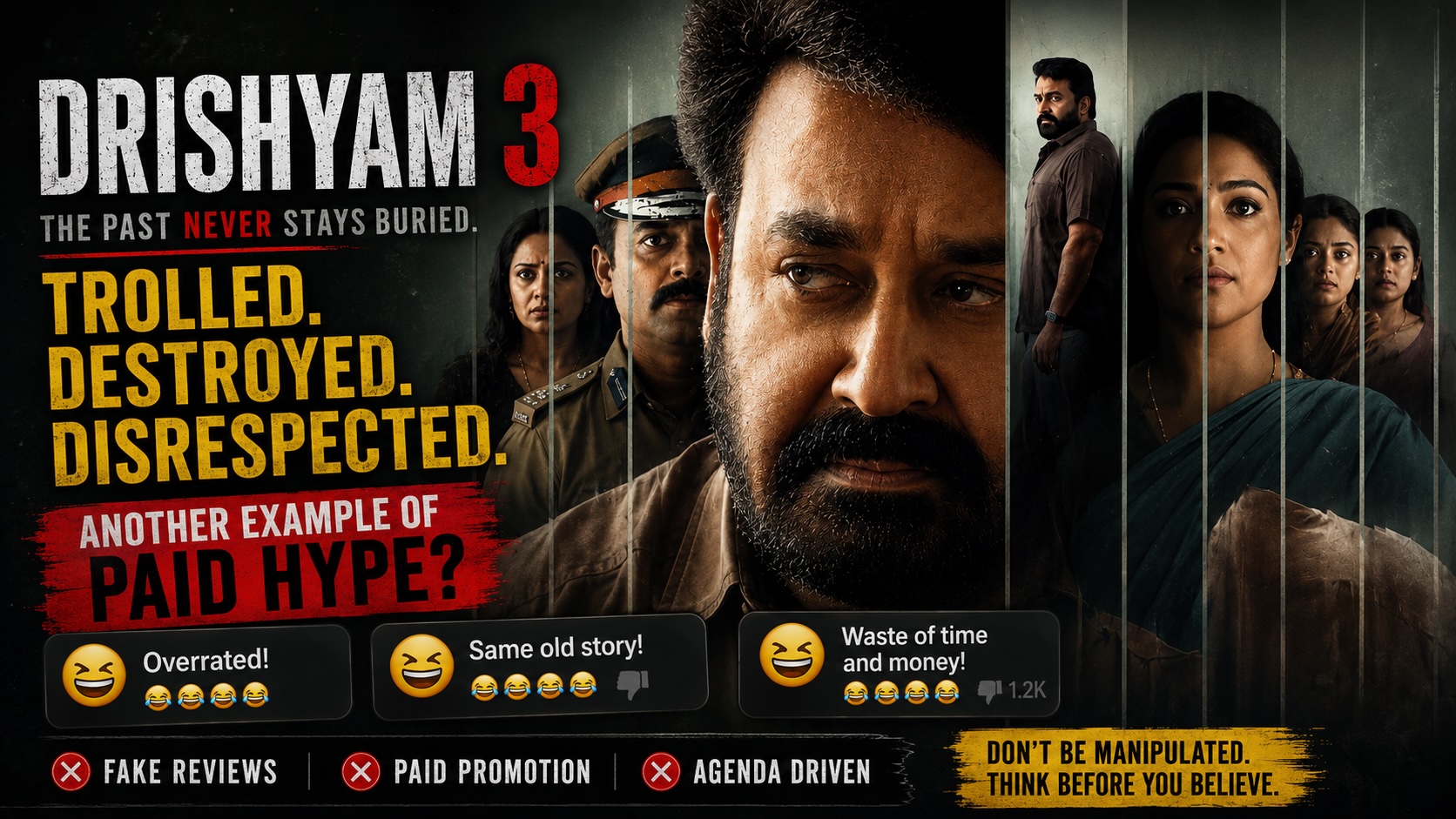
What Is Paid Degrading?
Most people have heard about paid promotion, where companies pay influencers or agencies to create positive publicity.
The opposite strategy also exists. It is often called paid degrading. The goal is to damage the reputation of a movie, public figure, company, or political movement by creating a negative public perception.
This strategy is not limited to cinema. Organisations around the world use similar techniques in politics, business, and media battles.
Social Proof: Following the Crowd
One of the strongest psychological principles behind the Drishyam movie degrading technique is social proof.
Many people do not have a fixed opinion when they first see a movie teaser. They are undecided.
When they see hundreds of laughing reactions under a positive review, they may subconsciously think:
“Maybe this movie is not that good.”
The same principle works during elections, product launches, and public debates. People often use the reactions of others as a shortcut when making decisions.
A mass display of mocking emojis can influence people more effectively than angry reactions because laughter signals ridicule rather than disagreement.
Framing Effect: The First Impression Matters
The first visible reactions often frame how a person interprets a post.
Suppose a highly positive review receives thousands of laughing emojis. Before reading the content, many viewers may already assume something is wrong.
This is why those attempting degradation often target posts with the highest reach. The greater the visibility of the post, the greater the potential influence on public perception.
In many cases, negative publicity spreads faster than positive publicity.
Status Signalling Through Mockery
A detailed criticism still treats the subject as worthy of discussion.
A laughing emoji sends a different message:
“This is not even worth taking seriously.”
This is known as status signalling.
The objective is not merely to disagree with a film or person. The objective is to make the audience feel that the subject does not deserve attention or respect.
That makes the Drishyam movie degrading technique particularly powerful.
Bandwagon Effect and Public Opinion
People naturally hesitate to support something that appears unpopular.
When viewers see thousands of negative reactions, they may delay buying tickets, postpone watching a teaser, or avoid expressing support publicly.
This is known as the bandwagon effect.
In Kerala especially, visible opposition often attracts more attention than visible support. That makes coordinated reaction campaigns highly effective.
Think Before You Accept Online Opinions
This article is not an opinion about the quality of Drishyam 4. The film should be judged after watching it.
However, when hundreds or thousands of reactions come from profiles that appear fake or suspicious, it becomes reasonable to question whether genuine public opinion is being represented.
Your opinions should be your own. Manipulated opinions can influence not only entertainment choices but also business decisions, political beliefs, professional relationships, and even the future of society.
Meta Description:
Drishyam movie degrading technique explained: how fake reactions, social proof, and online manipulation can influence public opinion.