
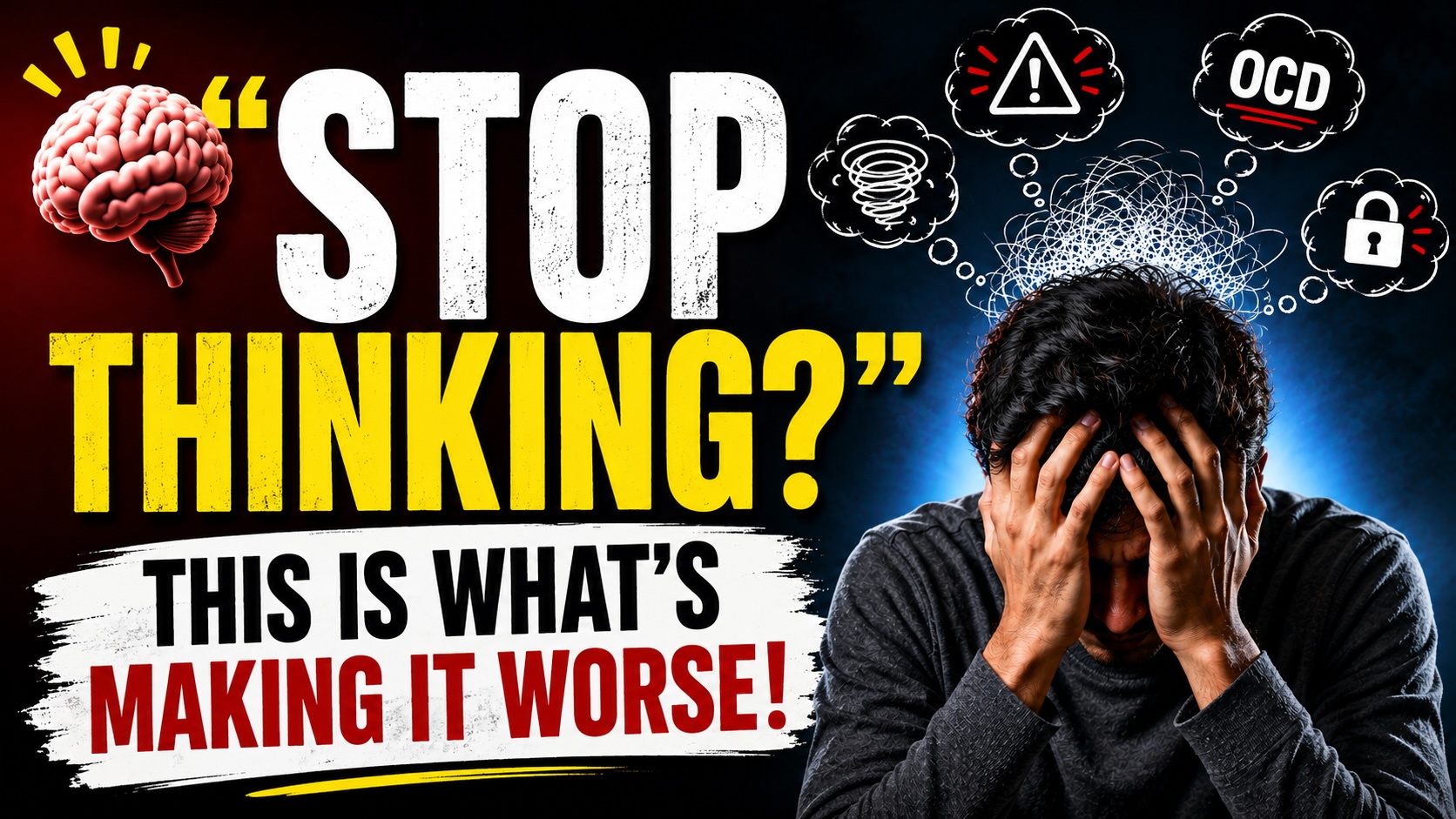
Many people with anxiety, OCD, and overthinking problems hear the same advice again and again: “Stop thinking about it.” Unfortunately, this is one of the least helpful suggestions someone can receive.
The truth is that people struggling with anxiety or OCD already want to stop thinking about their worries. If they could simply switch off unwanted thoughts, they would have done it long ago. In many cases, trying harder to stop thinking about it actually makes the problem worse.
Why the Brain Does Not Like Thought Suppression
Let us try a simple experiment.
For the next one minute, do not think about a pink elephant with a green tail.
5…4…3…2…1…
What happened?
For most people, the image of that elephant immediately appears in the mind. The harder they try not to think about it, the more often it returns.
This is exactly what happens with anxiety-related thoughts and OCD thoughts. When you repeatedly tell yourself to stop thinking about it, your brain keeps checking whether the thought is still there. Ironically, this constant checking keeps the thought active.
The Reverse Psychology of the Mind
The mind works in a surprising way. Every time you say:
- “I should not think about this.”
- “This thought must go away.”
- “I need to remove this from my mind.”
your brain starts monitoring the thought.
To monitor it, the thought must remain present in your awareness. As a result, the unwanted thought often becomes stronger rather than weaker.
This is why many people notice that their worries increase when they desperately try to push them away.
What to Do Instead of Fighting Thoughts
Rather than fighting every unwanted thought, try a different approach.
Accept the Presence of the Thought
Acceptance does not mean you agree with the thought or that it is true. It simply means you stop wasting energy trying to force it away.
When a thought appears, acknowledge it and allow it to exist without starting a battle against it.
Create a Response Plan
Instead of asking, “How do I make this thought disappear?” ask, “What will I do when this thought shows up?”
A practical response plan gives you a sense of control and reduces emotional reactivity.
Focus on the Present Moment
After noticing the thought, gently redirect your attention to the task, conversation, or activity in front of you.
The goal is not to eliminate thoughts. The goal is to continue living your life even when thoughts are present.
When Professional Help May Be Needed
If you still cannot manage the thoughts despite these strategies, consider professional consultation.
In many cases, persistent anxiety and obsessive thinking may be connected to unresolved emotional conflicts, suppressed feelings, or deeper psychological patterns. When these underlying issues are addressed, the thoughts often lose their intensity naturally.
Focus on Solutions, Not the Problem
The next time someone tells you to stop thinking about it, remember that the human mind does not work like an on-off switch.
Trying to force thoughts away usually strengthens them. Acceptance, emotional resolution, and purposeful action often work far better. Instead of spending all your energy thinking about the problem, start directing your attention toward the solution.