
Many people experience occasional doubts about different aspects of their identity. However, for individuals with Homosexual OCD (HOCD), these doubts become repetitive, distressing, and difficult to control. HOCD, also known as Sexual Orientation OCD, is a subtype of OCD where a person develops obsessive fears and doubts related to their sexual orientation.
Over the last year alone, I have received a significant number of consultations related to homosexual OCD, showing that this condition is more common than many people realise.
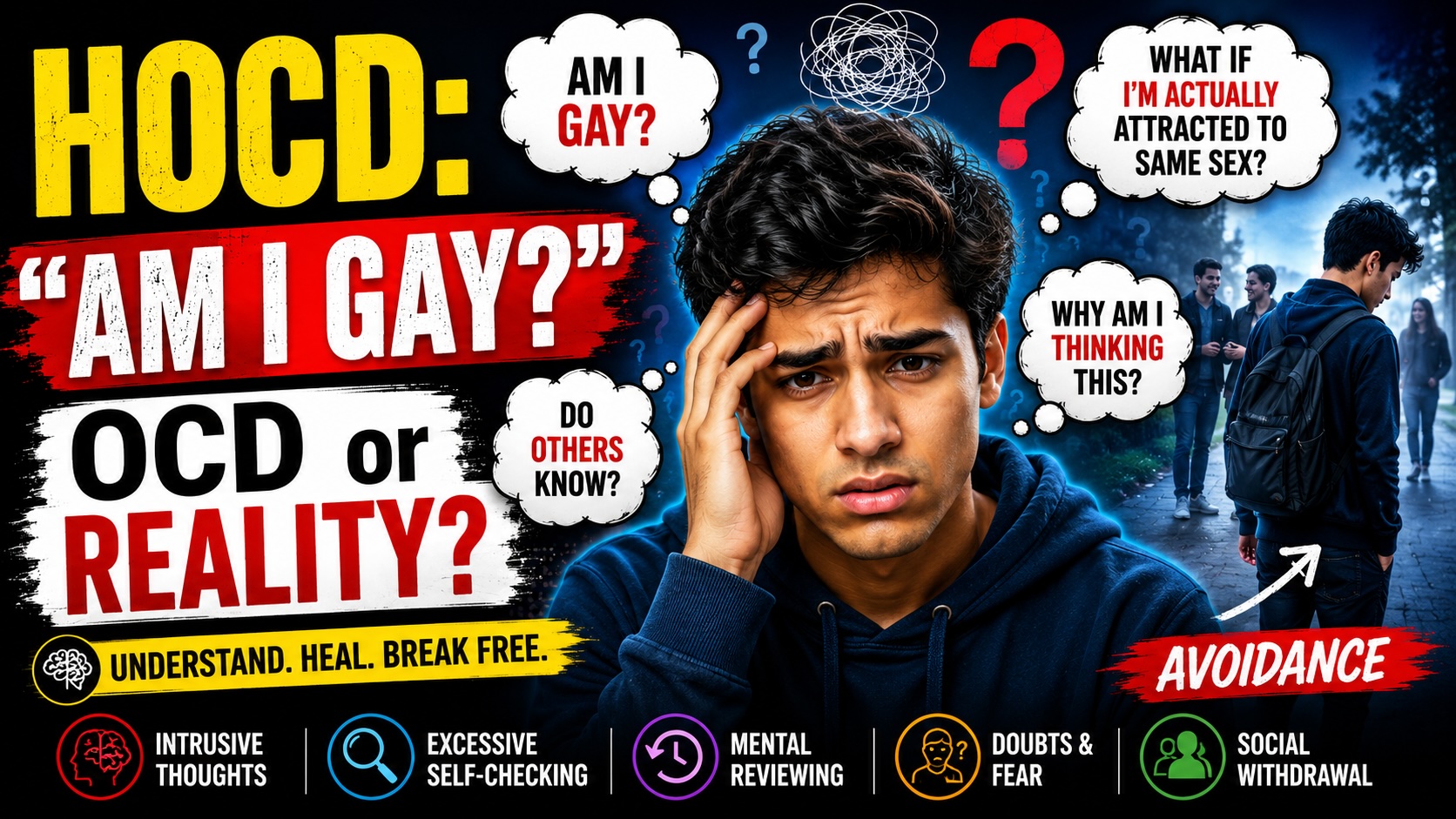
What is Homosexual OCD?
Homosexual OCD is not about a person’s actual sexual orientation. Instead, it involves intrusive thoughts, anxiety, mental checking, and avoidance behaviours related to sexuality.
A person may constantly question whether they are gay, lesbian, or attracted to the same sex, even when these thoughts cause intense distress and confusion.
1. Repeated and Disturbing Thoughts About Sexuality
One of the most common symptoms of HOCD is persistent and unwanted thoughts such as:
- “What if I am gay?”
- “What if I am lesbian?”
- “Will I become attracted to someone of the same sex?”
- “What will others think about me?”
- “Will my family reject me?”
These thoughts can occur throughout the day and interfere with normal daily functioning.
2. Excessive Self-Checking
People with Sexual Orientation OCD often spend a lot of time checking their feelings and reactions.
They may:
- Analyse their feelings towards people of the same sex.
- Repeatedly check body sensations.
- Watch pornography to test attraction.
- Compare their reactions towards males and females.
- Monitor every emotional response for signs of attraction.
This constant checking increases anxiety rather than reducing it.
3. Mental Reviewing of Past Experiences
Many individuals repeatedly review memories from the past in an attempt to find answers.
They may think about:
- Childhood experiences
- Teenage friendships
- College memories
- Interactions with colleagues
The goal is usually to determine whether they were homosexual all along, but this mental reviewing rarely provides lasting relief.
4. Fear That Others Will Suspect Them
People with homosexual OCD often worry that others may think they are gay or lesbian.
This fear can become so strong that even normal social interactions trigger anxiety and self-consciousness.
5. Impact on Daily Life
As the condition progresses, a person may experience:
- Difficulty concentrating
- Reduced confidence
- Social withdrawal
- Increased anxiety
- Avoidance of certain people or situations
These symptoms can significantly affect work, studies, relationships, and overall quality of life.
What Causes HOCD?
There is no single cause for HOCD. Different factors may contribute to its development.
In clinical practice, around half of the individuals presenting with this problem report a history of childhood sexual exploitation or sexually confusing experiences. However, this is not true for everyone.
Other contributing factors may include:
- Fear of social rejection
- Fear of judgement
- Fear of identity loss
- Fear of uncertainty
- Existing anxiety disorders
- OCD-related thinking patterns
Can HOCD Be Treated?
Yes. The distress caused by Homosexual OCD can be extremely intense. Many people struggle silently for months or even years before seeking help.
With appropriate psychological intervention, the underlying fears, obsessive thinking patterns, and avoidance behaviours can often improve significantly. In many cases, meaningful relief can begin within the first few sessions itself, although the exact duration varies from person to person.
Seeking professional help early can prevent the condition from becoming more severe and help individuals regain confidence and peace of mind.