
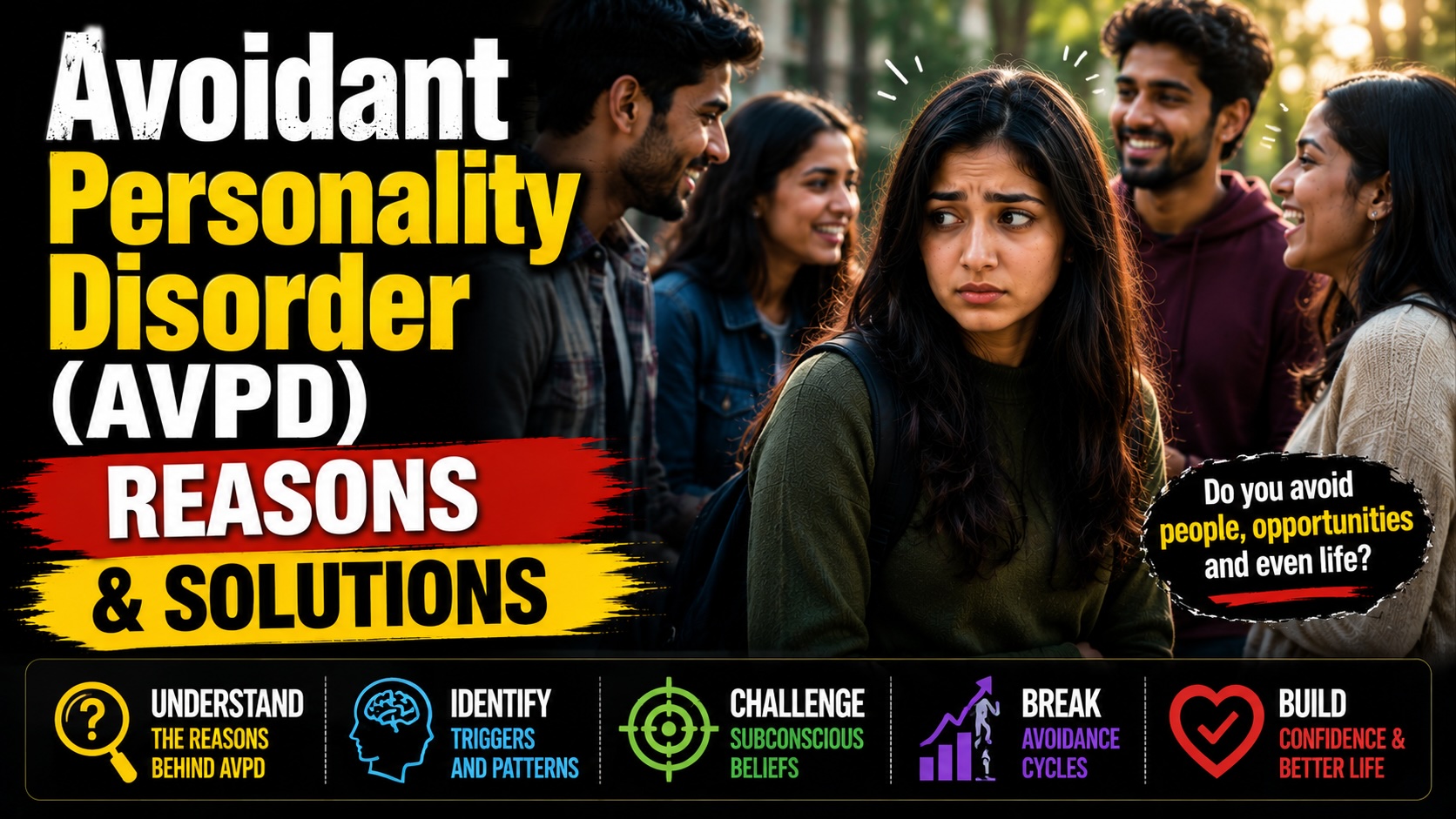
In the previous article, we discussed the symptoms of Avoidant Personality Disorder (AVPD). Many people with this condition want to stay away from social situations, relationships, opportunities, and sometimes even everyday responsibilities. Understanding the Avoidant Personality Disorder (AVPD) reasons can help individuals recognize the roots of their struggles and seek appropriate support.
1. Constant Criticism During Childhood
One of the most common Avoidant Personality Disorder (AVPD) reasons is growing up in an environment filled with criticism. Some children hear negative comments from parents, teachers, or caregivers even for minor mistakes. Instead of receiving encouragement and guidance, they face comparisons, ridicule, or harsh punishment.
Over time, the child may start believing that they are never good enough. This fear of making mistakes can continue into adulthood and lead to avoidance of situations where criticism is possible.
2. Emotional Rejection and Neglect
Children need emotional validation to develop confidence and security. When parents ignore, reject, or dismiss a child’s emotions, the child may learn that expressing feelings is unsafe.
Many adults with avoidant traits report that their emotions were not understood during childhood. They often felt alone, unheard, or emotionally disconnected from their caregivers. This emotional rejection can contribute significantly to the development of AVPD.
3. Social Humiliation and Trauma
Public embarrassment can leave a lasting psychological impact. Some individuals experienced situations where parents, teachers, or authority figures punished or humiliated them in front of others.
Even a few intense incidents can create a deep fear of social judgment. The person may begin avoiding situations where they could feel embarrassed, criticized, or exposed again.
4. Overprotective Parenting
Many parents act out of love but unknowingly limit their child’s emotional growth. When children do not get opportunities to make decisions, solve problems, or develop independence, they may struggle to trust their own abilities.
Overprotective parenting can create dependency and self-doubt. As a result, the individual may avoid challenges because they feel incapable of handling them independently.
5. Conditional Love and Perfectionism
Some children receive appreciation only when they achieve success or meet very high expectations. They may grow up believing that love and acceptance depend on performance.
Children who constantly hear comparisons with siblings, relatives, or classmates may develop feelings of inadequacy. They often become highly sensitive to failure and criticism, increasing the risk of avoidant behaviour later in life.
6. Deep Rejection and Loneliness Trauma
Experiences such as abandonment, betrayal, exclusion, or prolonged loneliness can also contribute to AVPD. When emotional pain becomes overwhelming, the mind may develop avoidance as a protective strategy.
The person starts avoiding situations that could potentially lead to further rejection or disappointment.
The Role of Subconscious Beliefs
Like other personality disorders, AVPD can have many known and unknown causes. Beneath the surface, subconscious beliefs often guide behaviour. Thoughts such as “I am not good enough,” “People will reject me,” or “I will fail” can silently influence daily decisions.
Repeated avoidance strengthens these beliefs and creates a cycle that becomes difficult to break.
Can Avoidant Personality Disorder Be Treated?
The good news is that improvement is possible. Identifying anxiety triggers, subconscious beliefs, emotional wounds, and repeated avoidance patterns can help individuals gradually regain confidence.
Most people with AVPD feel an urge to escape from challenging situations. Unfortunately, this can affect their career, relationships, and overall quality of life. The earlier these patterns are recognized, the easier it becomes to work toward positive change.
If avoidant behaviours are affecting your personal or professional life, seeking professional psychological support may be beneficial.