
What is Agoraphobia?
Agoraphobia is more than just a fear of open spaces. It is an anxiety disorder where a person feels intense fear in situations that seem hard to escape or where help might not be available. As a result, they may avoid public transport, markets, or even stepping outside alone. Over time, this avoidance creates isolation and dependency. Consequently, the person’s comfort zone shrinks to their home or a single “safe place.”
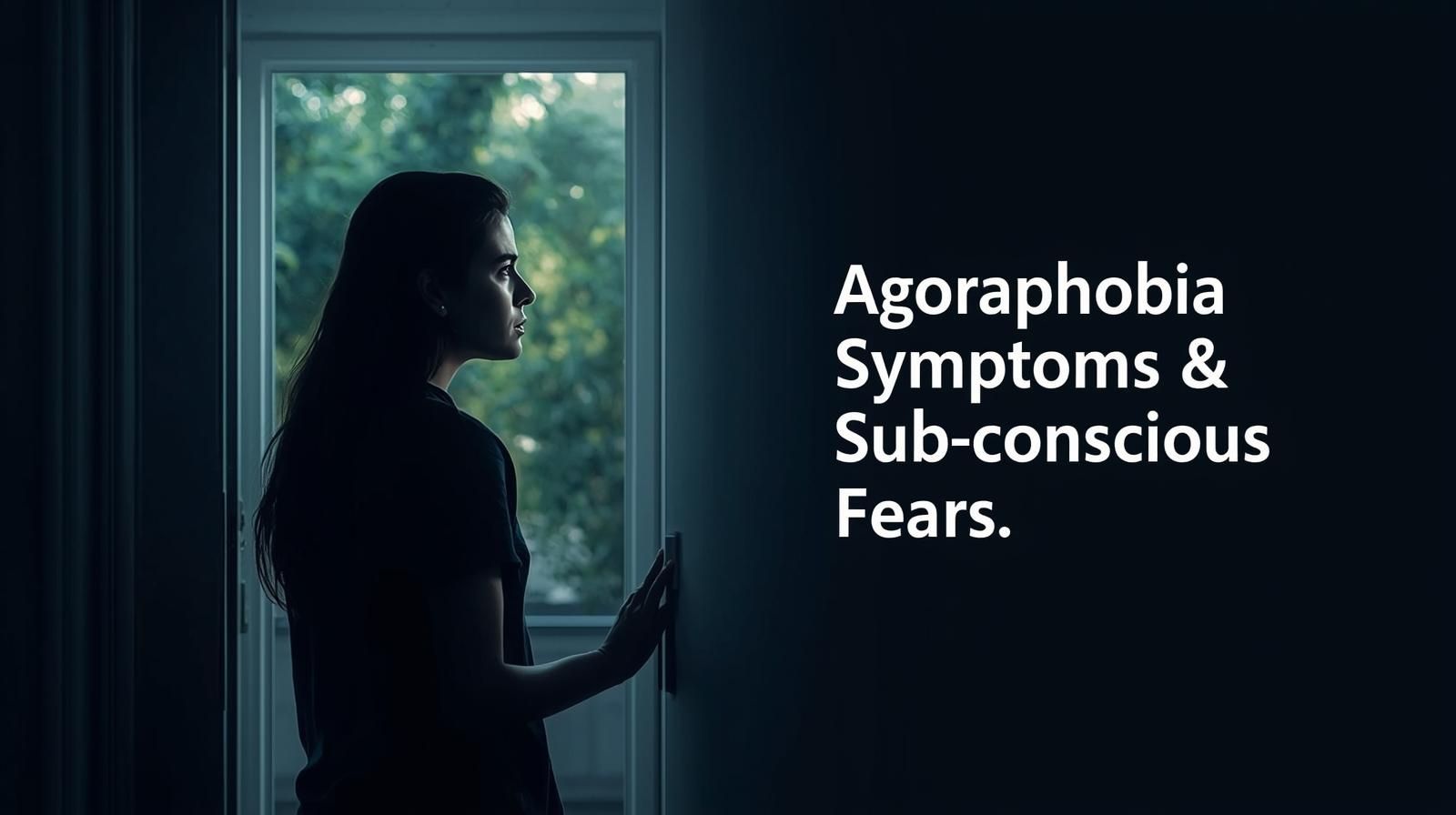
Common Symptoms of Agoraphobia
The symptoms appear in both emotional and physical forms. Typically, individuals experience:
-
Fear of leaving home alone or traveling far from safety
-
Avoiding crowded, enclosed, or unfamiliar places
-
Rapid heartbeat, sweating, trembling, or shortness of breath in public
-
Feeling trapped, helpless, or embarrassed in open areas
-
Needing a companion to step outside
-
Persistent worry about losing control or fainting in public
Because of these symptoms, daily activities become increasingly restricted. Moreover, self-confidence and social relationships gradually weaken, creating a cycle of anxiety and avoidance.
Subconscious Fears
While the conscious mind fears the situation, the subconscious mind fears the emotional experience linked to it. Therefore, the real causes often lie deeper than what appears on the surface.
-
Fear of Losing Control:
Deep within, there may be a fear of something unpredictable happening — such as fainting or panicking — leading to public humiliation. Consequently, the person avoids any environment where control might seem uncertain. -
Fear of Vulnerability:
The subconscious often links open or crowded spaces with exposure and emotional danger. Hence, the person may believe, “If I go out, I won’t be safe,” even when logic says otherwise. -
Fear of Abandonment or Rejection:
Early experiences of being left alone or emotionally unsupported can form this hidden fear. As a result, being in unfamiliar places triggers feelings of helplessness or abandonment. -
Fear of Emotional Overload:
In some cases, the mind remembers a past panic attack outside the home. Therefore, to prevent re-experiencing that emotional flood, the subconscious avoids similar situations. -
Fear of Independence:
On the other hand, certain individuals find safety in emotional dependence. The subconscious fears that stepping out alone may lead to losing that support or love, so it prefers to stay dependent.
Healing from Agoraphobia
Healing begins when both the conscious and subconscious fears are addressed together. Gradual exposure therapy helps rebuild confidence, while hypnotherapy and subconscious reprogramming release the deeper emotional triggers. Ultimately, the goal is to make the person feel safe — not just outside their home, but within themselves.