
What Is Hyper Sexuality?
Hyper sexuality is often misunderstood and casually labeled in society. Many people, including non-professionals, use the term loosely to describe someone with strong sexual desire. However, it is not about having multiple partners or a high libido. It refers to uncontrollable sexual thoughts, urges, or behaviors that interfere with daily life, work, relationships, and emotional stability.
If sexual behavior stays within personal boundaries and does not cause distress to oneself or others, it does not fall under hyper sexuality.
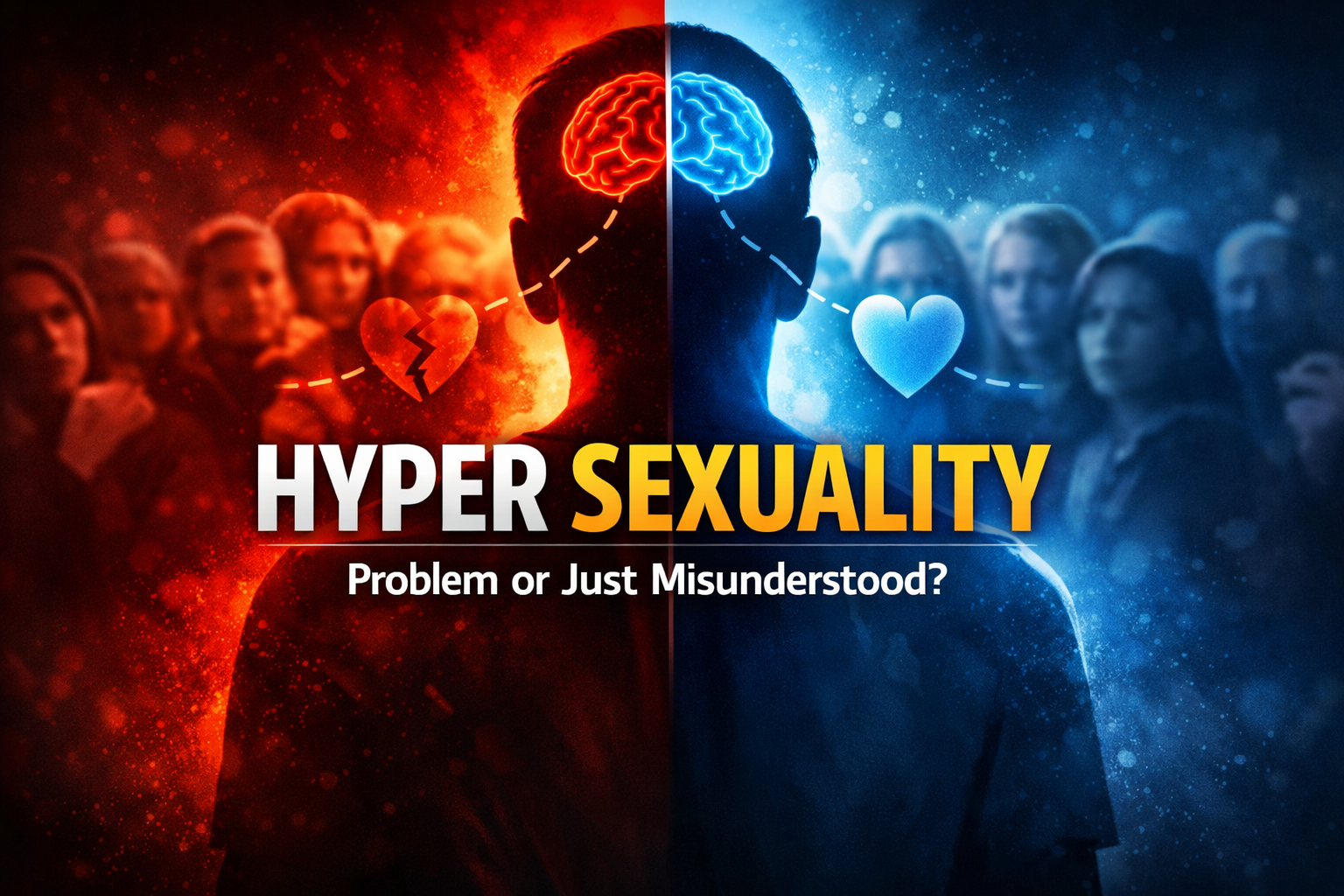
Hyper Sexuality vs High Libido
A high sexual drive alone does not indicate a psychological issue. Some individuals naturally experience above-average sexual desire. In the animal kingdom, such traits often receive acceptance or dominance status. Humans, however, attach morality, shame, and judgment to sexual expression, which creates confusion.
Hyper sexuality becomes a concern only when control is lost and life functioning suffers.
Emotional and Psychological Roots
In clinical practice, it rarely appears without emotional roots. Most cases emerge from unresolved emotional issues, especially those linked to childhood. A common pattern includes early sexual exposure or exploitation combined with rewards, validation, or power dynamics.
Such experiences wire the brain to associate emotional safety, worth, or relief with sexual behavior.
Relationship Patterns and Authority Figures
Individuals with hyper sexuality often enter toxic or imbalanced relationships. They may feel drawn toward authority figures such as teachers, mentors, or significantly older partners. These relationships initially feel intense and confusing.
When emotional responses from the other person remain unclear or inconsistent, the individual may freeze, overthink, and suppress emotions. Gradually, the relationship may appear enjoyable, but often the other person seeks only sexual access, not emotional bonding.
Emotional Consequences and Mental Health Impact
Once the reality of these relationships becomes clear, individuals commonly experience anxiety, overthinking, guilt, and depression. The repeated cycle of attachment, confusion, and emotional abandonment deepens psychological pain.
Many people in this state believe a new relationship will “fix” everything. While a relationship may bring temporary relief, the core emotional wound remains unresolved. Without addressing the root cause, the pattern repeats.
Why Professional Help Is Essential
Hyper sexuality does not resolve on its own. Avoiding consultation only prolongs suffering. Therapeutic intervention helps identify emotional triggers, childhood conditioning, and unconscious beliefs tied to sexual behavior.
With proper psychological support, individuals can regain emotional control, build healthy intimacy, and experience relationships without pain or dependency.
Final Thought
Hyper sexuality is not a character flaw or moral failure. It is a psychological response to unresolved emotional experiences. Understanding this difference changes judgment into compassion—and opens the door to healing.