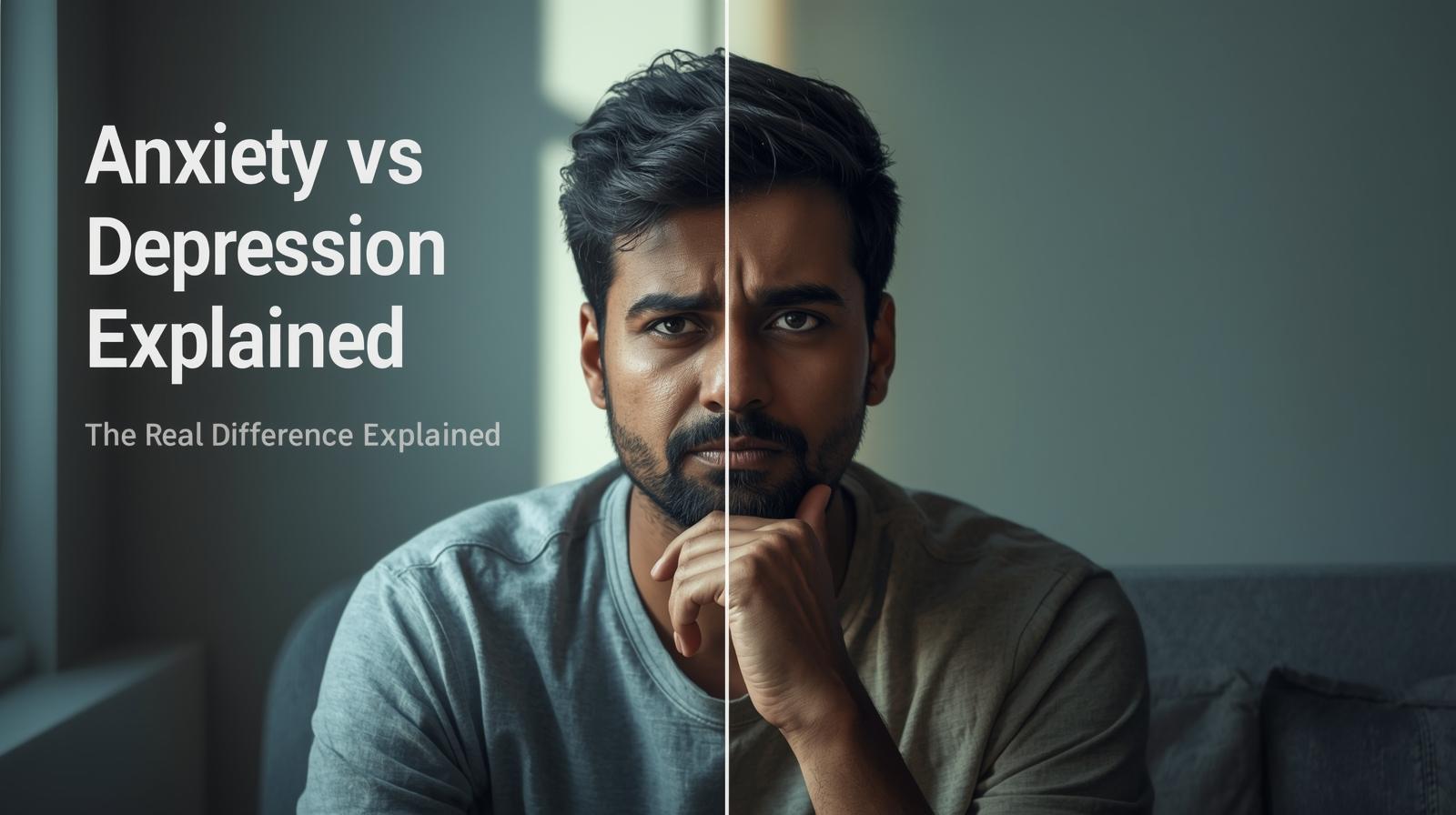
The commonly repeated idea that “anxiety is about the future and depression is about the past” sounds neat, but it oversimplifies how the mind actually works. To truly understand the difference between anxiety and depression, we must explore how emotions get stuck in the body and how the nervous system responds to unresolved experiences.
1. Both Anxiety and Depression Start From Unresolved Past Emotions
Every emotional struggle begins from earlier life experiences—fear, rejection, helplessness, or emotional neglect. These memories stay active in the nervous system. When they get triggered, the system reacts instantly.
This perspective helps reveal the difference between anxiety and depression:
-
Anxiety comes from unprocessed fear.
-
Depression comes from long-term emotional shutdown after the system stays overwhelmed for too long.
Both originate from the past, not from the future or present situations.
2. What Anxiety Really Is: A Hyper-Arousal State
Anxiety is not just “worrying about the future.”
It is the body stuck in fight or flight because old fear remains unresolved. When the system stays alert for too long, the mind tries to predict danger. This creates overthinking, restlessness, and tension.
People with anxiety often feel:
-
A fast mind
-
A busy body
-
Sudden fear without reason
-
Difficulty relaxing
The fear feels like it is about the future, but the root sits in the past. That is a key part of the difference between anxiety and depression.
3. What Depression Really Is: A Freeze Response After Emotional Overload
Depression is not simply “sadness about the past.”
It is the nervous system entering freeze mode after long periods of stress or emotional pressure. When the body can no longer stay in fight or flight, it shuts down to conserve energy.
Signs of depression often include:
-
Numbness
-
Low energy
-
Disconnection
-
Loss of interest
-
Emotional flatness
Depression is the body saying, “I cannot fight this anymore.”
This makes it the deeper layer of the same system that first generated anxiety.
4. The Deep Connection Between Anxiety and Depression
Anxiety and depression are not opposite conditions. They sit on the same spectrum of emotional suppression. The typical pattern is:
Unresolved fear → Chronic anxiety → Emotional exhaustion → Depression
When we see this connection, the difference between anxiety and depression becomes clearer. They feel different, but both come from the same emotional root.
5. Healing Requires Releasing Suppressed Emotions
Since both states originate from stuck emotional energy, the solution is not just positive thinking. Real healing comes from:
-
Understanding emotional triggers
-
Releasing suppressed feelings
-
Reprogramming old beliefs
-
Regaining a sense of safety in the body
When this happens, both anxiety and depression naturally reduce.