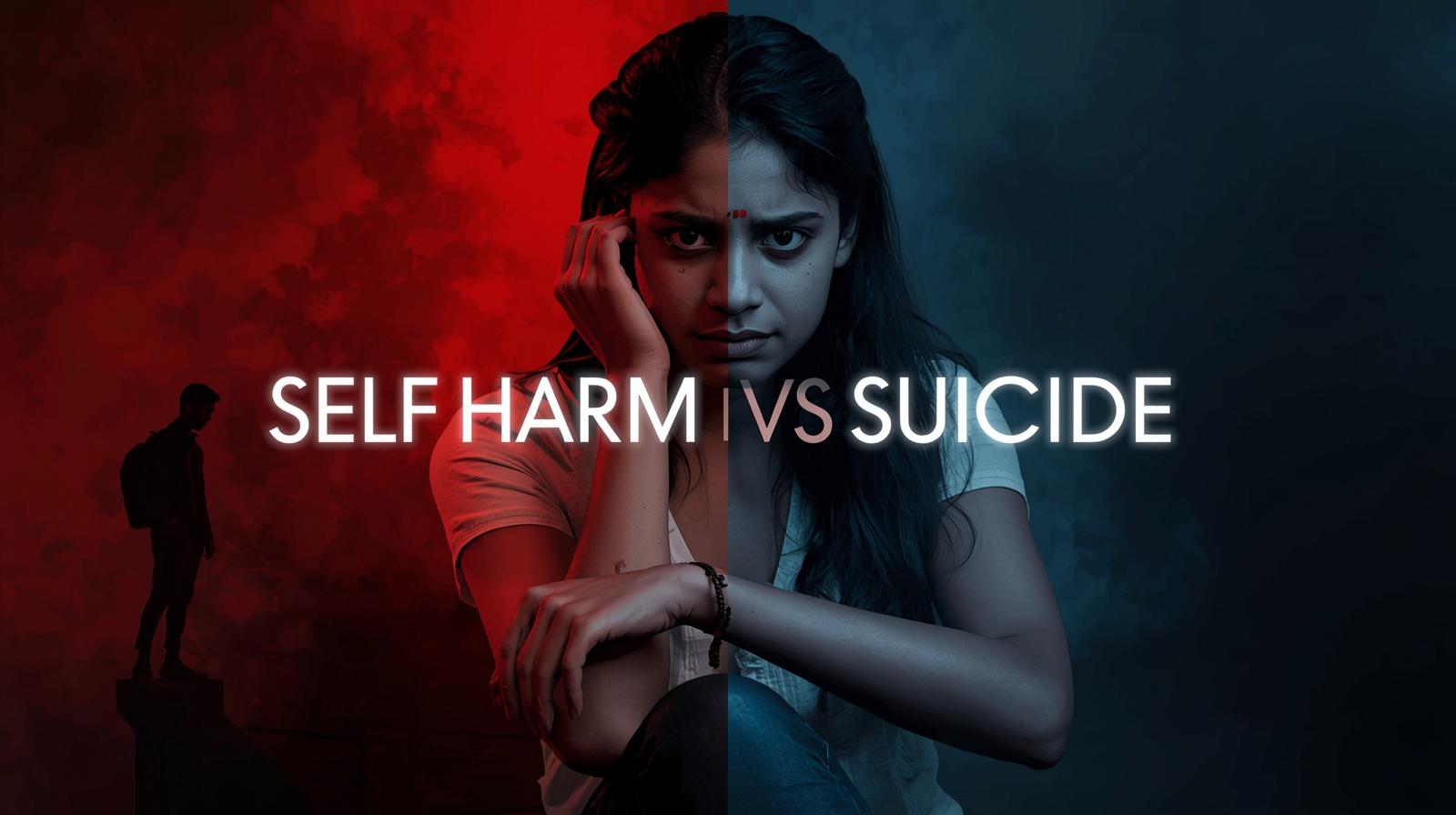
Many people believe self harming and suicide are the same. In reality, they are very different psychological conditions. The emotions, intentions, and inner experiences behind these behaviours are not the same.
Understanding the difference between self harming and suicide is important because the support and treatment approach also changes.
What is Self Harming?
Self harming means intentionally hurting one’s own body without the desire to die. A person may create small cuts, scratches, burns, or other injuries. These wounds may look small but they are still painful.
The purpose of self harm is usually self-punishment or emotional release.
When physical pain is created, the mind temporarily stops focusing on the emotional pain inside. In many cases, people feel that they deserve punishment.
Because of this belief, guilt is usually very high in people who engage in self harming. Along with guilt, they may also experience:
-
Deep sadness
-
Intense anger
-
Self-hatred
-
Emotional confusion
Many individuals who experience self harming and suicide thoughts report that hurting their body temporarily reduces emotional pressure.
Trauma and the Hidden Emotional Loop
In clinical observations, many people who engage in self harming have experienced sexual exploitation or sexual trauma, especially during childhood or teenage years.
The emotional pattern often looks like this:
Trauma → Shame → Guilt → Self-punishment → Self harm
For many individuals, self harming begins during teenage years, when emotional awareness is still developing.
Unfortunately, when such individuals reach hospitals, they are often labelled with conditions like borderline personality disorder or bipolar disorder. Medication may reduce symptoms temporarily, but the self harming tendency may continue if the emotional root is not addressed.
To truly resolve self harming and suicide related behaviour, therapy must identify and release the underlying emotional loop of guilt, anger, and sadness.
This can be challenging, but it is completely possible to overcome with the right psychological support.
What is Suicide?
Suicide is very different from self harm.
The intention behind suicide is not self punishment, but escape.
A person who attempts suicide usually feels deep hopelessness. They may believe that their life situation cannot improve and that the pain will never end.
In this state, the mind tries to escape from life itself.
While self harm is often linked to guilt, anger, and emotional overwhelm, suicide attempts usually come from extreme hopelessness and despair.
Understanding this difference between self harming and suicide helps professionals provide the right type of psychological support.
Seeking Help is the First Step
Whether someone is experiencing self harming behaviour or suicide thoughts, professional support can make a huge difference.
Emotional pain does not have to remain permanent.
Talking to a trained professional can help identify the real reason behind the emotional struggle and guide the person towards healing.
Remember, you are the only person who can speak for your pain, and seeking help is a powerful step toward recovery.