
Many people experience sudden fear without knowing why it happens. There is no clear thought, no visible memory, yet the body reacts as if death is near. Heart races, chest tightens, dizziness appears, and a strong urge to escape takes over. Understanding sudden fear reasons helps reduce confusion and prevents mislabeling it as a heart problem or weakness.
This experience is more common than people realise.
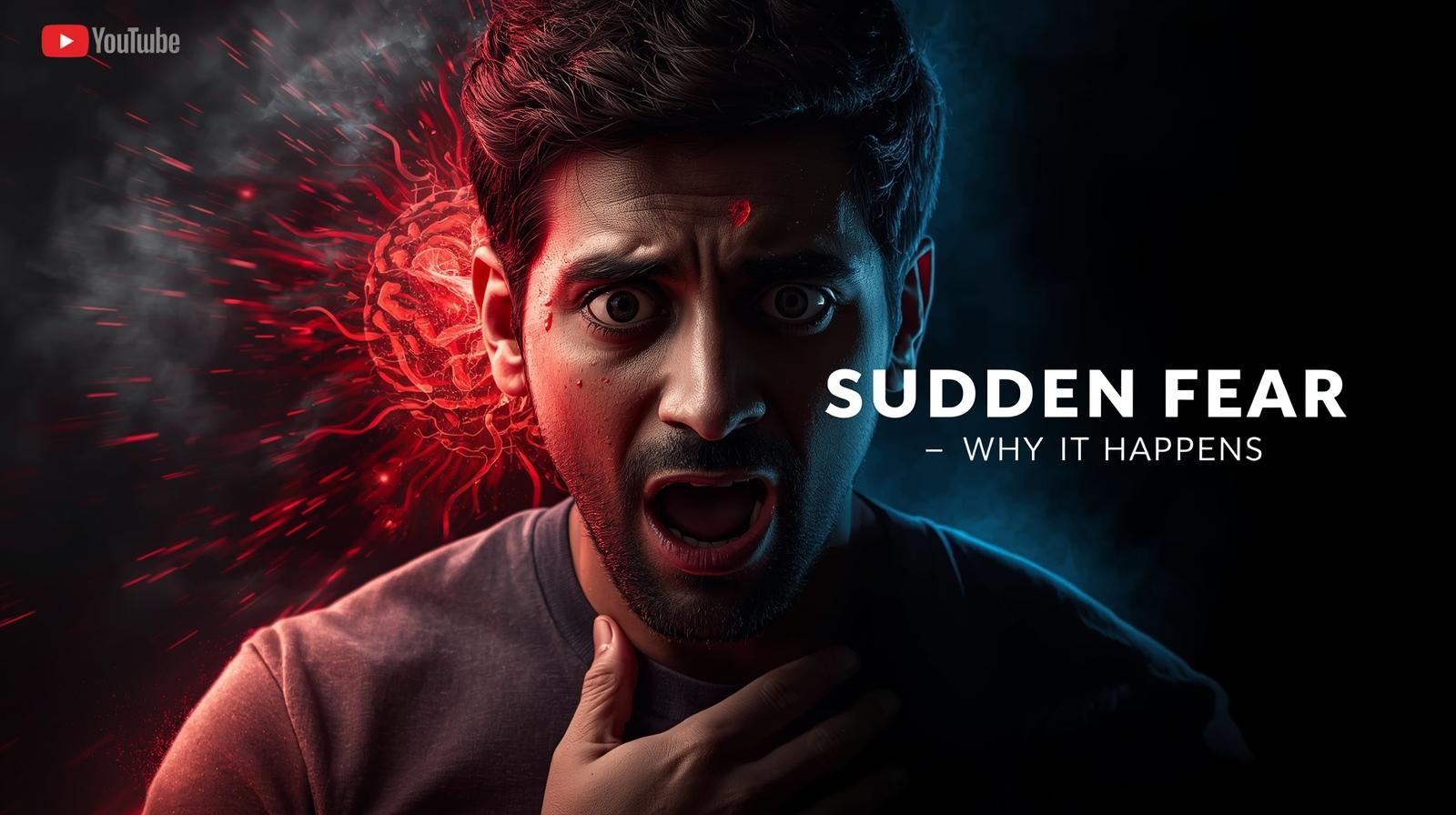
What Happens During Sudden Fear?
Sudden fear is not created by conscious thinking. It begins with amygdala activation, the brain’s threat detection system. When the amygdala senses danger, it triggers a high-threat survival response.
At this stage:
-
Thoughts may disappear
-
No clear memory comes to mind
-
A strong feeling of “I am going to die” arises
Because this reaction bypasses the thinking brain, logical reassurance or breathing exercises often fail in that moment.
When Can Sudden Fear Appear?
Sudden fear can occur at any time:
-
While resting or overthinking
-
During work or walking
-
In public or alone
-
During sleep, waking suddenly with fear
This unpredictability is one of the main reasons people feel helpless. Understanding sudden fear reasons helps reduce this secondary fear.
Childhood Trauma and Hidden Memories
In most cases, the root cause lies in childhood trauma. However, not all trauma is remembered. Some experiences occur before the brain develops clear memory storage. Others involve emotions that were too intense to tolerate.
The brain protects itself by hiding these memories. This process is called dissociation.
Dissociation allows a person to function normally for years, sometimes decades, without obvious symptoms.
Adult Trauma Can Also Trigger It
Sudden fear does not belong only to childhood. Adults may develop it after:
-
Unexpected accidents
-
Sudden losses
-
Emotional shocks
-
Situations involving helplessness or intense fear
When trauma occurs suddenly and overwhelms the nervous system, the fear gets stored without proper emotional processing.
Why Memories Are Often Missing
Many clients worry because they cannot remember any traumatic incident. This absence of memory does not mean the fear is imaginary.
In dissociation:
-
The event may not be stored as a story
-
Only the emotional intensity remains
-
The body remembers, even if the mind does not
Later life stress or emotionally similar situations can reactivate this stored fear.
Why Breathing Exercises Don’t Work
During a sudden fear episode, the body is in high threat mode. The nervous system prioritises survival. At this level, basic relaxation techniques usually fail.
The issue is not poor coping skills. The issue is unresolved fear stored in the subconscious and nervous system.
Why Counselling Support Is Essential
To fully resolve sudden fear, the suppressed fear energy must be processed safely. This requires the subconscious mind and nervous system to relearn safety.
Without proper intervention, sudden fear may repeat or intensify over time. Early counselling support helps prevent long-term anxiety disorders.
Understanding sudden fear reasons changes the experience from confusion to clarity—and opens the door to healing.