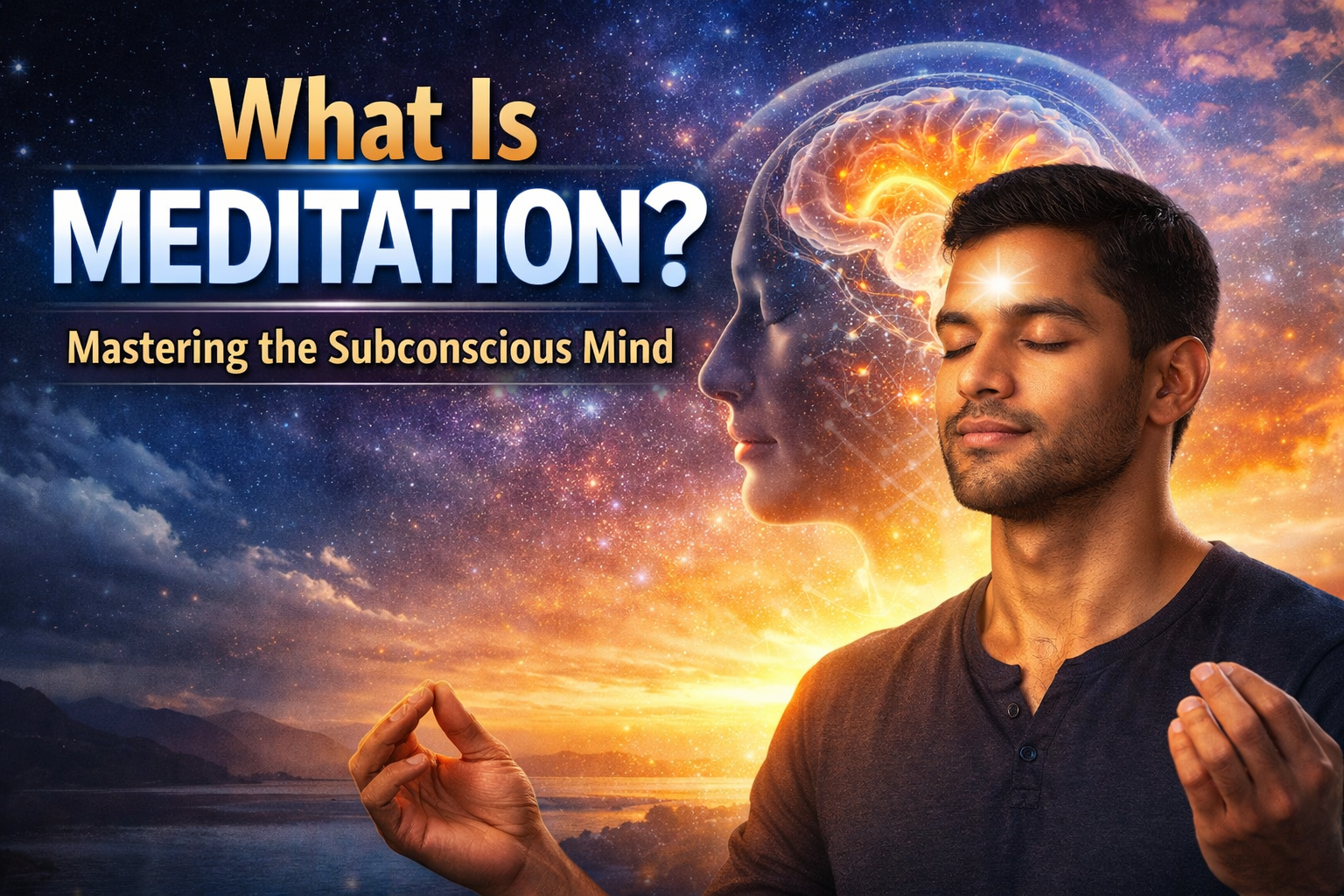
Many people believe meditation means closing the eyes and doing a few breathing exercises. While breathing techniques can help calm the nervous system, they do not define a true meditative state. To understand what is meditation, we must go beyond surface-level relaxation and explore how the mind enters a deeply focused subconscious state.
Meditation Is a State, Not Just a Technique
It is not the act of breathing in and out. It is a state of consciousness where the mind moves away from external awareness and enters deep internal focus. Breathing methods only serve as tools to prepare the mind. They slow down mental noise and help the body relax, but they do not complete the journey.
Many people stop practicing because boredom appears once relaxation stabilizes. That happens because they never cross into the meditative state. True meditation begins when attention shifts from the conscious mind to the subconscious level.
Entering the Subconscious Mind
At its core, meditation is the conscious ability to enter the subconscious mind. In this state, imagination feels real, and emotions arise without external triggers. Whatever you imagine begins to feel emotionally and physically real.
This explains why meditation can create calm, happiness, joy, or even intense bliss. The mind stops reacting and starts creating experiences internally. Understanding it from this angle changes how we practice it.
Creating Target Feelings Intentionally
One powerful aspect is emotional control. Instead of waiting for happiness or calmness to happen, meditation allows you to choose a target feeling and practice generating it consciously.
You can meditate to feel relaxed, confident, joyful, or deeply peaceful. Advanced practitioners aim for ecstatic states, often called Paramananda in spiritual traditions. This is not imagination for escape—it is emotional mastery.
Meditation Happens Naturally More Than You Think
Interestingly, humans enter meditative states unconsciously. During early romance, people daydream intensely. They feel emotions vividly without external awareness. Messages trigger smiles, and voices fade into the background. This is a natural meditative focus.
Similarly, imagination alone can create strong bodily sensations and emotions. When the mind generates pleasure without physical touch, it shows how deeply imagination influences the body. Meditation simply trains this ability consciously and ethically.
Using Meditation to Handle All Emotions
It is not limited to positive feelings. Fear, anger, shame, or sadness can also be created and observed safely during practice. This makes meditation a powerful emotional regulation tool.
By consciously experiencing emotions, you reduce fear of them. Over time, emotions become manageable rather than overwhelming. This psychological use explains this beyond spirituality.
Many Techniques, One Core Principle
There are many meditation techniques—breathing-based, visualization-based, awareness-based, and emotion-based. Techniques differ, but the goal remains the same: conscious access to the subconscious mind.
It is not about escaping life. It is about learning to control internal experience intentionally.
Meta Description (under 156 characters):