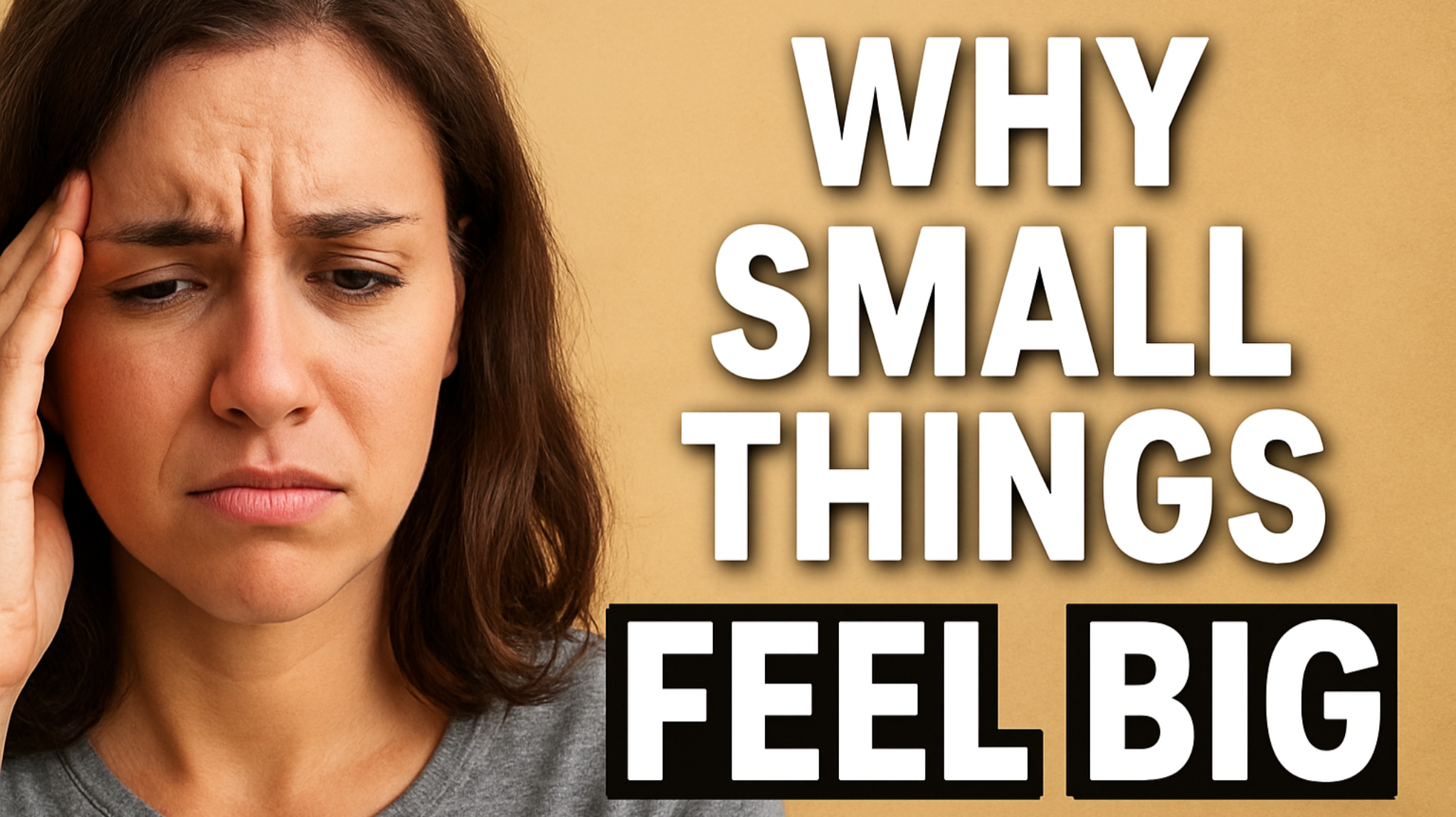
Many people say, “Even small things feel big in my head.” This emotional experience is more common than we think. When simple situations feel overwhelming, it is not because the person is weak or overly dramatic. Instead, it is often due to a highly alert nervous system, usually connected to anxiety. In this article, we explore why small things feel big, the brain’s role in this reaction, and how you can restore emotional balance.
The Hyper-Alert Mind
When the mind is in an anxious state, it becomes extra sensitive to the environment. The brain’s alarm center, called the amygdala, is responsible for detecting danger. In a relaxed state, it only responds to real threats. But during anxiety, the amygdala becomes overactive, scanning for danger even in safe situations. Because of this, small things feel big due to the brain reacting as if every situation might be risky.
Why Sensitivity Increases
This increased sensitivity often begins in childhood or during emotionally stressful experiences. The mind learns that staying alert helps to avoid emotional pain or rejection. So the nervous system forms a pattern:
- Stay watchful
- Analyze everything
- Assume worst-case outcomes
This pattern becomes automatic. It is not a conscious decision. It is a survival strategy that once helped, but now causes emotional overload.
How the Brain Interprets Small Events
When the mind is over-alert, even minor comments, changes in tone, or small uncertainties can feel heavy. The brain magnifies these signals because it believes something needs to be controlled or fixed immediately. As a result:
- A small argument feels like a major conflict
- A delay in reply feels like rejection
- A minor mistake feels like failure
This is not a character flaw. It is the brain reacting to past emotional memories.
Relearning Safety
The solution is to help the mind realize that it is safe now. Calming practices like slow breathing, grounding techniques, and emotional awareness training help the nervous system shift from alertness to relaxation. Therapy can also help dissolve old emotional patterns and form new responses.
When you understand why small things feel big, you begin to respond with compassion instead of criticism toward yourself.