Many people ask, “How can I improve self confidence?” I have mentioned this in an earlier video, but let us make it simpler and easier to understand.
The first thing to understand is that self confidence does not mean having the ability to face everything in life without fear. Nobody has complete confidence in every possible situation. Confidence develops through experience. You build it by facing situations that make you uncomfortable and learning that you can handle them.
1. Accept Your Fear
The first step to improve self confidence is to accept that you are afraid.
Many people struggle here. Instead of accepting their fear, they try to hide it from themselves and others. They may avoid situations, make excuses, or pretend that nothing bothers them.
For example, someone may confidently handle a dangerous animal but feel extremely uncomfortable around insects, reptiles, or other specific triggers. Another person may have the confidence to climb Mount Everest but still feel afraid of swimming.
This shows an important point: confidence is situation-specific.
Fear does not mean that you are weak. Accepting fear simply means recognising, “Yes, this situation makes me uncomfortable.”
2. Be Willing to Face It
After accepting the fear, the next step is becoming willing to face it.
You do not have to immediately confront your biggest fear. Start with a manageable situation and gradually move towards more difficult ones.
When you repeatedly avoid something, your brain can continue to treat it as a threat. Facing it gives your mind an opportunity to learn something different: “I can cope with this.”
This is particularly important when you want to improve self confidence in social situations, public speaking, relationships, or other areas where fear leads to avoidance.
3. Face It Repeatedly
One experience may not completely change your confidence. Repetition matters.
When you repeatedly face a feared situation, you gain new experiences. You learn how your body reacts, what you can tolerate, and what coping strategies work for you.
For example, a person with social anxiety may gradually begin speaking to others, attending social situations, or expressing their opinions. Each successful experience can strengthen their belief that they are capable of handling similar situations.
This is why repeated experience plays an important role in building self confidence.
4. Learn From the Experience
The final step is not simply facing the situation—it is learning from what happened.
Ask yourself:
- What did I expect would happen?
- What actually happened?
- How did I manage the situation?
- What did I learn about myself?
Even if the experience was uncomfortable, you may discover that you were able to tolerate the discomfort and continue.
Over time, these experiences build self-efficacy—the belief that you can handle specific challenges.
You Can Build Your Confidence Again
When people lose self confidence, they may start questioning their abilities and avoiding situations they once handled. But confidence is not something permanently lost.
You can gradually rebuild it.
If you find the first stages difficult, therapy can provide support. A therapist can help you understand your fear, challenge unhelpful beliefs, and create appropriate situations for gradual exposure. However, the repeated practice eventually becomes your own responsibility.
So, remember:
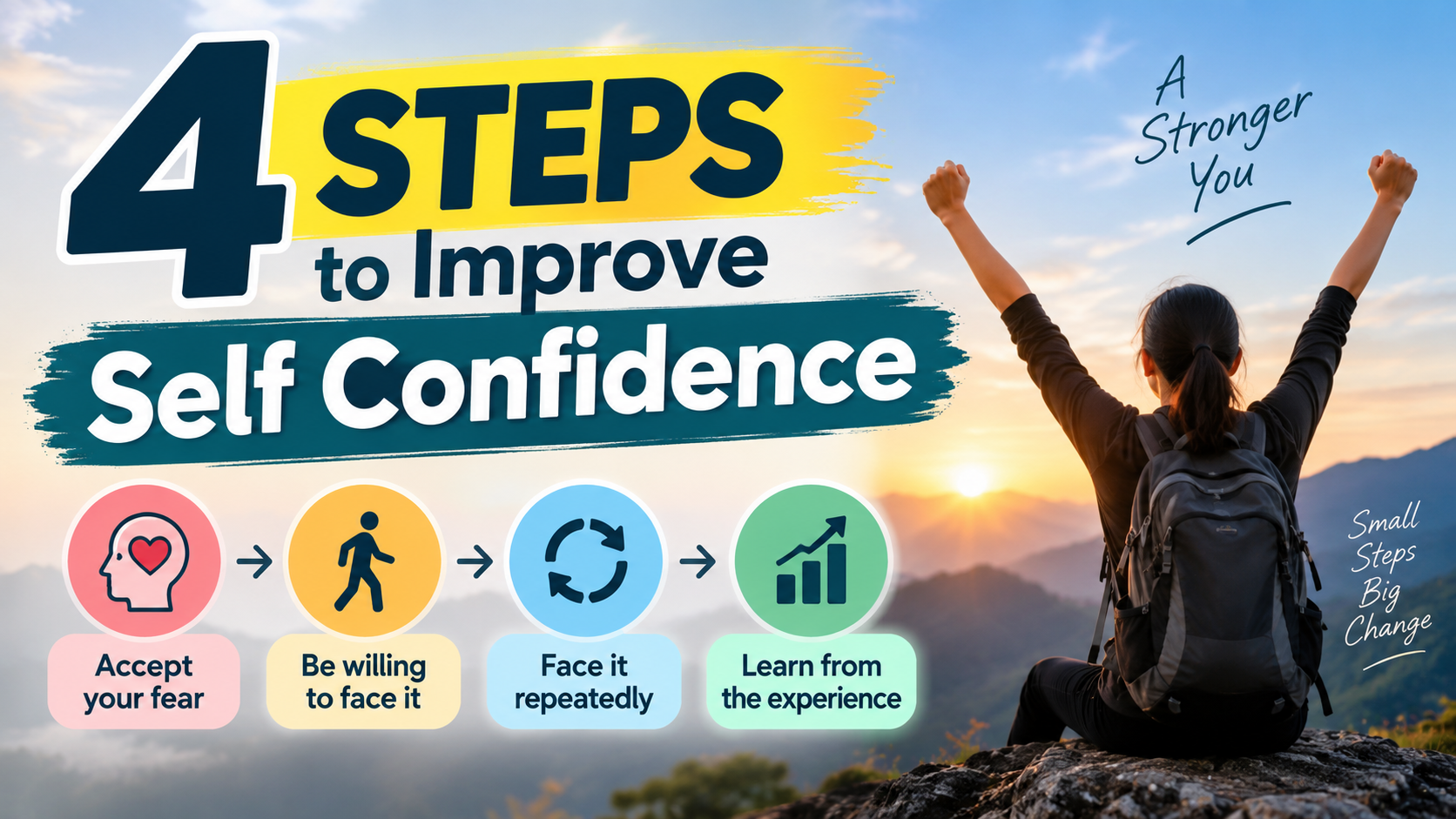
Accept the fear → become willing to face it → face it repeatedly → learn from the experience.
Put aside some of the fear and embarrassment, and try living instead of constantly avoiding. Even when life has problems, you may discover that it can still feel beautiful.