
We naturally compare ourselves with others. Comparison can sometimes motivate us to improve, but for some people, it becomes a repetitive mental pattern that causes significant emotional distress. This pattern is sometimes described as Obsessive Comparison Disorder.
Importantly, Obsessive Comparison Disorder is not an officially recognised psychiatric disorder in the DSM or ICD. It is better understood as an OCD-like comparison pattern that may occur alongside difficulties such as anxiety, low self-esteem, perfectionism, social anxiety or obsessive thinking.
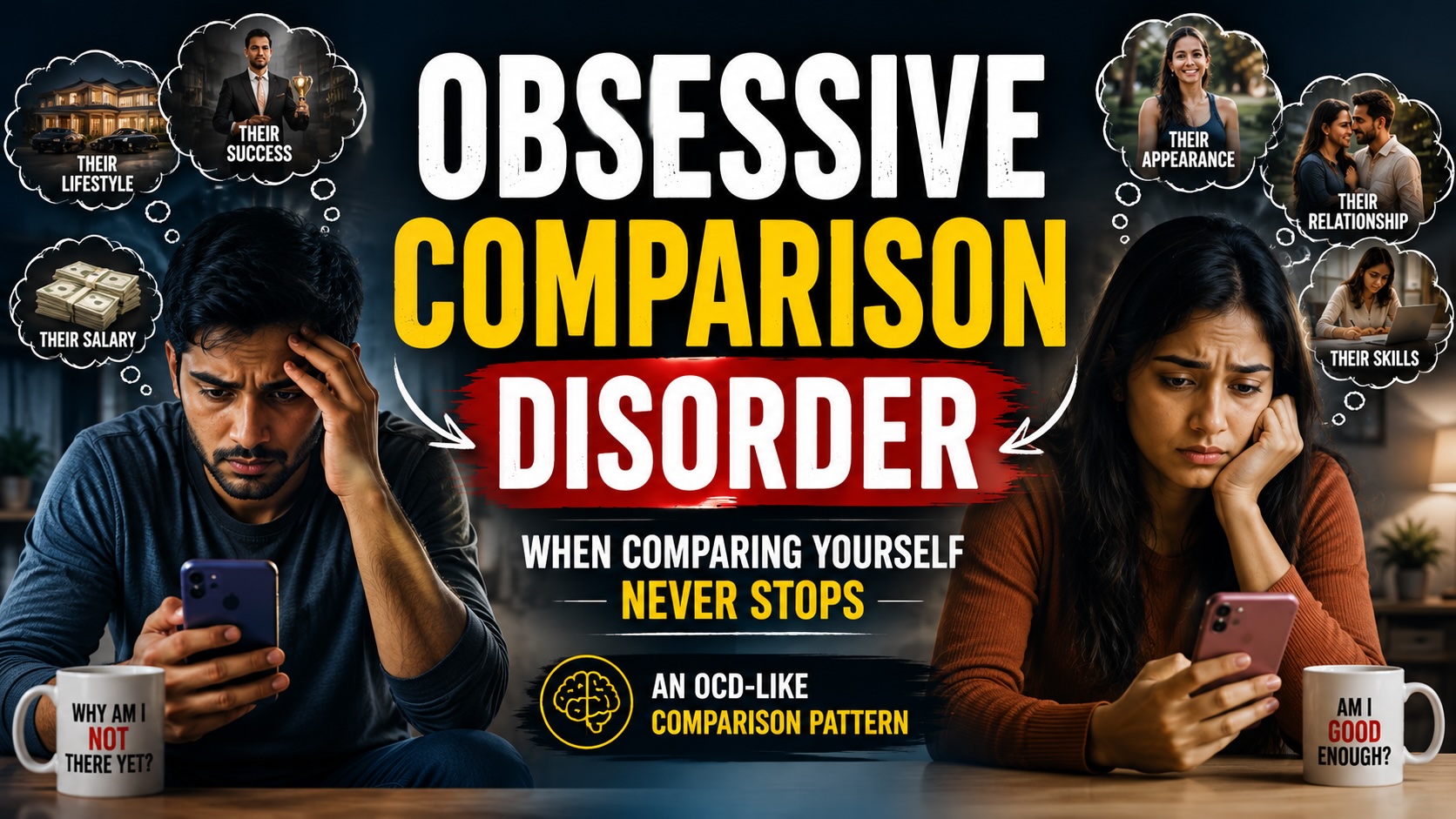
What Is Obsessive Comparison Disorder?
In this pattern, the mind repeatedly compares one’s situation with that of other people. The comparison may involve appearance, salary, career, relationships, intelligence, skills, lifestyle or achievements.
A person may repeatedly think:
“Are they better than me?”
“Why are they ahead of me?”
“Am I not successful enough?”
Even when nothing is happening, these thoughts may return. During periods of sadness, insecurity or stress, the comparison can become even stronger.
Symptoms of Obsessive Comparison Disorder
The symptoms can vary from person to person, but common signs include:
- Constantly comparing appearance, salary, relationships, skills or achievements with specific people.
- Repeatedly thinking about whether someone is better or more successful.
- Checking social media profiles, photographs and updates to make comparisons.
- Asking others for reassurance about one’s own appearance, success or abilities.
- Feeling jealousy, anger, sadness or inadequacy when someone achieves something.
- Finding it difficult to enjoy one’s own achievements.
- Mentally ranking oneself against other people.
- Replaying situations and wondering how one performed compared with others.
- Feeling uncomfortable when someone appears to be progressing faster.
- Knowing that comparison is causing distress but still feeling unable to stop.
The important feature is the repetitive nature of the comparison and the distress it creates.
Why Does Obsessive Comparison Develop?
There can be several reasons behind this pattern.
Childhood Comparison and Criticism
Repeated comparison with siblings, classmates or other children can influence how a child develops self-worth. Constant criticism, blaming or humiliation may also make the child highly sensitive to how they perform compared with others.
Conditional Love and Approval
Some children receive appreciation mainly when they perform well, achieve high marks or obtain a good rank. Over time, they may learn an unhealthy belief:
“I am valuable only when I perform better.”
This can make comparison an important part of adult self-evaluation.
Perfectionism and Fear of Failure
A perfectionistic person may not simply want to improve. They may feel that they must be better than others to feel secure. Another person’s achievement can therefore feel like evidence of their own failure.
Social Media
Social media can intensify comparison because people usually display selected positive aspects of their lives. Constant exposure to these highlights can create unrealistic comparisons and increase feelings of inadequacy.
Can Obsessive Comparison Be Changed?
Yes. Obsessive Comparison Disorder is a changeable psychological pattern, although the appropriate approach depends on what is maintaining it. Therapy can focus on identifying the beliefs behind comparison, reducing reassurance-seeking and checking behaviours, improving self-worth and developing healthier ways of evaluating personal progress.
If comparison is becoming repetitive, difficult to control and emotionally distressing, professional psychological support can help identify the underlying pattern and work towards changing it.