
Many people ask, “Is there a cure for OCD?” Recently, one of my clients asked the same question. He had searched on Google and found several articles saying that OCD has no cure. This information made him feel hopeless and confused.
When I asked where he got this belief, the answer was simple: Google.
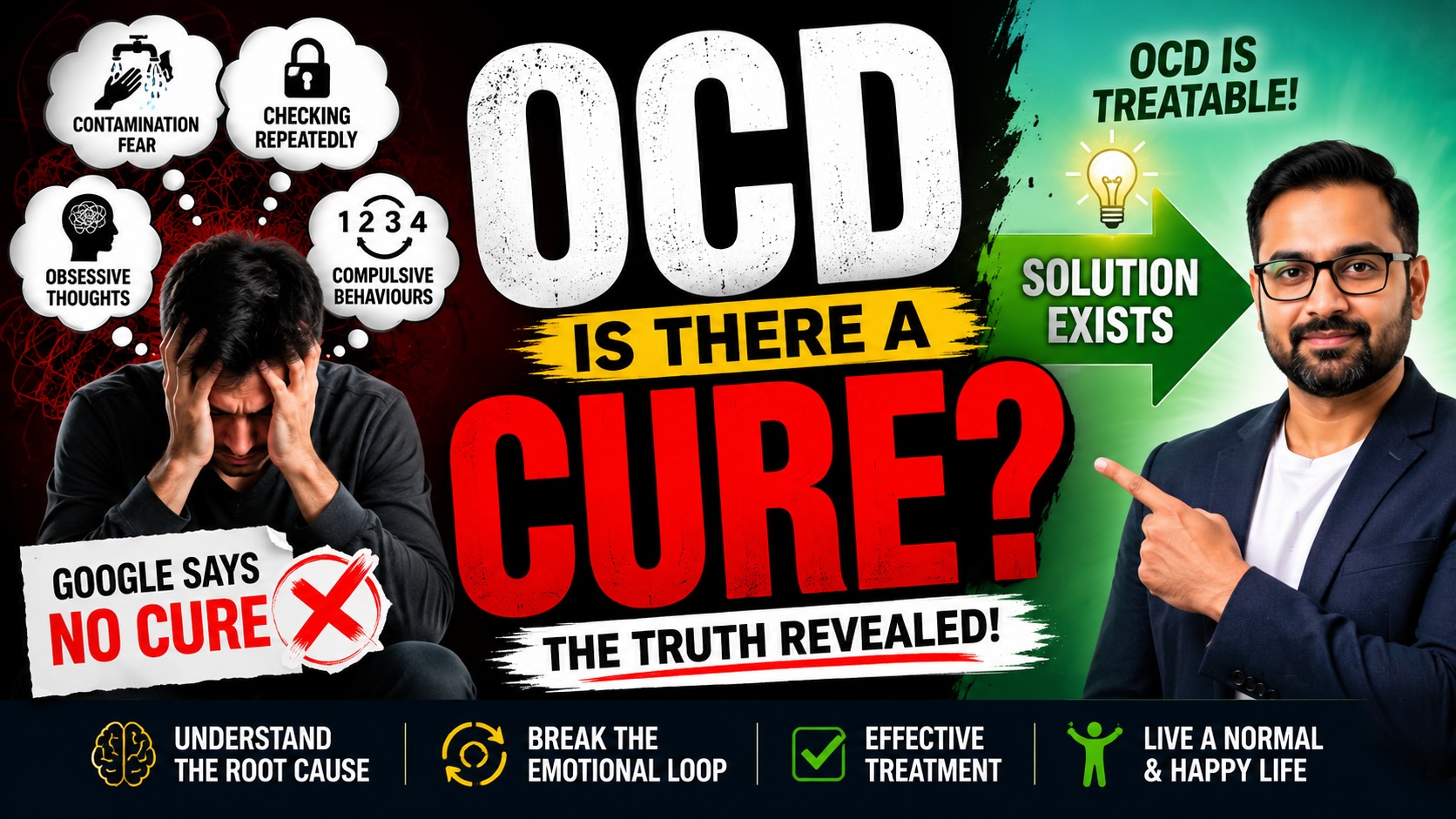
Why Google Creates Confusion About OCD
The confusion often comes from the way people search. If you search “cure for OCD,” many websites may say that OCD is a chronic condition and does not have a universally accepted medical cure.
However, the same sources also mention that OCD is highly treatable and that many people live normal, symptom-free lives after proper treatment.
Think about common conditions like fever, headache, or chickenpox. If you search whether they have a permanent cure, you may find mixed answers. Yet people receive treatment, recover, and continue their lives without difficulty.
OCD is no different.
Understanding What Happens in OCD
To understand the cure for OCD, we first need to understand what happens inside the mind of a person with OCD.
The process usually starts with an external or internal trigger. This trigger creates an uncomfortable emotional feeling. In many cases, the person may not fully realise what the feeling is or where it came from.
This uncomfortable feeling then triggers obsessive thoughts.
As the obsessive thoughts continue, the emotional discomfort becomes stronger. To reduce this discomfort, the person starts repeating certain actions or mental rituals.
These repeated actions are called compulsions.
The cycle looks like this:
Trigger → Uncomfortable Feeling → Obsessive Thoughts → Compulsive Behaviour → Temporary Relief
This is essentially an emotional loop.
Why Thoughts and Behaviours Are Difficult to Control
People often focus only on the obsessive thoughts or compulsive behaviours. However, both of these are symptoms of a deeper emotional process.
The thoughts feel uncontrollable because they are fuelled by emotional discomfort.
The behaviours repeat because they temporarily reduce that discomfort.
As long as the underlying emotional trigger remains active, the cycle continues.
The Real Solution for OCD
In my clinical experience, lasting improvement happens when we identify and resolve the emotional factors that create the obsessive thoughts and compulsive behaviours.
Every person reaches OCD through a different emotional pathway. For one person, fear may be the trigger. For another, guilt, uncertainty, shame, or anxiety may play a major role.
That is why treatment should be individualised.
When the underlying emotional discomfort reduces, obsessive thoughts lose their intensity and compulsive behaviours become easier to control.
This approach helps many people move towards what they experience as a practical cure for OCD in their daily lives.
Stop Increasing Anxiety Through Endless Searches
Constantly searching the internet can increase fear and confusion. Instead of assuming that recovery is impossible, seek professional guidance and understand the factors that drive your OCD.
The cure for OCD may not be found through endless Google searches, but with the right assessment and treatment approach, significant recovery is absolutely possible.