
Many people experience doubts in relationships from time to time. However, when these doubts become obsessive, repetitive, and uncontrollable, they may indicate Relationship OCD (ROCD). Relationship OCD is a subtype of OCD in which a person experiences persistent intrusive thoughts and compulsive behaviours related to their romantic relationship.
In Kerala, many people struggle with this condition but hesitate to discuss it, even with their own partner, due to embarrassment or fear of being misunderstood.
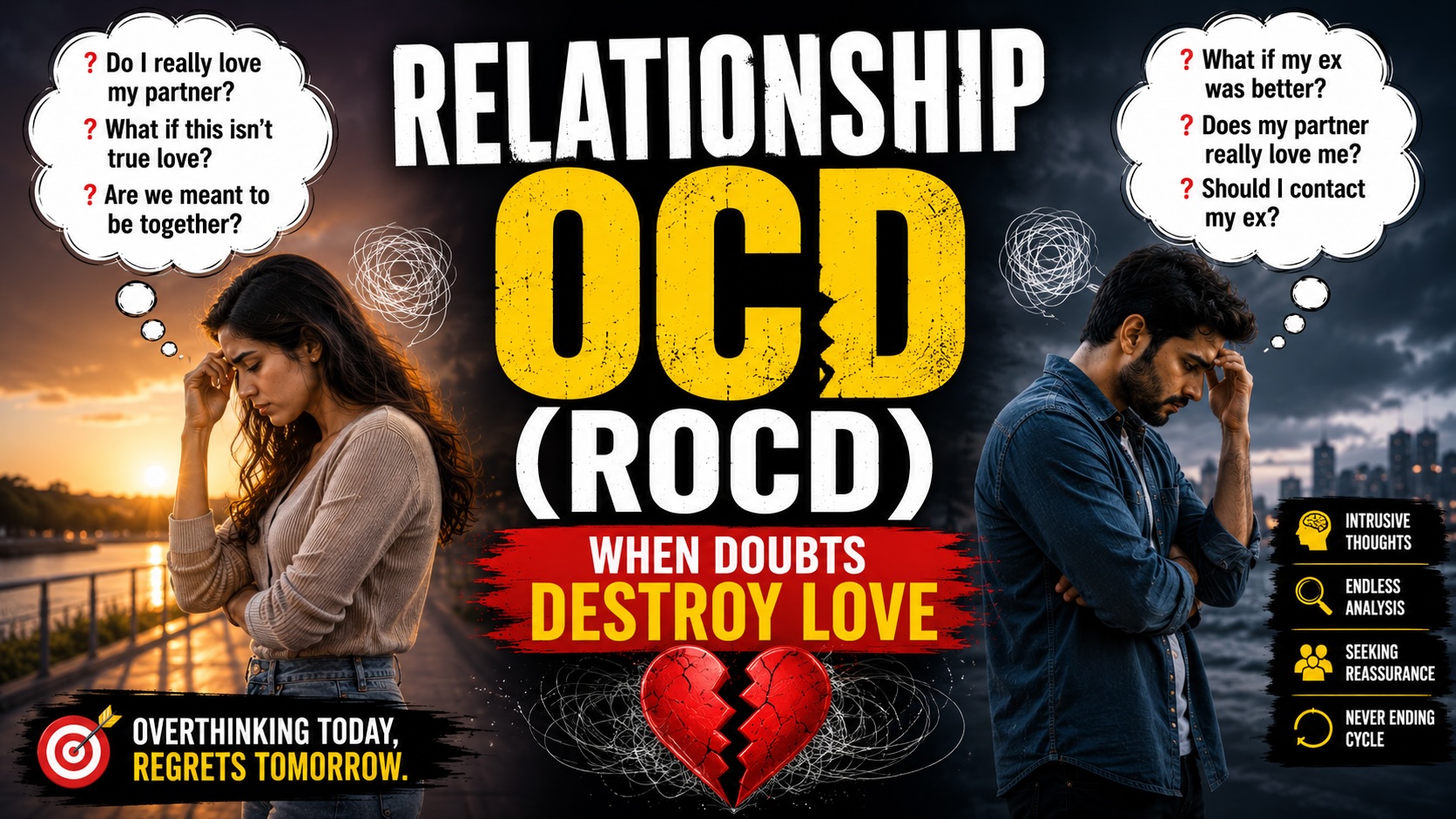
What is Relationship OCD?
Relationship OCD involves obsessive thoughts about love, attraction, compatibility, and commitment. A person may constantly question their relationship despite having a caring and supportive partner.
Common questions that repeatedly appear in the mind include:
- Is this really love?
- Do I genuinely love my partner?
- Does my partner truly love me?
- Are we meant to be together?
- What if there are better options?
- What if I regret this relationship later?
- Why do I focus only on my partner’s flaws?
- Why can’t I simply be happy?
- Was my previous partner better?
- Should I contact my ex?
- Is it wrong to have these thoughts?
These thoughts often feel uncontrollable and may flood the mind like water released from a dam.
Common Compulsive Behaviours in ROCD
The anxiety created by these thoughts often leads to compulsive behaviours aimed at finding certainty.
Some common compulsions include:
- Repeatedly asking partners, friends, relatives, Google, or ChatGPT for reassurance.
- Comparing the relationship with other couples.
- Testing feelings to check if love is still present.
- Comparing current emotions with emotions from the past.
- Re-reading old chats and messages.
- Checking an ex-partner’s social media profiles.
- Replaying old memories repeatedly.
Although these behaviours provide temporary relief, they usually strengthen the cycle of anxiety and doubt.
How Relationship OCD Affects Relationships
Instead of enjoying and nurturing the relationship, the person becomes trapped in endless analysis, comparison, and testing. They spend so much time searching for “perfect love” that they miss opportunities to experience genuine connection.
Over time, this pattern can create misunderstandings, emotional distance, and unnecessary conflicts. Some relationships may even break down if the underlying problem remains untreated.
When Should You Seek Help?
Many people assume these thoughts are normal relationship concerns. However, if doubts consume significant time, create anxiety, and interfere with daily life or relationship satisfaction, professional consultation may be helpful.
Early intervention often prevents unnecessary distress and helps individuals regain confidence in their relationships.
Final Thoughts
Relationship OCD is not a sign that a relationship is wrong. In many cases, it reflects an anxiety-driven need for certainty about love, attraction, and commitment. Understanding the condition is the first step toward breaking the cycle of obsessive thinking and compulsive reassurance-seeking. With proper guidance, people can learn to focus less on endless analysis and more on building meaningful and fulfilling relationships.