
In a previous article, we discussed the symptoms of Relationship OCD (ROCD). Unlike many personal struggles, obsessive thoughts and compulsive behaviours related to relationships often affect both partners. If left unaddressed, Relationship OCD can create misunderstandings, emotional distress, and even damage healthy relationships. If you have not read about the symptoms yet, it is worth understanding them first.
In this article, let us explore some common Relationship OCD reasons and why certain people become trapped in a cycle of doubt and overthinking.
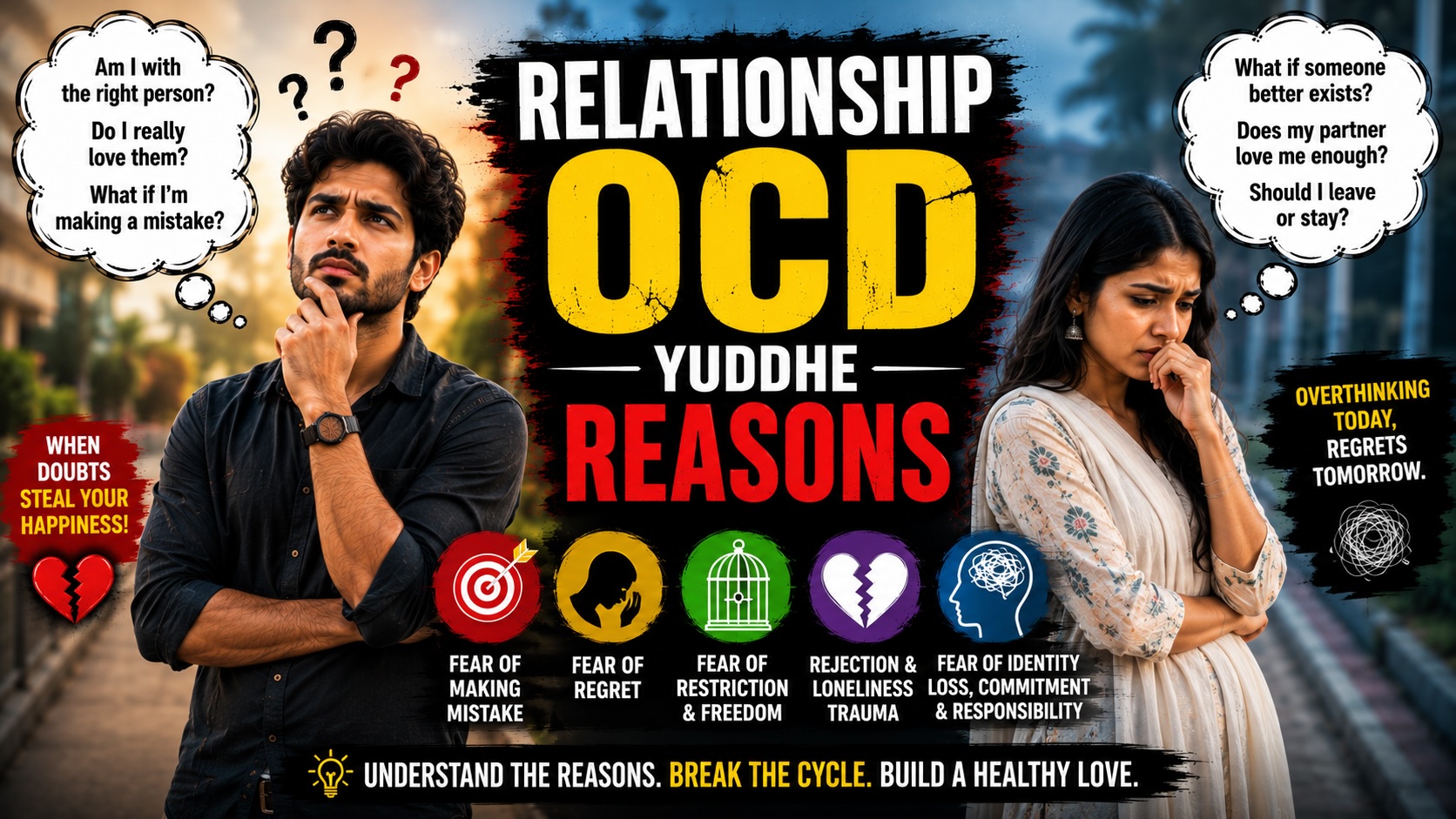
Fear of Making the Wrong Decision
One of the most common Relationship OCD reasons is the fear of making mistakes. Some people have a subconscious goal of making perfect decisions without any risk of failure.
When they enter a relationship, they repeatedly analyse every choice they have made. Questions such as “Did I choose the right person?” or “What if I made a mistake?” keep returning. This constant mental review creates confusion and triggers anxiety.
Fear of Regret
Many people with ROCD experience excessive fear of future regret, guilt, or disappointment.
They worry about situations that have not happened and may never happen. Their mind keeps generating “what if” scenarios in an attempt to prevent future emotional pain. Unfortunately, these obsessive thoughts often create more anxiety instead of providing reassurance.
Fear of Restriction and Loss of Freedom
Some individuals grow up with limited emotional freedom. They may have experienced excessive control, criticism, or pressure during childhood.
As adults, commitment can sometimes trigger fears of losing independence. They may repeatedly wonder:
- Am I trapped in this relationship?
- What if I lose my freedom?
- What if I cannot leave later?
These thoughts can become a major contributor to Relationship OCD.
Previous Rejection or Loneliness Trauma
Past experiences of rejection, abandonment, betrayal, or loneliness can influence how a person views relationships.
Even when they are with a caring partner, part of their mind may remain alert for signs of rejection. This fear can lead to constant checking, reassurance-seeking, and relationship analysis.
Fear of Identity Loss and Commitment
For some people, a serious relationship brings concerns about identity, responsibility, and commitment.
They may worry:
- Will I lose myself in this relationship?
- Am I ready for this responsibility?
- What if I cannot handle long-term commitment?
These fears can create persistent doubts even when the relationship itself is healthy.
Intolerance of Uncertainty
Among all Relationship OCD reasons, difficulty tolerating uncertainty often plays a major role.
People with ROCD usually want clear and definite answers about the past, present, and future. When certainty is unavailable, anxiety increases.
Logical questions often have clear answers. Emotional questions usually do not. Questions such as “Do I love my partner enough?” or “Will we always be happy together?” rarely have perfect answers. The search for complete certainty can keep the OCD cycle alive.
Can Relationship OCD Be Managed?
The good news is that Relationship OCD is highly manageable with the right guidance. Many people experience significant improvement when they learn to reduce reassurance-seeking, stop excessive checking, and understand the anxiety cycle behind their thoughts.
Support from a partner can also make recovery easier. Early consultation often prevents unnecessary conflicts and helps couples focus on building a healthier and more fulfilling relationship.
Understanding the true Relationship OCD reasons is often the first step toward breaking free from the cycle of doubt and anxiety.