
Many people occasionally avoid difficult situations, uncomfortable conversations, or social gatherings. However, Avoidant Personality Disorder (AVPD) is much more than simple shyness. It is a psychological condition where a person consistently avoids social situations, relationships, and opportunities because of an intense fear of rejection, criticism, or embarrassment.
Although Avoidant Personality Disorder (AVPD) is not among the most common mental health conditions, it is a concern that frequently appears in psychological consultations.
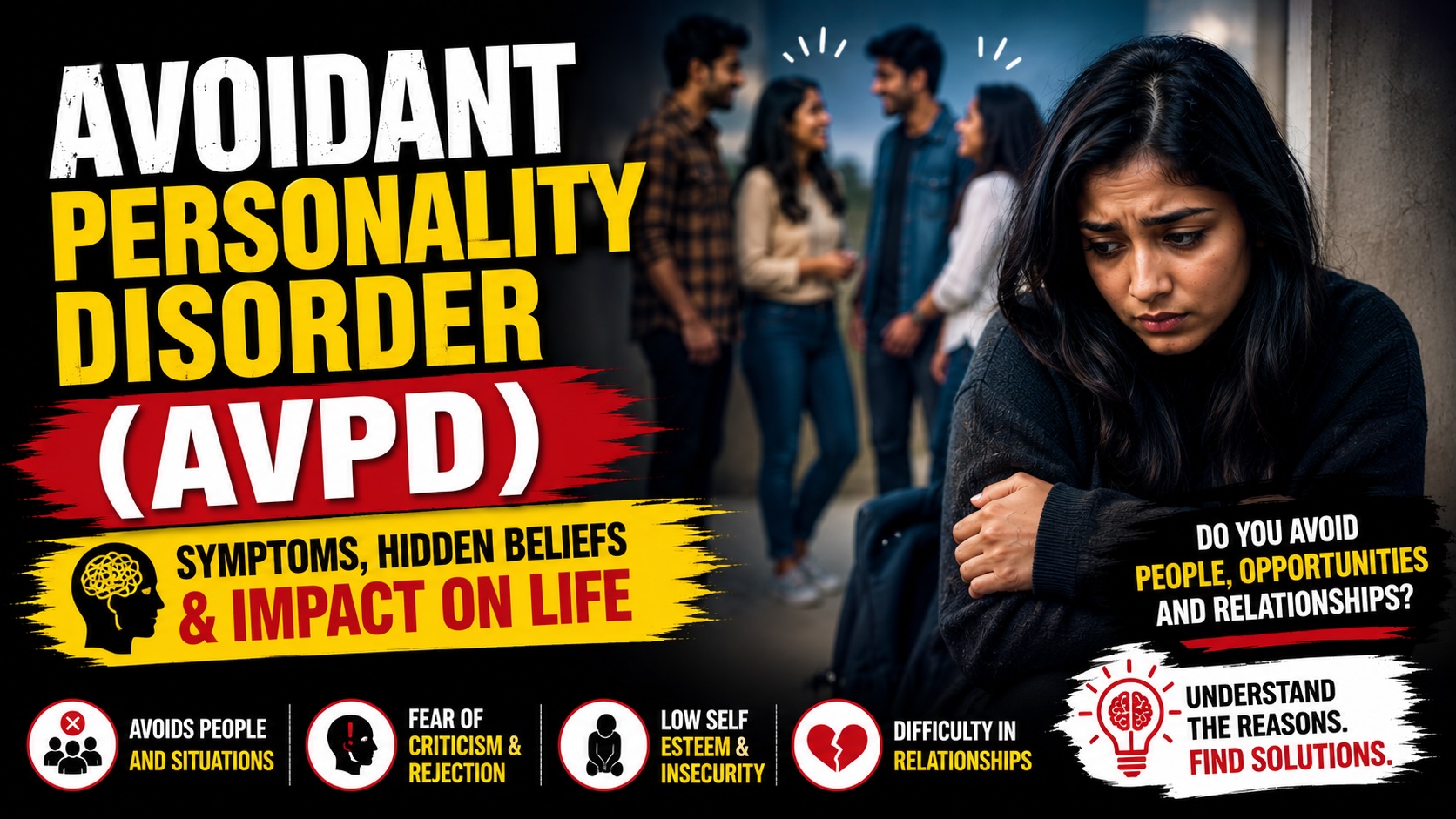
What is Avoidant Personality Disorder (AVPD)?
People with Avoidant Personality Disorder (AVPD) often want connection, friendship, and acceptance. However, their fear of rejection becomes so strong that they choose to stay away from situations where they might feel judged or criticized.
As a result, they may miss valuable opportunities in their personal life, career, and relationships.
Common Symptoms of AVPD
1. Avoiding Social Situations
Individuals with AVPD often avoid public places, social gatherings, meetings, or group activities because they fear embarrassment or emotional discomfort.
2. Extreme Sensitivity to Criticism
Even minor criticism, teasing, or negative feedback can cause significant emotional distress. They often replay such incidents repeatedly in their minds.
3. Feelings of Inadequacy
Many people with AVPD carry a strong belief that they are less valuable, less capable, or less attractive than others.
4. Difficulty Forming Friendships
They may hesitate to start friendships because they fear rejection, abandonment, or disappointment.
5. Avoiding Romantic Relationships
Even when they desire intimacy and emotional closeness, they may avoid romantic relationships due to fear of rejection.
6. Overthinking Conversations
People with AVPD frequently analyse past conversations and interactions. They may spend hours wondering whether they said something wrong.
7. Fear of Making Mistakes
The constant worry about making mistakes in front of others often prevents them from participating in activities or expressing themselves freely.
How AVPD Affects Daily Life
Self-confidence tends to remain very low in many individuals with AVPD. They often prefer isolation over interaction and may spend considerable time alone.
A common thought pattern is:
“People will eventually reject me.”
This expectation of rejection influences many of their decisions and behaviours.
Common Subconscious Beliefs in AVPD
Many individuals with Avoidant Personality Disorder (AVPD) develop deeply rooted subconscious beliefs that guide their behaviour.
Some common beliefs include:
- I am not good enough.
- If people know the real me, they will reject me.
- I do not belong here.
- Others are thinking negatively about me.
- It is safer to stay away from people.
- Whatever I do will end in failure.
- Getting close to others will only bring pain.
- I can never be like other people.
These beliefs often become so automatic that the person accepts them as facts rather than opinions.
Can AVPD Be Treated?
The encouraging news is that AVPD is not a hopeless condition. Understanding the underlying reasons, emotional experiences, avoidance patterns, and subconscious beliefs can help individuals make meaningful changes.
With proper psychological support, many people learn to challenge their fears, improve self-confidence, and build healthier relationships.
In the next article, we will explore the major causes of Avoidant Personality Disorder (AVPD) and discuss practical approaches that can help individuals overcome this pattern.