News reports often describe incidents where people engage in unwanted sexual behaviour in public, such as touching strangers without consent, exposing themselves, getting arrested, and later repeating the same behaviour. While these acts are criminal offences, not every offender has the same psychological background.
Broadly, these behaviours may occur in two different ways. Some individuals knowingly break the law to satisfy sexual urges or challenge social boundaries. Others may be struggling with Compulsive Sexual Behaviour Disorder (CSBD), a mental health condition that affects their ability to control repetitive sexual behaviours. Understanding this difference is important because legal accountability and mental health treatment can both play important roles.
What is Compulsive Sexual Behaviour Disorder (CSBD)?
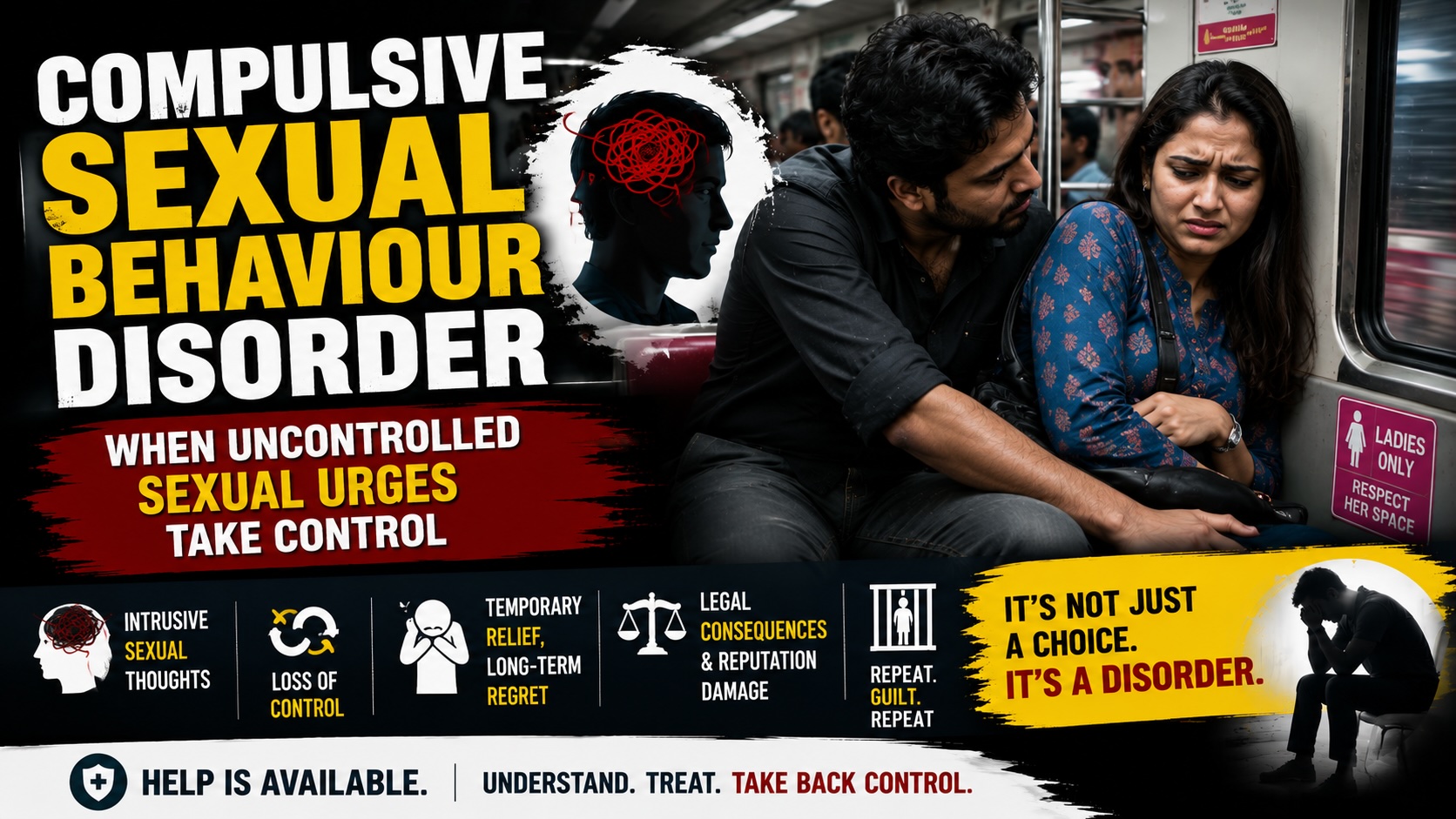
Compulsive Sexual Behaviour Disorder (CSBD) is a recognised mental health condition in which a person experiences persistent sexual thoughts, urges, or behaviours that become difficult to control. These behaviours continue despite causing problems in relationships, work, finances, reputation, or even legal consequences.
Many people with this condition never seek treatment because they fear judgement, embarrassment, or social stigma.
Common Symptoms of Compulsive Sexual Behaviour Disorder (CSBD)
People with Compulsive Sexual Behaviour Disorder (CSBD) may experience several of the following symptoms.
1. Persistent Sexual Thoughts
Sexual thoughts become repetitive, intrusive, and difficult to stop. They often interfere with concentration and daily activities.
2. Loss of Control
The person genuinely wants to stop the behaviour but repeatedly fails despite making personal promises to change.
3. Stronger Internal Pressure While Resisting
Some individuals notice that the internal urge becomes more intense when they try to suppress it without appropriate professional help. This creates an emotional struggle between self-control and overwhelming impulses.
4. Temporary Relief Instead of Pleasure
Many people describe the behaviour as providing temporary relief from intense psychological pressure rather than genuine sexual satisfaction. The act reduces emotional tension for a short time.
5. Guilt, Fear, and Shame Afterwards
Once the relief disappears, many experience guilt, regret, fear of consequences, embarrassment, and self-blame. They often decide never to repeat the behaviour but may find themselves trapped in the same cycle again.
6. Using Sexual Behaviour to Cope with Stress
Stress, loneliness, anxiety, anger, boredom, or emotional pain can trigger the urge. Sexual behaviour becomes an unhealthy coping mechanism instead of a healthy source of pleasure.
7. Excessive Pornography or Masturbation
Some individuals also struggle with compulsive pornography use or excessive masturbation. However, these behaviours alone do not confirm a diagnosis of CSBD.
Why Professional Help Matters
Many people describe feeling overwhelming tension before engaging in the behaviour. Some report intense anxiety, racing thoughts, a feeling of losing control, physical restlessness, or emotional pressure that becomes difficult to tolerate. The sexual behaviour temporarily relieves this pressure, reinforcing the cycle.
Without treatment, the behaviour may become more frequent and may lead to relationship problems, social isolation, legal consequences, or significant emotional distress.
Recovery is Possible
Evidence-based psychological therapies can help individuals understand their triggers, improve impulse control, develop healthier coping strategies, and reduce the risk of repeating harmful behaviours.
If you recognise these symptoms in yourself, do not let shame prevent you from seeking help. Early intervention can improve self-control, emotional wellbeing, and overall quality of life.