What Is Depersonalisation and Derealisation?
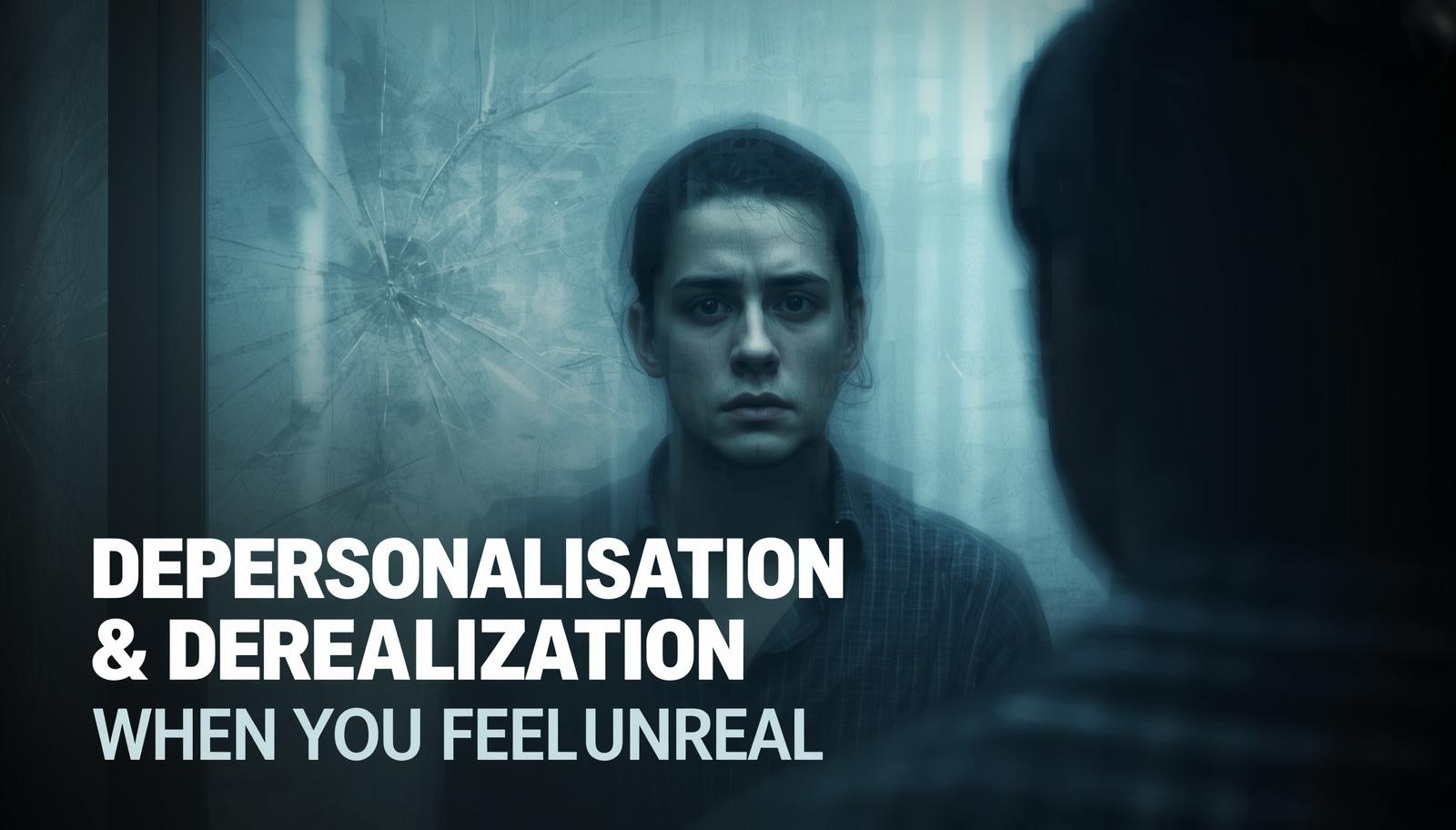
Depersonalisation and derealisation are dissociative experiences where a person feels disconnected from their own body, identity, or surroundings. People often describe it as “I am not myself, I am only a body,” or “This world does not feel real.” When looking into a mirror, some feel as if they are seeing a stranger instead of themselves. Others may feel emotionally detached from loved ones or believe they do not belong to their own environment.
How This Condition Develops
Depersonalisation and derealisation usually develop gradually. It does not appear suddenly without reason. Long-term emotional trauma, unresolved psychological pain, intense fear, or chronic anxiety often trigger this condition. When a person repeatedly faces situations that the mind cannot emotionally tolerate, the subconscious mind activates a survival response.
This response works as a defense mechanism. By creating emotional distance, the mind tries to reduce psychological pain. If the experience does not feel like “mine,” the suffering also feels less personal. While this mechanism protects the mind temporarily, it can become distressing when it persists.
Early Warning Signs Before Dissociation
Before full depersonalisation and derealisation appear, many people experience subtle symptoms. They may forget things easily or struggle to visualise memories. Some find it difficult to think clearly or emotionally connect with their thoughts. Mental images may fade, and concentration may reduce.
These signs often signal emotional overload. Ignoring them can allow the dissociative state to deepen over time.
Why Anxiety and Fear Play a Major Role
High levels of anxiety and fear strongly contribute to this. Constant alertness keeps the nervous system overstimulated. When the mind stays in survival mode for long periods, dissociation becomes an automatic escape.
People with panic disorder, trauma histories, or prolonged emotional suppression face a higher risk. The condition does not mean weakness. It reflects a nervous system trying to survive overwhelming internal pressure.
Why Early Consultation Is Important
Consultation is highly important when depersonalisation and derealisation persist. If left unaddressed, the condition can intensify. In some cases, individuals may later experience hallucinations or delusion-like thoughts due to prolonged dissociation and anxiety.
Many people around you may normalise your symptoms or minimise your pain. However, only you truly feel the intensity of your internal distress. Emotional pain does not need external validation to be real.
Shifting From Problem Focus to Solution Focus
Healing begins when you stop searching for explanations alone and start searching for solutions. Professional psychological support helps regulate the nervous system, release suppressed emotions, and restore a sense of self. With the right approach, depersonalisation and derealisation are manageable and reversible.
You deserve clarity, connection, and emotional safety.