
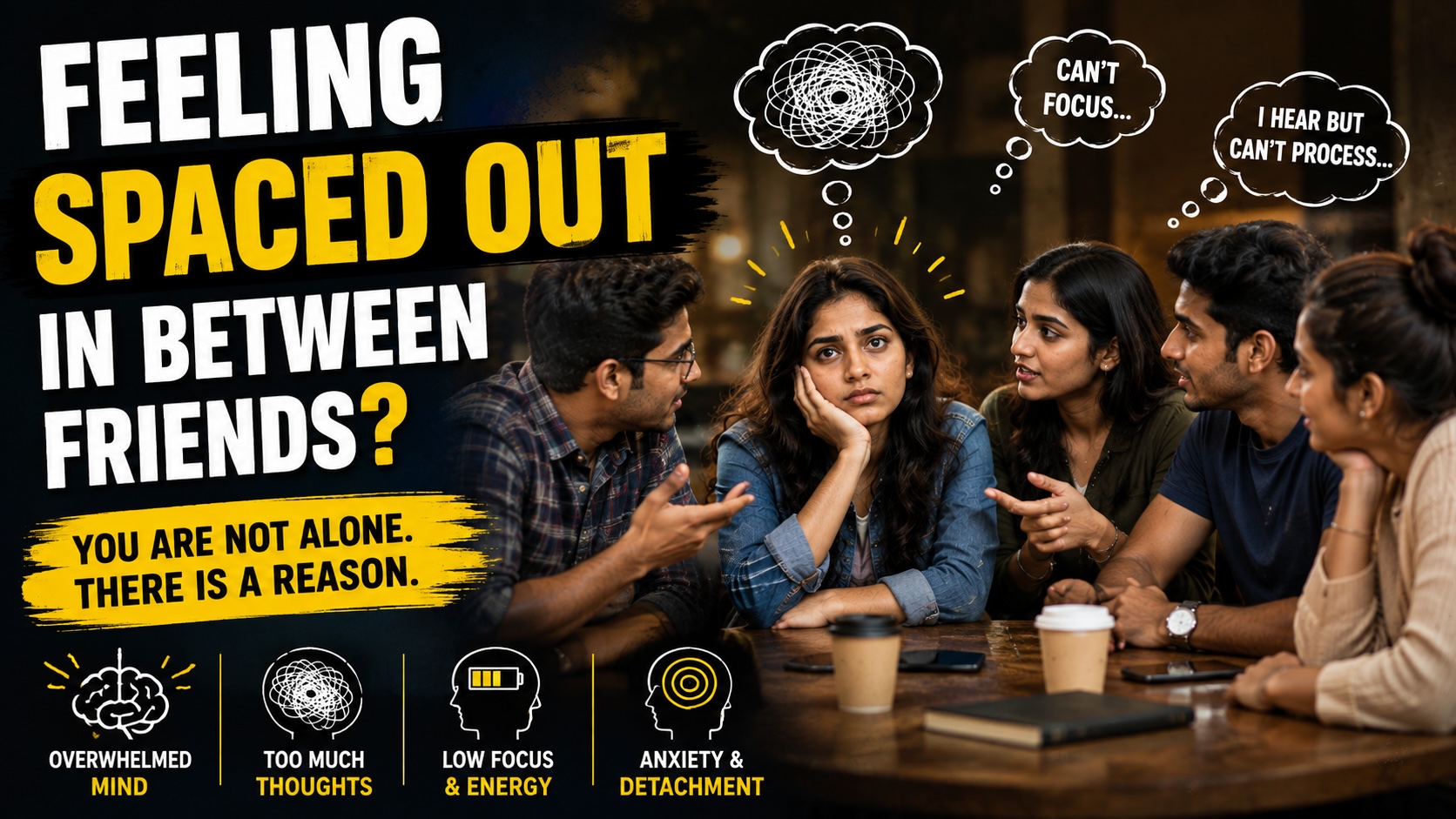
Some people appear absent-minded during conversations. They may miss parts of what others are saying, give unrelated answers, or seem mentally disconnected. Friends or colleagues often assume they are not paying attention and may even joke about it. However, this behaviour is not always intentional. In many cases, emotional overload may be affecting the person’s ability to process information.
What Is Emotional Overload?
Emotional overload occurs when the brain is handling more emotional stress than it can comfortably manage. Repeated trauma, chronic anxiety, fear of embarrassment, or ongoing emotional pressure can keep the nervous system in a constant state of alertness.
When the brain becomes overloaded, it prioritises managing stress instead of processing new information efficiently. As a result, concentration, attention, and working memory may temporarily decline.
Why Do Some People Seem Absent-Minded?
Imagine someone standing in a group conversation. Everyone is talking, but they fail to process the discussion completely. When another person asks them a question, they may respond with something unrelated because they missed important parts of the conversation.
Others may think the person is careless, distracted, or simply not listening. In reality, their brain may already be struggling with emotional overload.
For individuals with a history of repeated emotional trauma or chronic anxiety, social situations can become especially difficult. They may constantly worry about being judged, criticised, or embarrassed. This fear itself consumes mental resources, making it even harder to stay focused.
How Emotional Overload Affects the Brain
When stress and anxiety become intense, the brain has fewer resources available for attention and working memory. Processing conversations, remembering details, and responding appropriately become more difficult.
Think about the moments immediately after receiving shocking news. For a short time, you may hear people speaking but struggle to understand their words. Your mind feels blank, and your thoughts slow down.
People experiencing persistent emotional overload may experience similar episodes more frequently because their brain is already under continuous stress.
Why Trying Harder Can Make It Worse
Many people believe they simply need to “concentrate more.”
Unfortunately, excessive self-monitoring often increases anxiety.
The person begins thinking:
- “I must not miss anything.”
- “Everyone will think I’m foolish.”
- “I have to stay focused.”
This constant mental effort places even greater demands on the brain. Anxiety rises further, making it even harder to process information effectively.
Feeling Detached from Reality
Some individuals experiencing severe anxiety and emotional overload may also experience derealisation or dissociation.
They often describe the experience as:
- Feeling physically present but mentally disconnected.
- Hearing people speak but struggling to process their words.
- Feeling as though the surroundings are distant, dream-like, or unreal.
These experiences are recognised stress responses. They do not mean the person is “going crazy” or intentionally ignoring others.
Recovery Is Possible
The good news is that emotional overload can improve with appropriate psychological support.
Treatment often focuses on identifying unresolved trauma, reducing anxiety triggers, and building healthier emotional regulation skills. Once anxiety decreases, therapies such as exposure therapy can gradually help individuals regain confidence in social situations without becoming overwhelmed.
If these symptoms interfere with daily life, consulting a qualified mental health professional can help identify the underlying causes and develop an effective treatment plan.
Choose Empathy Over Labels
Many people who appear absent-minded are fighting an invisible battle. Instead of labelling them as careless, stupid, or “not paying attention,” try to understand what they may be experiencing.
A little empathy can reduce shame, encourage healing, and create a safer environment for people struggling with emotional overload.