
What is Fear of Flying?
Fear of Flying, also known as Aerophobia, is a common anxiety disorder that affects many people across the world. In recent years, mental health professionals have noticed an increase in the number of people seeking help for this condition. Many individuals with aerophobia also experience claustrophobia, which is the fear of enclosed or confined spaces.
For some people, the anxiety begins days or even weeks before a scheduled flight. The thought of boarding an aircraft alone can trigger intense fear and emotional distress.
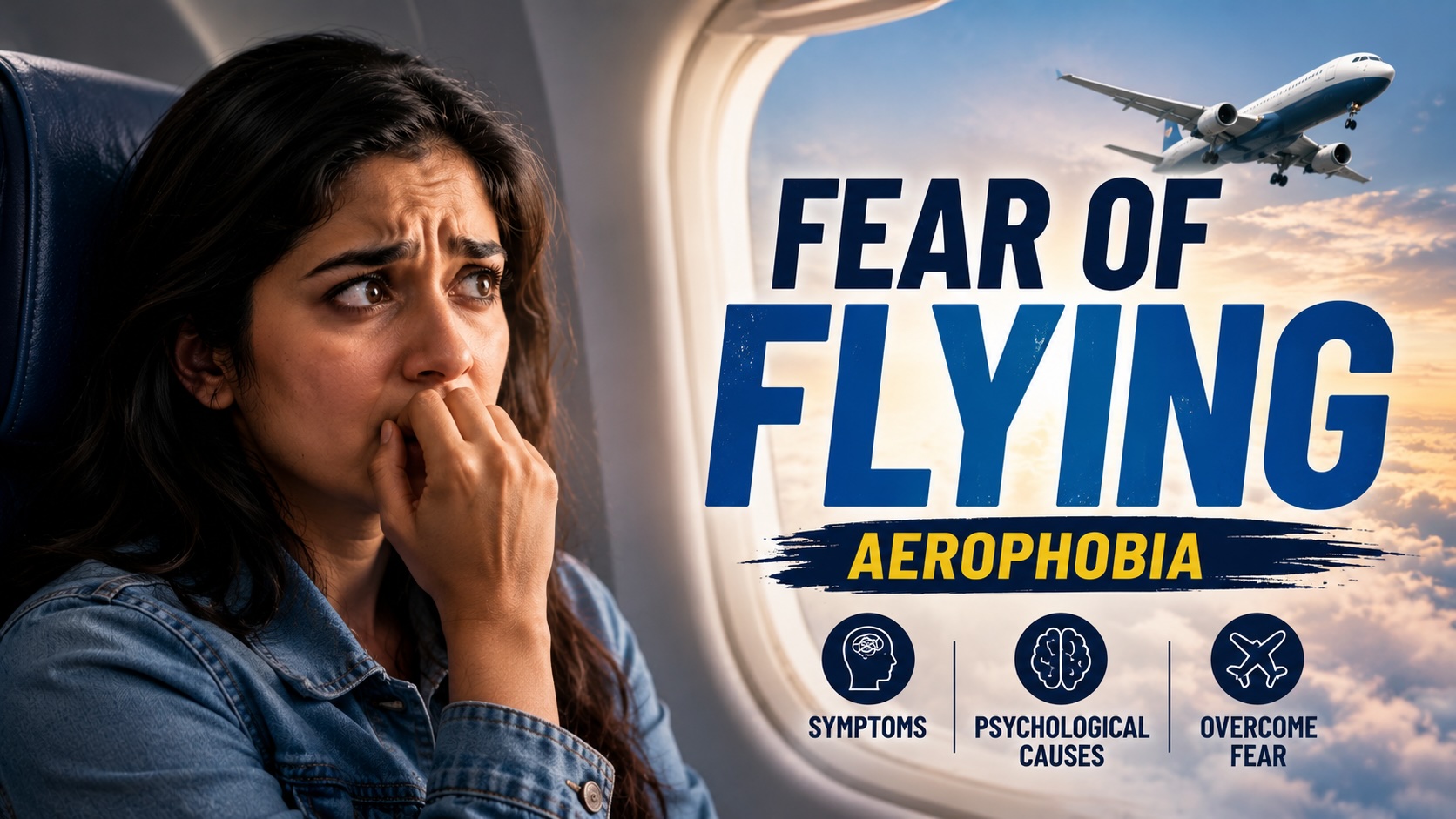
Common Symptoms of Fear of Flying
The symptoms of Fear of Flying can vary from person to person. Some individuals feel anxious while planning a trip, while others experience severe discomfort only during take-off or landing.
Common symptoms include:
- Excessive anxiety before air travel
- Repeated thoughts about plane crashes
- Fear of getting trapped in the air
- Rapid heartbeat
- Sweating and trembling
- Shortness of breath
- Chest heaviness or tightness
- Dizziness or nausea
- Intense fear or panic
- Panic attacks during flights
Some people feel more anxious during take-off, while others struggle more during landing. In severe cases, the fear becomes so overwhelming that the person avoids air travel altogether.
Behavioural Signs of Aerophobia
People suffering from Fear of Flying often develop avoidance behaviours. They may:
- Avoid booking flights
- Cancel trips at the last moment
- Create reasons to avoid travelling
- Constantly search online for flight safety information
- Repeatedly check weather conditions and airline safety records
- Seek reassurance from family members and friends
These behaviours may provide temporary relief but often strengthen the fear over time.
Psychological Causes of Fear of Flying
Many people assume that aerophobia is simply a fear of aircraft. In reality, the problem often has deeper psychological roots.
Fear of Losing Control
Inside an aircraft, passengers have no control over the situation. For individuals who prefer certainty and control, this can trigger significant anxiety.
Fear of Death
Some people associate flying with danger and mortality. Even though commercial aviation is extremely safe, their mind focuses on worst-case scenarios.
Fear of Being Trapped
Since passengers cannot leave the aircraft during flight, individuals with claustrophobic tendencies may feel trapped and helpless.
Fear of Heights
Although not everyone with aerophobia fears heights, some individuals become anxious when they think about being thousands of feet above the ground.
Post-Traumatic Experiences
Previous traumatic experiences, severe turbulence, emergency situations, or other anxiety-related events can contribute to the development of Fear of Flying.
Has Fear of Flying Increased After COVID-19?
Many mental health professionals have observed an increase in flight-related anxiety after the COVID-19 pandemic. Extended periods of isolation, health concerns, uncertainty, and reduced travel exposure may have contributed to higher levels of anxiety among travellers.
Can Fear of Flying Be Treated?
The good news is that Fear of Flying is a treatable condition. With the right psychological support, many people successfully overcome their fear and travel comfortably.
Treatment options may include:
- Psychological counselling
- Cognitive Behavioural Therapy (CBT)
- Hypnotherapy
- Relaxation techniques
- Anxiety management strategies
- Exposure-based interventions
In many cases, even a focused consultation before a scheduled flight can significantly reduce anxiety. Some clients benefit from online sessions conducted shortly before travel.
Conclusion
Fear of Flying can interfere with personal, family, and professional opportunities. However, it does not have to control your life. Early intervention and professional guidance can help identify the underlying causes and reduce anxiety effectively. If you struggle with aerophobia, seeking consultation can be an important step toward comfortable and confident air travel.