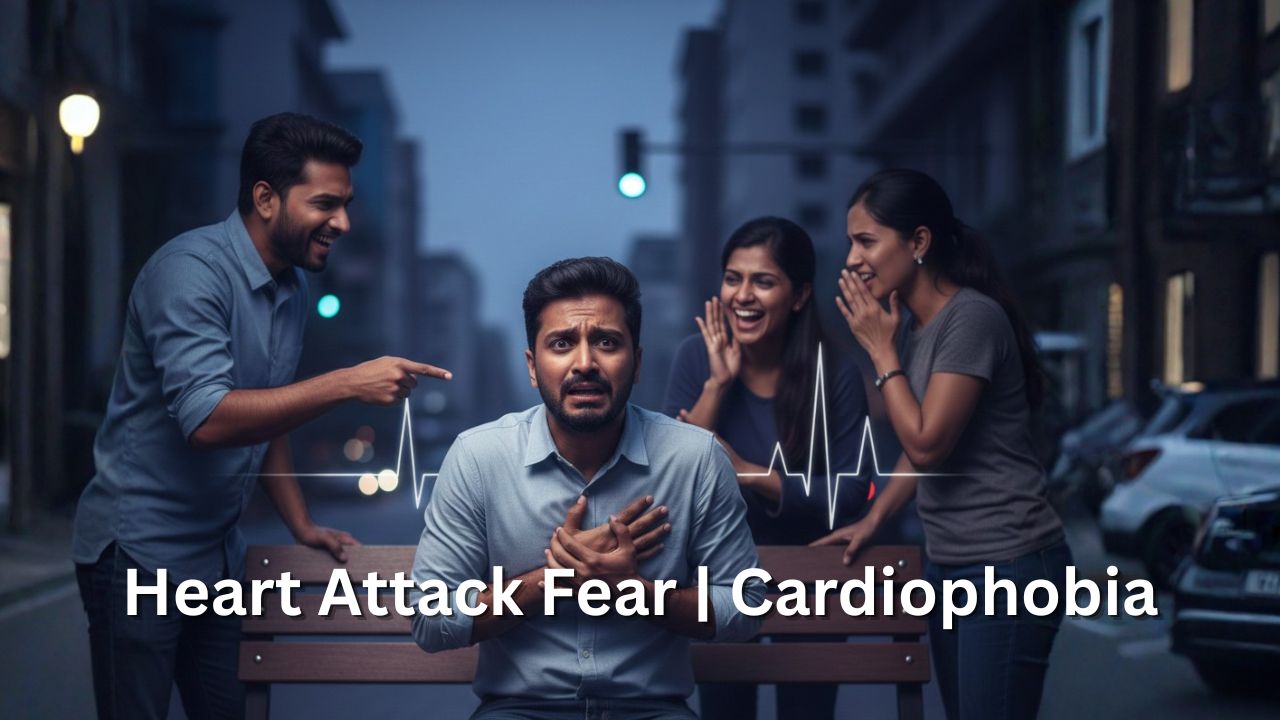
Many people live with a constant thought — “Heart attack varumo?”
A slight increase in heartbeat, mild chest discomfort, or a sudden weakness in hands and legs can immediately trigger fear. The mind jumps to one conclusion: “Am I dying?” Chest pain feels real. Fear feels real. Death feels close.
Yet, when they rush to the hospital and undergo ECG, blood tests, echo, and scans, doctors find nothing wrong. Still, the fear returns. Repeated consultations follow, sometimes within weeks. For many, this pattern started after COVID. For others, it began after a stressful event or a frightening news story.
What Is Cardiophobia?
The fear of heart attack without an actual heart disease is called Cardiophobia.
It is a form of anxiety where the mind misinterprets normal body sensations as signs of danger.
A fast heartbeat after climbing stairs, excitement, or stress is normal. But in cardiophobia, the brain treats these sensations as life-threatening. Fear increases adrenaline. Adrenaline increases heartbeat. The cycle continues.
This condition does not mean the person is weak or dramatic. It means the nervous system is stuck in survival mode.
Why Medical Tests Feel Normal but Fear Feels Extreme
Hospitals look for structural or electrical problems in the heart. Anxiety creates functional symptoms, not structural damage. That is why reports come back normal, while the person still feels unsafe.
Many clients say the fear started after:
-
Watching news about sudden deaths in gyms
-
Seeing someone collapse unexpectedly
-
Hearing stories of young heart attacks
-
Post-COVID body awareness and fatigue
Once the mind learns to fear the heart, every sensation becomes suspicious.
When One Fear Changes Its Mask
An important clinical observation is this:
When therapists address the fear of heart attack, some people later develop fear of cancer, stroke, rabies, AIDS, or other fatal illnesses.
Why does this happen?
Because cardiophobia is often not the root fear.
At a subconscious level, these fears point to fear of death and fear of uncertainty. Death anxiety does not always appear directly. It often wears different medical masks.
Childhood Clues Hidden Beneath Adult Anxiety
Many people with cardiophobia show earlier patterns:
-
Fear of darkness
-
Fear of ghosts
-
Fear of being alone
-
Fear during sleep or sudden awakenings
Some had these fears clearly. Others did not notice them. Years later, stress, illness, or shocking news can trigger these silent fears into the body — using the heart as the symbol.
Why Treating Only Heart Attack Fear Is Not Enough
If therapy focuses only on reducing heart-related fear, relief may stay temporary. The deeper causes remain untouched.
True recovery requires:
-
Understanding suppressed fear patterns
-
Addressing death anxiety safely
-
Regulating the nervous system
-
Correcting subconscious beliefs about body sensations
At this stage, happiness and excitement feel unsafe. Even joy increases heartbeat, which then feels dangerous. Life slowly shrinks.
When to Seek Help
If normal excitement feels threatening, if reassurance never lasts, and if fear controls daily decisions, professional consultation becomes essential.
The fear of heart attack is treatable — but only when therapy goes beyond symptoms and reaches the root.