Many married couples continue living together even when the relationship has become emotionally exhausting. When someone asks, “Why are you still living together?”, common answers are, “We are already married,” or “We have children.” But marriage and parenthood alone do not always make a relationship healthy.
When repeated attempts to improve the relationship, including communication and couple sessions, have not helped the partners develop meaningful compatibility, friendly separation in marriage can become an option worth considering.
What Is Friendly Separation?
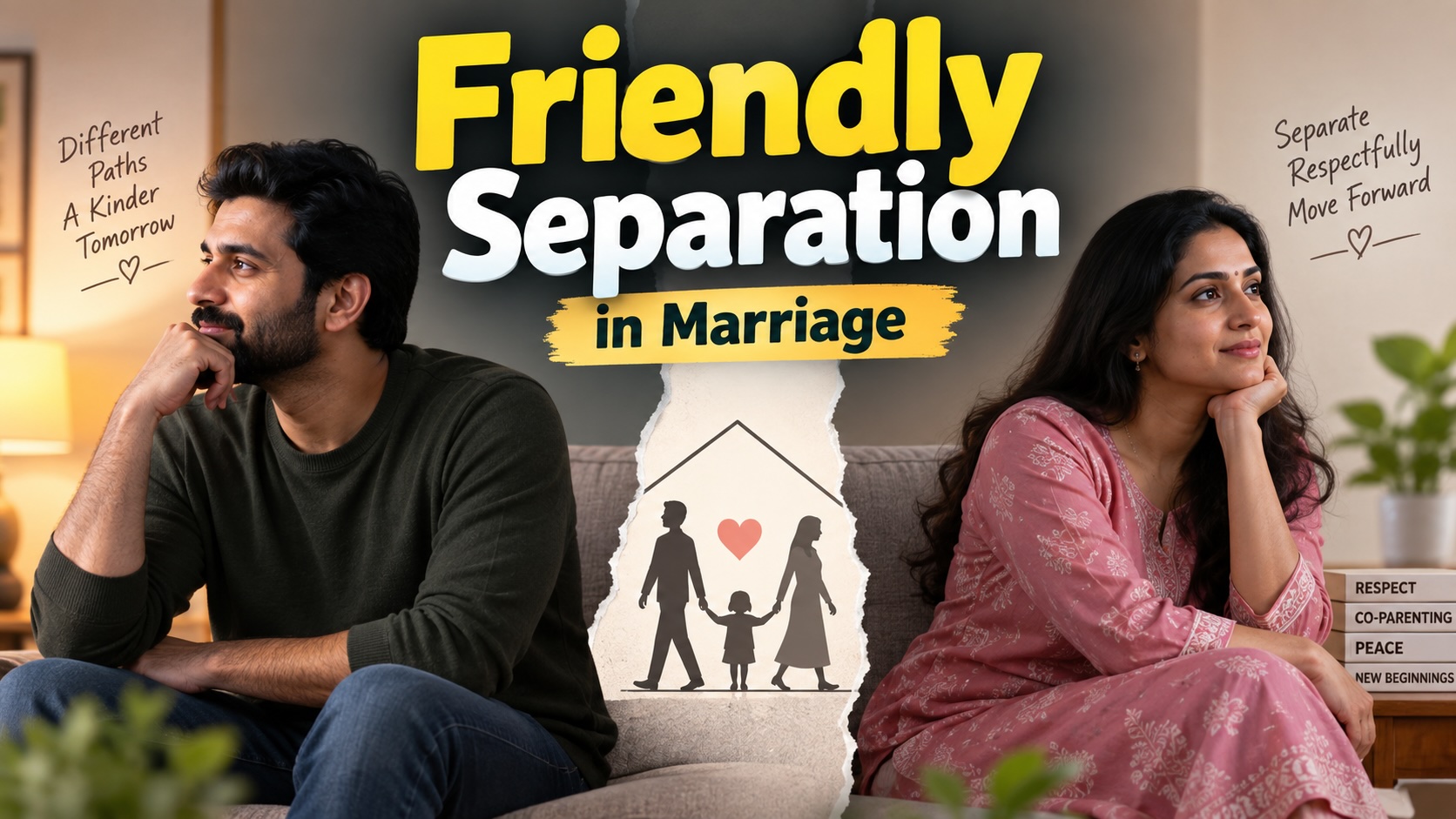
Friendly separation means deciding to live separately or end the marital relationship without turning the separation into a battle. It does not mean that both partners have no pain, anger or disappointment. Instead, it means they choose to handle these emotions without deliberately damaging each other.
For some couples, couple counselling is not only about saving the marriage. It can also help them understand whether continuing the relationship or separating respectfully would be healthier for everyone involved.
Sometimes, when partners try to discuss separation without guidance, conversations can quickly become arguments. They may blame each other, involve family members and struggle to reach practical decisions. A structured process can help them communicate more clearly.
Emotional Settlement Is Also Important
Financial settlement, property division and legal procedures may have formal processes. But emotional settlement is equally important.
A couple may legally separate while continuing to carry intense anger, resentment and unresolved emotional wounds. This can create problems long after the marriage has ended.
A healthy separation therefore requires more than deciding who gets what.
Important Agreements During Friendly Separation
A couple considering friendly separation in marriage can work towards several important agreements.
1. Accepting the Decision Together
Both partners need to gradually recognise that separation may be healthier for them than continuing a chronically unhappy relationship. This does not necessarily mean both will feel equally ready at the same time.
2. Maintaining Mutual Respect
Even when romantic feelings have changed, basic human respect can remain. Partners can agree not to insult, threaten or intentionally humiliate each other.
3. Establishing Clear Boundaries
They can decide how often they will communicate, what personal matters should remain private, how they will interact with extended families and what boundaries they need after separation.
4. Protecting the Children’s Well-being
Children need stable and emotionally safe relationships with both parents. Separation does not automatically mean that parents stop being a family to their children.
In some situations, two separated parents who cooperate respectfully may provide a healthier environment than two parents who remain together while constantly fighting. However, every child’s circumstances are different, and separation should be planned carefully.
5. Avoiding Public Blame
Both partners can agree not to use social media, relatives or public spaces to attack or shame each other. Protecting each other’s dignity can make the transition considerably healthier.
6. Reaching Financial Clarity
Property, savings, gold, debts and other financial responsibilities should be discussed clearly and, where appropriate, documented with professional legal advice.
Sometimes Separation Can Be an Act of Responsibility
Living together while constantly hating, humiliating or fighting with each other is not necessarily better simply because the couple remains married.
Friendly separation in marriage is not about giving up easily. It can be about recognising reality after genuine efforts to repair the relationship have failed and choosing a less destructive way forward.
Having children or being married for many years are important realities to consider, but they do not automatically mean that staying together is always the healthiest option.
The important question is not simply, “Should we remain married?”
It is:
“What is the healthiest and least damaging way for everyone involved to move forward?”
Sometimes the answer is rebuilding the marriage. Sometimes it is taking structured time apart. And sometimes, after careful consideration, it is separating with dignity, respect and responsibility.