
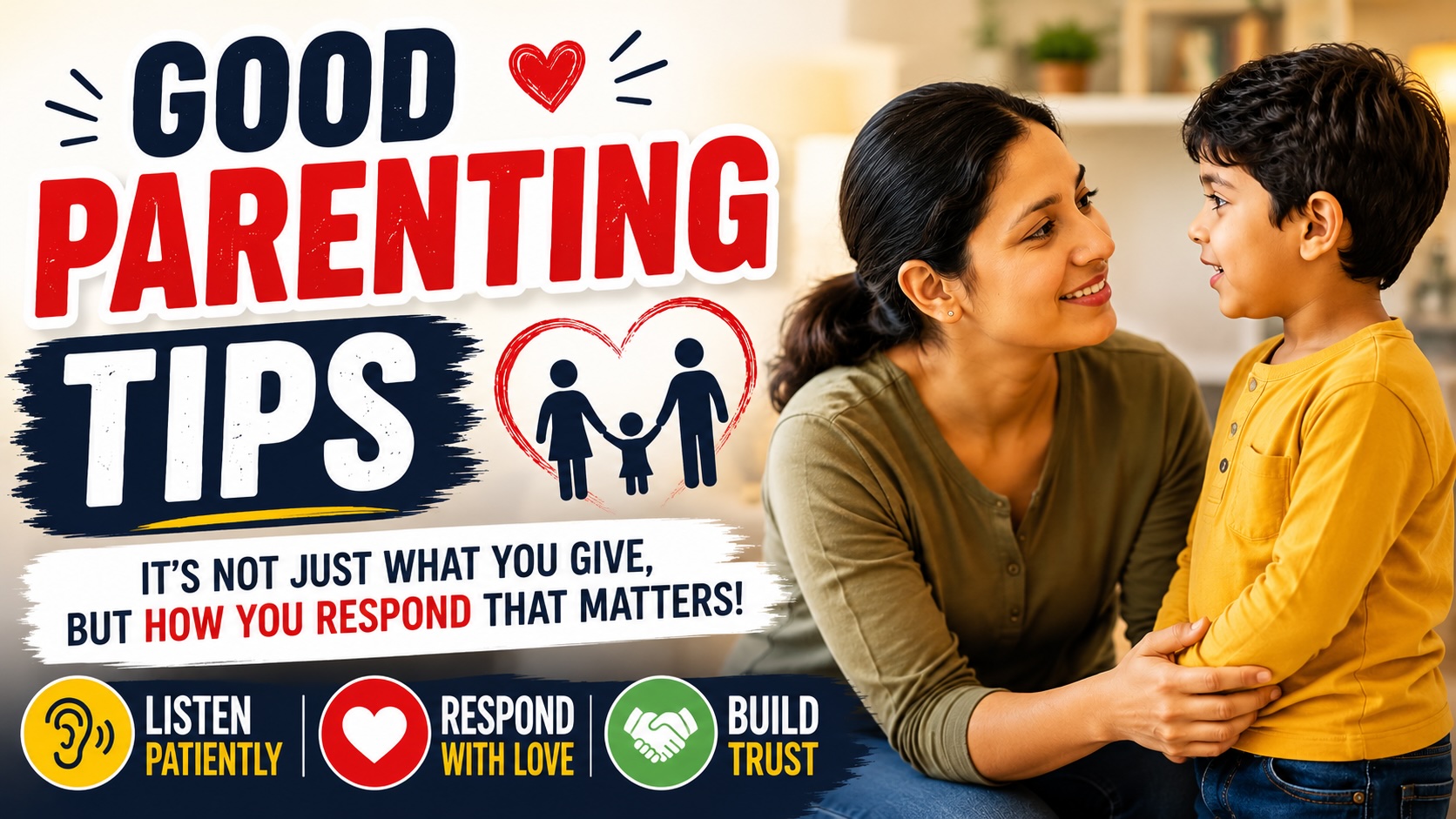
Parenting is not only about giving everything your child asks for. The real strength of parenting lies in how you respond to their emotions, wishes, and expectations. Many parents work hard day and night for their family, but sometimes a small negative reaction can hurt the emotional bond with their child. These simple good parenting tips can help you build a stronger and healthier relationship with your children.
Why First Reactions Matter in Parenting
Children often share their wishes with excitement and hope. It may be a toy, dress, gadget, or something they saw somewhere. At that moment, they are not only asking for an object. They are also testing emotional safety.
Sadly, many parents react negatively at first.
“Why do you need this now?”
“Didn’t we buy something last week?”
“I don’t have money for all this.”
“Don’t copy rich kids.”
Such responses may look normal, but repeated negative reactions can slowly damage communication. Even if parents later buy the item, the emotional damage may already happen. This is one of the most ignored good parenting tips in modern families.
Children Need Respect More Than Expensive Gifts
Most children understand financial limitations when parents explain them calmly. The problem is usually not rejection. The problem is the tone.
When a child comes with a wish, listen patiently. Respond softly even if you cannot fulfil the request immediately.
You can say:
“Moné, achan will buy it for you. Please wait for a few days. Right now I don’t have enough cash.”
This type of answer keeps hope alive. The child feels heard and respected. Parents do not lose authority by speaking kindly. In fact, kindness increases emotional trust.
Among the best good parenting tips, respectful communication holds a very important place.
Avoid Making Children Feel Guilty
Some parents start listing previous expenses whenever a child asks for something.
“I already bought you this.”
“Do you know how much money I spend on you?”
This approach often creates guilt instead of gratitude. Over time, children may stop sharing their thoughts openly. Emotional distance begins silently.
Even if the request is impossible, parents can still answer gently.
“Right now this is difficult for us, but let me think about it.”
“We may need some time, but we can try.”
These responses cost nothing financially, but they protect the relationship beautifully.
Communication Builds Long-Term Relationships
This principle applies not only to children but also to married life. When people feel emotionally safe, they continue communicating honestly in the future.
Sudden “No,” angry reactions, forcing someone to beg repeatedly, or emotional blaming can reduce openness in relationships. Children who constantly fear rejection may slowly stop expressing their feelings at home.
One of the most practical good parenting tips is this: focus not only on what you give, but also on how you give or reject something.
Small Changes Can Create Big Emotional Growth
Parents do not need to become perfect overnight. Even small changes in tone, patience, and listening can improve family bonding greatly.
The future of relationships depends less on money and more on emotional response. Try changing the way you react when your child expresses a desire. You may notice surprising positive changes in your home and communication.
Good parenting is not about saying “yes” to everything. It is about making children feel valued even when the answer is “not now.”
Meta Description: